An excellent graphic design portfolio doesn’t do the work for you, but as an ever-running marketing tool, it can change your life by reeling in new opportunities.
and online design platforms like are impacting graphic design hiring, making your portfolio more important than ever.
So whether you‘re a full-time graphic designer or dabbling in graphic design as a freelancer, it’s crucial to create a tailored graphic design portfolio to showcase your work to potential clients.
To that end, I’ve created a list of over 20 impressive graphic design portfolios, instructions on how to make your own, and tips for curating the perfect space for your unique work.
Table of Contents
- Graphic Design Portfolio Website Examples
- How to Make a Graphic Design Portfolio
- Graphic Design Portfolio Ideas
- What is a graphic design portfolio?
- Where to Find Inspiration for Your Design Portfolio
- Graphic Design Portfolio Tips
What is a graphic design portfolio?
A graphic design portfolio is one of the most important elements a client or employer needs to see when choosing a graphic designer. A portfolio should include a selection of a graphic designer’s best work, as well as professional samples from client projects.
It’s important to note that while there’s definitely still a place for physical portfolios (more on that below), graphic designer websites can really offer a host of advantages when done well.
As an illustration graduate, I can tell you firsthand how important a portfolio is to landing paying commercial design work. Even if you’re a certified Rembrandt, no one will hire you for anything design-related if you can’t showcase your abilities through existing work. It’s so important, in fact, that most of my final year at university was dedicated to creating a portfolio that would get me hired upon graduation.
I also find it incredible just how much the emphasis has shifted from physical to digital portfolios, even since I completed my degree nearly 15 years ago. Yes, physical portfolios still have their place. They can actually make you stand out from the crowd, depending on how you pitch to clients.
One of my fellow graduates mails out postcards as physical examples of their work, accompanied by handwritten notes, to different agencies at the end of each year. Off the back of that, they land enough work for the year ahead — purely because their approach was so different.
That said, having an online body of visual work to hand is now the industry standard. And it’s an incredible method to showcase your work across multiple project types and niches.
Whatever your design industry, a portfolio is essential for proving your skills. It's also a chance to:
- Share your design process.
- Talk about design or industry specialties.
- Showcase your unique style.
- Demonstrate your range of design skills.
A graphic design portfolio, like a resume, will also include contact information. It may also feature case studies from past employers and clients.
Why do graphic designers need a portfolio website?
Most portfolios are now graphic designer websites. Beyond just sharing your work, it’s a 24/7 branding opportunity that works while you sleep or hit the streets with your physical portfolio.
These websites also create ways to connect with clients, help graphic designers build communities, and share their work with potential fans around the world. In many ways, it’s a major advantage to get one set up, and you can start with any site builder from to Wix.
150+ Free Content Creation Templates
Access ebook, blog post, CTA, case study, and more content templates.
- Ebook Templates
- CTA Templates
- Blog Post Templates
- And more!
Download Free
All fields are required.
Form not available
You're all set!
Click this link to access this resource at any time.
What to Include in a Graphic Design Website
So what does a graphic design portfolio website need to include to stand out?
Your portfolio is much more than proving you know how to use Photoshop. Many graphic designers also include logos, typography, print design, or web design in their portfolios.
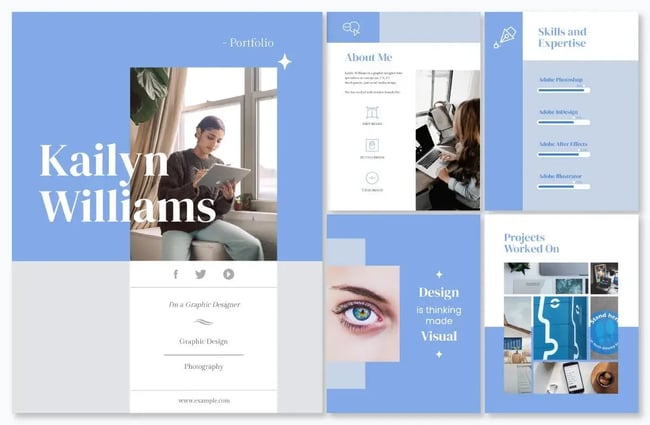
Some of the best graphic design portfolios often also include:
- Motion graphics
- Video
- Original illustrations
- Animation
- Product design
- UX design
- Ad campaigns
- Storyboards
- Brand identity
As you’ll see below, the most powerful graphic designer portfolios balance personal vision (and personality!) with standout client samples.

Graphic Design Portfolio Website Examples
- Jessica Walsh
- Morag Myerscough
- Heather Shaw
- Mike Mills
- Hannah Stouffer
- Gail Anderson
- Gleb Kuznetsov
- Stefan Sagmeister
- Lotte Niemenen
- Luke Choice (Velvet Spectrum)
- David Shrigley
- Eduardo Nunes
- Stefanie Brüeckler
- Victor Work
- Ryan Dean Sprague (Pavlov)
- MISCPRINTCO
- Alex Trochut
- Leandro Assis
- Peter Tarka
- Tobias van Schneider
- Aries Moross
- LingK
- Nisha K. Sethi
Let’s look at some graphic design portfolio website examples to inspire and motivate your portfolio development. Whether you’re a traditional graphic designer, experimenting with new media, or lean towards illustration like me, there’s something here for everyone. I also share why I think each portfolio is unique.
1.
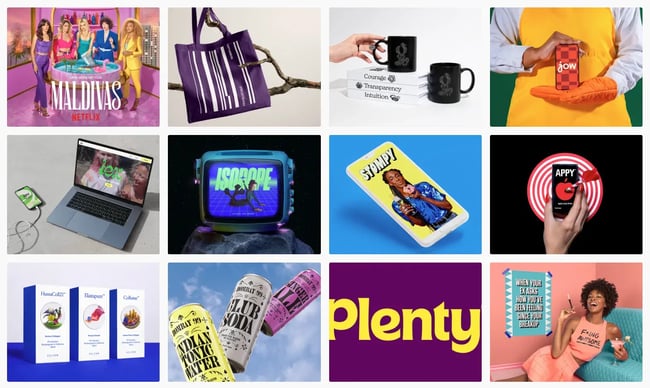
The design industry is highly competitive. It takes eye-catching imagery and typographic finesse to create a portfolio that attracts top clients such as Apple, Benefit, and Levi’s. But this designer’s achievements don’t stop there.
Walsh has been named one of Ad Age’s “Top 10 Visual Creatives,” among many other accolades. Currently a design professor, creative director, and head of the creative agency , this designer’s Behance portfolio focuses on great design.
Why this is a great example of a graphic design portfolio website:
- Walsh’s approach to type is bright, graphic, and complex.
- Lush, colorful photography and illustrations.
- This graphic designer is an expert with negative space.
- Uses careful visual composition to draw the eye and make a statement.
What I like: There is a good amount of information about Jessica on the left side of the portfolio homepage, including her work experience, title, and social media profiles. I think this is balanced well with the work samples Walsh has chosen to highlight on the right side.
Although Jessica’s portfolio is simple compared to others on this list (it doesn’t have interactive elements, for example), it’s easy for prospects to see who she is and what she does on one page.
2.
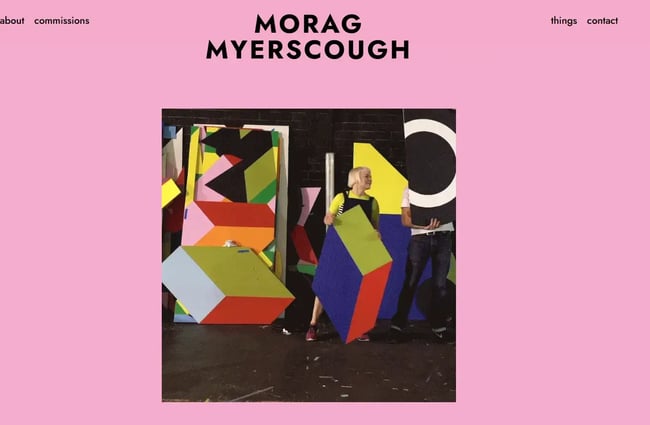
Bright graphics, animations, and clean design make this an exceptional graphic design portfolio.
This approach is great for designers who lean into the art side of design. It also works for designers who take on more experimental or site-specific projects.
Why this is a great example of a graphic design portfolio website:
- Myerscough’s aesthetic is unique, and this image-focused site quickly communicates her style. I love that she was able to marry the site’s visual design with her own aesthetic.
- Short sections of copy connect her visual brand to her background, professional experience, and personal philosophy.
- The combination makes the site feel like it shows the whole designer, not just a visualization of the work she does for clients.
What I like: The site is very minimal with a bold but simple pink background and a few menu headings. There’s also a cool GIF of Morag with some of her work. The video is really eye-catching, and it stands out even more because of the minimal background. I think this designer has balanced interactivity and simplicity well.
3.
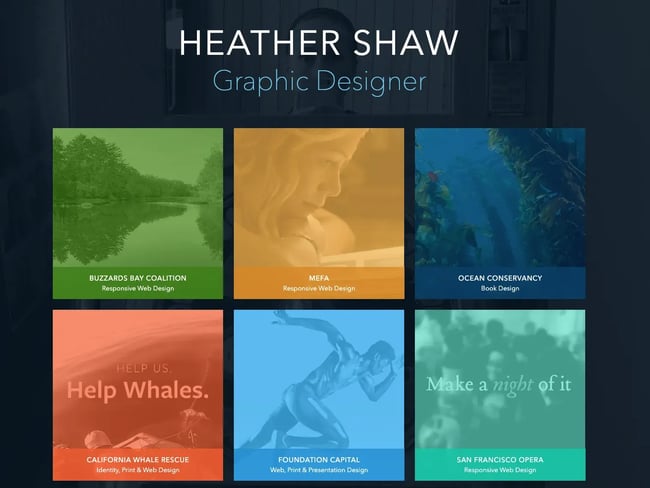
This graphic design portfolio website includes samples of book and website designs, branding, and more. It’s good for designers who work in many different media but want to present a cohesive portfolio.
Why this is a great example of a graphic design portfolio website:
- Heather Shaw’s portfolio is super clear and easy to navigate.
- It shows a wide range of skills and approaches to solving client problems, yet it’s also visually consistent, even though the variations could easily have been disjointed.
- The designer also uses text effectively to explain each project and to encourage further engagement with the work.
What I like: The portfolio gets straight into showcasing Shaw’s work. It clearly highlights the types of design she offers, including book design, responsive web design, and traditional print media. I can imagine this would make it easier for a prospective client to identify how Shaw can help them. And then quickly see examples of each design niche in action.
4.
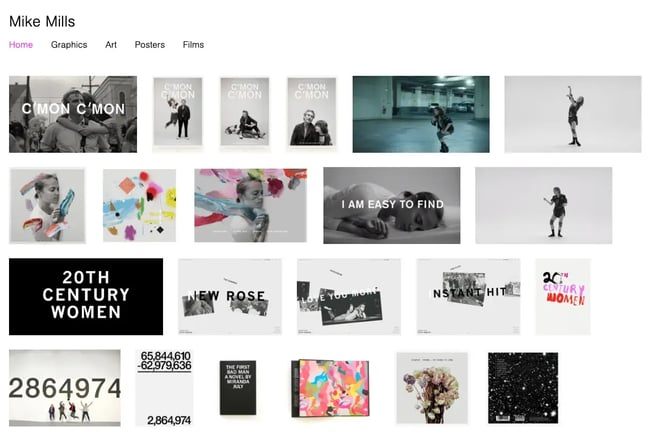
Mike Mills is a talented designer, artist, and filmmaker, known for his punk aesthetic and original style.
His portfolio reflects his diverse interests and skills. The website offers a quick lesson in clean design, with easy-to-understand headers, professional photography, and crisp layout.
Why this is a great example of a graphic design portfolio website:
- Mills has found a way to include samples of design that span from the 90s to today. This could easily feel disjointed or overwhelming. Instead, it’s a beautiful and cohesive portfolio with exceptional attention to detail.
- When you’re a design beginner creating your first graphic design portfolio, you quickly learn the importance of editing. A logo for your first-year graphic design class might have been your best work then. It shows that you know how to use Illustrator or other design software alternatives. But five years later, you have to ask — does that logo belong in a professional portfolio?
- As your body of graphic design work grows, you’ll find yourself making tough decisions about what to include, and just as important, what to leave out of your portfolio.
What I like: The homepage is a collage of Mills’ creative offerings throughout the years. I love this approach because it shows a distinctive style. But it isn’t too overwhelming to browse through. You can also quickly view work samples and see more specific categories (such as graphics, art, and posters) by clicking the menus at the top left of the site.
This portfolio demonstrates the best of both worlds — creativity and practicality — and I think that balance is graphic design in a nutshell, honestly. For example, the curation is intriguing and creatively executed without compromising a solid user experience. It’s like being in an art gallery that actually wants you to buy the works on display, rather than just gawk at them.
5.

Hannah Stouffer is an American art director and visual artist with a distinct, illustrative, colorful, psychedelic style. You might have seen similar work quite a lot over the last decade or so, but Stouffer was one of the first to do it.
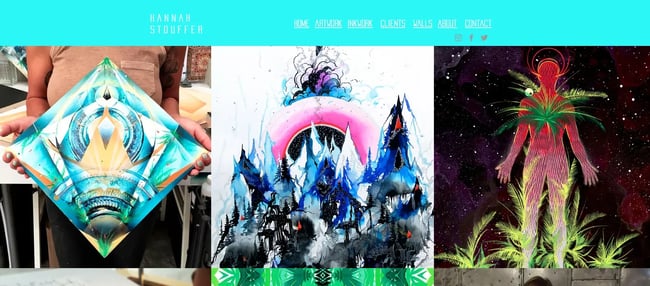
I have been a HUGE fan of Stouffer’s work since I started my first formal art qualification at 18. I won’t age myself, but it wasn’t my degree, so it’s been … a minute. I especially love her surface design work, particularly the snowboard designs and her surface work for The North Face.
Why this is a great example of a graphic design portfolio website:
- Besides the high quality of the design work, this portfolio captures the sheer range of Stouffer’s work, including her murals, snowboard designs, and personal work.
- It also shows a consistent vision and passion for visual communication.
- Stouffer’s work is exceptionally colorful and visually complex (which is why I love it!). This portfolio highlights that element, without being too visually distracting or making the work seem overbearing.
What I like: I love that the portfolio has an “Enter” screen that you have to click on before you get to Stouffer’s work. I think that shows real confidence because many designers might worry about losing a visitor’s attention during this time. Instead, I actually think this approach builds anticipation and intrigue.
6.
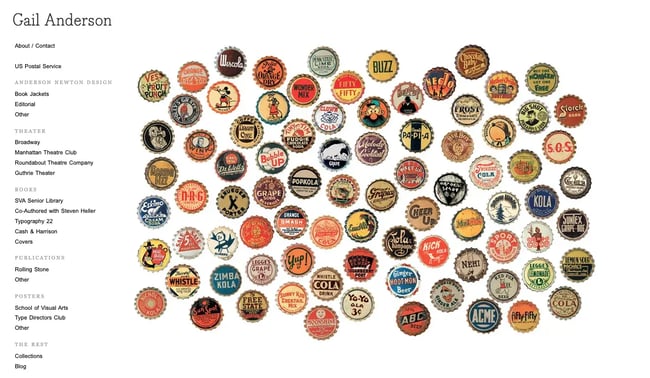
Image quality matters. And if your portfolio pieces include a lot of detail, you may get stumped with your online portfolio design.
This graphic design portfolio website has a simple left-hand navigation. So, with each click, you have a chance to see detailed posters, book covers, and more at a scale that shows how they look in print while also making it easy to scroll on a mobile phone.
Why this is a great example of a graphic design portfolio website:
- Anderson’s work is innovative and timeless. And let me tell you, that’s hard to execute. Each piece shows her dedication to the depth and value of design thinking, technical skill, and passion for design.
- The side navigation leaves lots of room to enjoy high-resolution images of her highly detailed works.
What I like: I like how Anderson has laid out the range of design types and projects she has worked on into categories on the left-hand side of the site.
At a glance, I can see that big brands like Broadway, Rolling Stone, and the US Postal Service have commissioned her. That’s some great social proof right there! Meanwhile, I can see she has worked on specific designs, such as book jackets and magazine covers. Those specifics will let a prospect know exactly how she can help them.
I’m also a big fan of the minimalistic approach, with a white background and the use of negative space. I’ve noticed that that is falling out of style in favor of bold color choices and moving visuals in some more contemporary graphic design portfolios.
7.
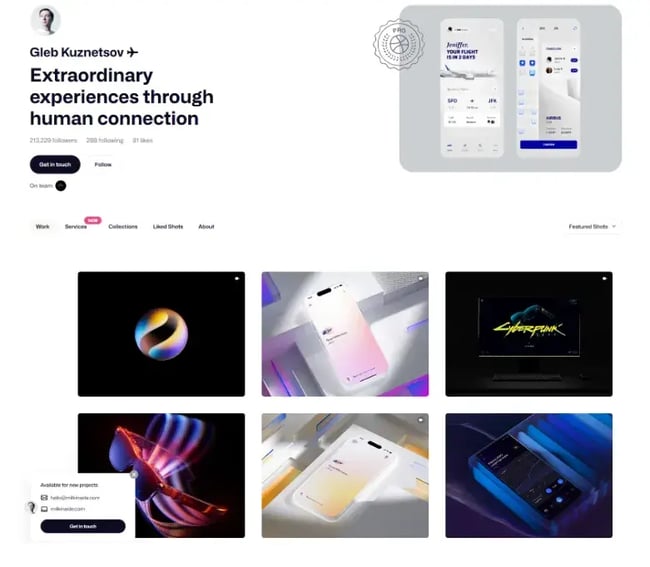
Kuznetsov’s portfolio combines product design, user experience, and graphic design to create something entirely new.
This Dribble-hosted portfolio has over 50 images, which could be overwhelming. But they’re split into seven easy-to-understand projects.
This makes it a great example of a graphic design portfolio for designers who want to showcase long-term or complex projects.
Why this is a great example of a graphic design portfolio website:
- From the images to his brief “About” statement, this designer makes his unique vision and personality part of the work and its presentation.
What I like: It might just be how Dribbble works, in general, but I love how the “available for new projects" pop-up appears in the bottom left-hand corner of the site. This makes it really easy for clients to hire or enquire about hiring Gleb. There’s also no question about whether this designer is fully booked or not.
Overall, this is a very commercially viable portfolio with an obvious niche. If you need high-level product design in the tech niche, this designer makes it clear that they’re available for hire.
8.
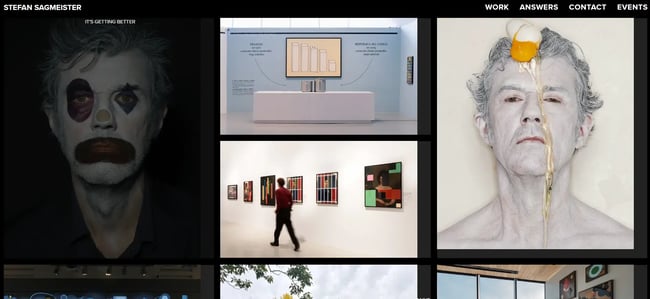
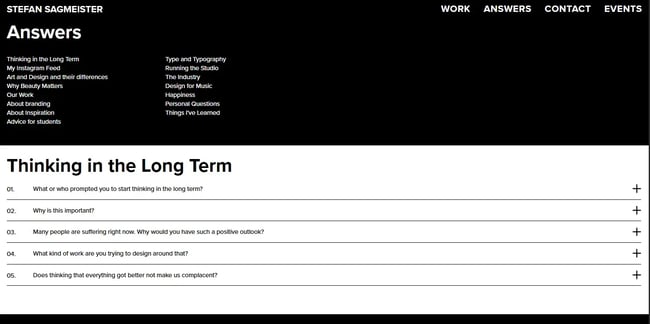
Sagmeister is a legend in the design world, and his website reflects the designer’s curiosity and power.
The homepage features a grid of images with text that appears as you scroll over each image. With a click, the site displays images and/or videos detailing each project.
The site is a mix of collaborations, art projects, and more traditional design, like the corporate identity for the Jewish museum.
Why this is a great example of a graphic design portfolio website:
- This portfolio site doesn’t just demonstrate the designer’s quality and technical ability. It also gives any client working with Sagmeister a sense of what the design process might be like.
- This portfolio has interactive elements, but they’re not too over the top. For example, when you hover over each work sample on the homepage, the name of each project appears. The names also move with the cursor, which is a nice touch. It’s hard to strike the right balance between showing that your site is interactive without it being so visually overwhelming that it distracts from your work.
What I like: I love that Sagmeister has totally committed to leading with the design work on the homepage. I also love how this designer has used the “answers” section to answer questions about his design philosophy and himself.
If you’re a relatively new designer, I implore you to peruse “” and “” All in all, the Answers page is one of the most thoughtful and creative FAQ pages I’ve seen in a while, not just on design sites, but in general.
9.
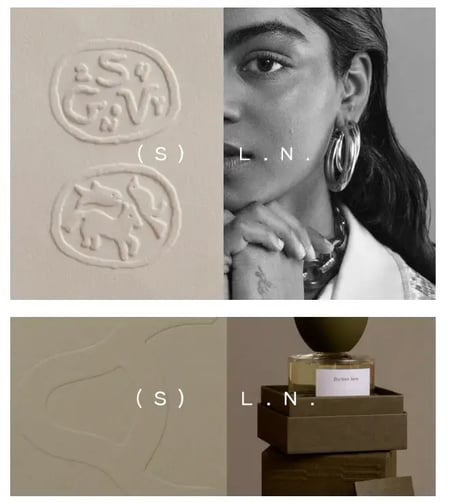
Great designers often let the work do the talking. That’s certainly true here, with a streamlined graphic design portfolio that calls attention to client deliverables.
When text is present, it adds value to the work, such as sharing which parts of the design process their team completed. This is a great portfolio format for designers doing graphic design work, like:
- Logo design
- Branding
- Packaging
- Product design
Why this is a great example of a graphic design portfolio website:
- This group of work is simple and to the point. It also shows off a wide range of skills and tactics with a consistent vision.
- Be sure to take a closer look at the website navigation — it’s clean and exciting and adds functionality to the site.
What I like: The images at the top of Niemenen’s portfolio automatically change to show the range of work. The image changes are set at a user-friendly pace. There’s enough time to soak in each image, but it’s quick enough to keep you interested in viewing a range of different design projects.
I also like how the homepage is a single long scrollable page, with each new section appearing as you scroll down.
10.
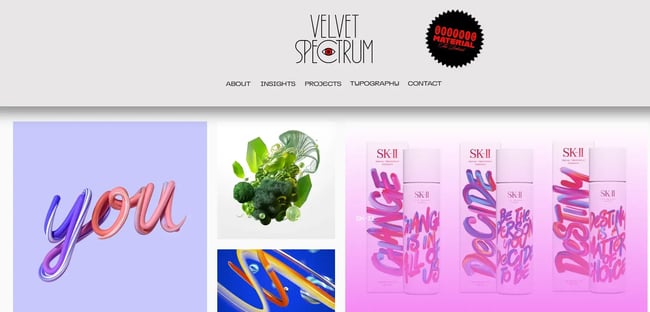
3D animation is an exciting design form that’s growing in popularity. But if you’re a client who’s not in the market for an animated billboard, it may be challenging to figure out how you might use this creative form for your business.
This site is an excellent example of a portfolio that educates with simple text, graphics, and video. It gives both a quick look and a deep dive into how this designer approaches his art form.
Why this is a great example of a graphic design portfolio website:
- If you’re doing something interesting and new, it may be a selling point. Truly new ideas can also challenge or frustrate people who don’t feel “in the know.” This means that your portfolio can’t just sell your designs. It also needs to teach viewers about the new format you’re using and why you think it matters.
What I like: I love the simple moving elements on the homepage. The eye blinks and moves around, and the sticker-style design on the right-hand corner moves too. There’s also a broad range of typography and animated work samples included in the portfolio. Overall, it feels very cutting-edge and exciting.
11.
David Shrigley is another graphic designer I have lived, laughed, and loved for way longer than I’d care to admit. I first stumbled upon his work for the London Underground (below). If you’ve ever been fortunate (or unfortunate!) enough to travel on the London Underground, his quirky depiction of the different tube lines and routes is precisely what it feels like.
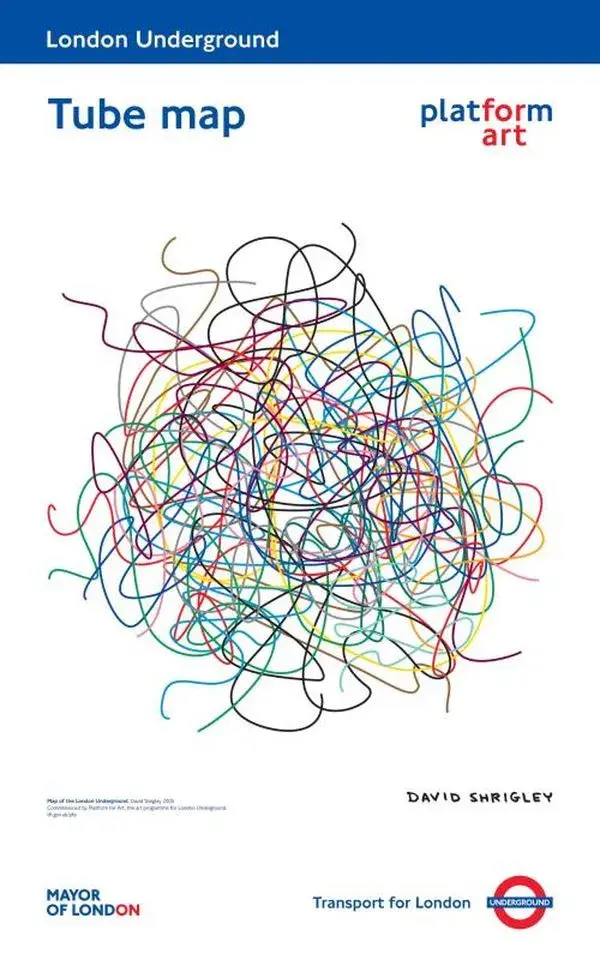
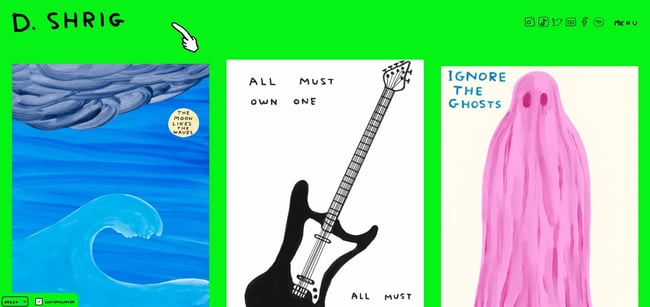
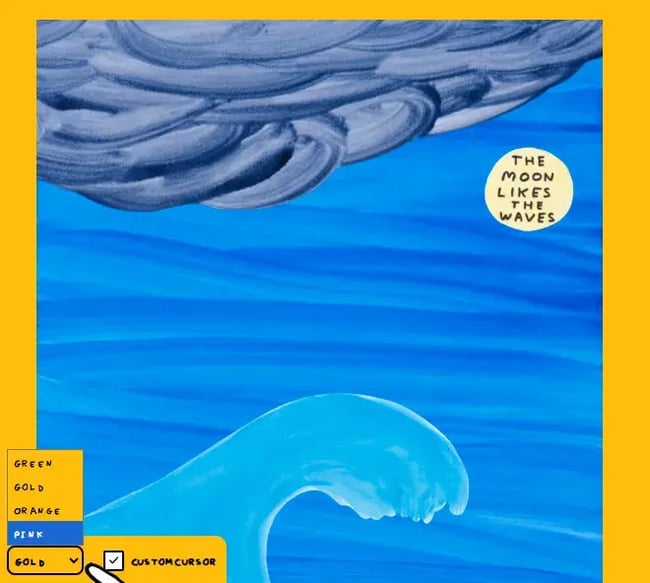
Now that I’ve familiarized you with Shrigley’s style, you’ll understand why his portfolio is so perfect. Straight away, it matches his unique aesthetic. He’s not trying to show off anything other than how whimsical his creative work is. Shrigley isn’t a fit for everyone, and that’s perfectly fine. And you’ll know straight away whether he’s the right designer for your project.
Why this is a great example of a graphic design portfolio website:
- A distinct style is important in graphic design. From the bright neon green to the funny cursor design, Shrigley’s unique style is immediately visible.
- The handwritten typography and imperfect, almost childlike drawings set his work apart from the crowd.
What I like: I absolutely love that you can change the color of the portfolio website and turn off the custom cursor if it’s not your thing. I haven’t seen this kind of customization in many, if any, of the other entries on this list.
12.
Designers often have a muse — someone or something that inspires and motivates them when the designing gets tough. Sometimes that inspiration can serve as a starting point for your portfolio design, as it did for this design portfolio example.
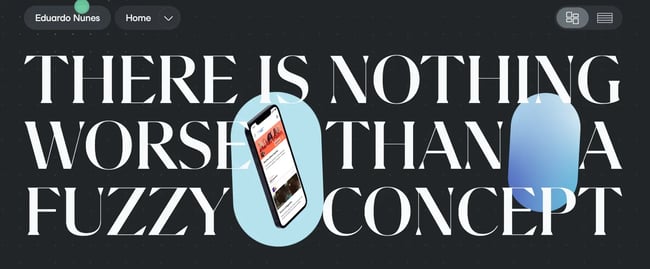
The landing page starts with a quote from Ansel Adams, “There is nothing worse than a sharp image of a fuzzy concept.”
Then, using clean motion graphics and fresh design, Nunes points to a central theme, a philosophy that guides his design approach. This leads every site visitor on a journey through his portfolio.
Why this is a great example of a graphic design portfolio website:
- This portfolio shows intense work, focus, practice, and care.
- It’s an excellent model for anyone who wants to show the world what they’re creating and why.
What I like: Nunes does interactivity particularly well. When you first land on the portfolio homepage, the image is out of focus. Then, it comes into focus. This is a playful way to visually represent the philosophy of the Ansel Adams quote.
The cursor is also an animated bubble-like design, and when you move it, it disrupts and moves the dots in the background. There’s also a nice animated snapshot of Nunes' different designs within the elongated circular shapes.
13.
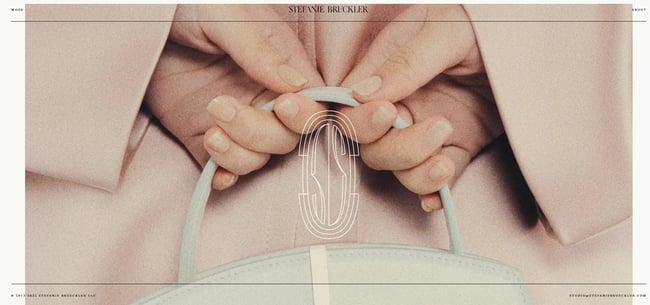
This portfolio includes packaging design, illustration, web design, graphic design, and branding work. It’s one of my favorite graphic designer websites because it’s clean and easy to navigate.
This makes it an excellent example for designers who aren’t sure how to organize all the work they want to include in their portfolio.
Why this is a great example of a graphic design portfolio website:
- Brückler’s graphic design portfolio focuses on the tiniest of details to create an excellent user experience.
- From the simple page-loading animation to the thoughtful use of motion graphics, this designer hones in on the stunning details.
What I like: In a predominantly digital world, Brüeckler’s portfolio almost looks like a physical print of a vintage fashion magazine. This approach is distinct from other portfolios and reflects the designer’s unique style.
14.
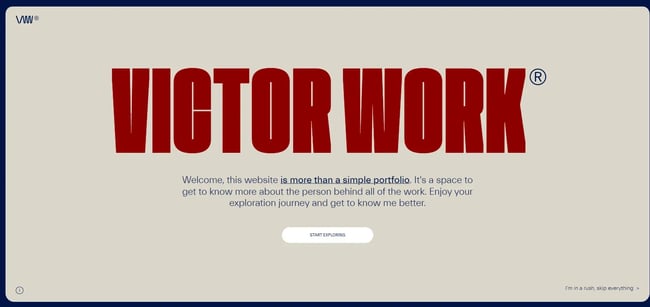
Victor Work is a Brazilian creative developer and designer residing in Canada. In his own words, his work “usually emphasizes the statics model into a memorable interactive experience, perfectly aligning the sense between effects and animations.”
I think this online portfolio stands out because it has user experience front and center. When you land on the homepage, there’s an option to “skip everything.” If you’re in a rush, this takes you straight to an overview of his “About” section and work projects. If you have more time, you can “start exploring.” This gives you the option to customize your experience to “Moderate,” “Full,” or “Simple.”
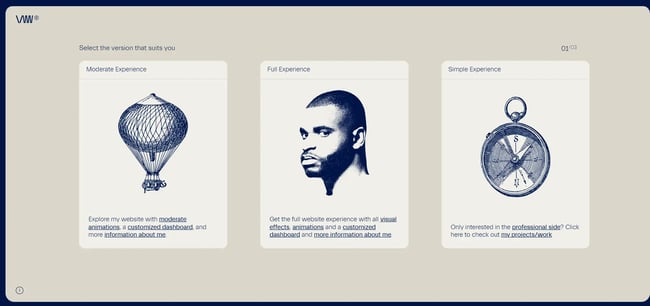
Why this is a great example of a graphic design portfolio website:
- The blue, red, and beige color scheme makes this graphic designer’s style pop.
- The level of customization available for the user is unmatched by any other portfolio on this list.
What I like: Victor Work’s “About” section is incredibly in-depth. I love this because it allows people to get to know the creator behind the work. Work goes so far as to map out the main pillars of his life, which include health, family, faith, intellectual, and professional.
It might sound like a cliche, but I firmly believe that people buy from people. And Victor Work’s portfolio provides prospects with enough information to do a “vibe check” on the person they’re considering working with.
15.
%E2%80%99s%20online%20portfolio.webp?width=650&height=599&name=Ryan%20Dean%20Sprague%20(Pavlov)%E2%80%99s%20online%20portfolio.webp)
This Texas designer’s style is heavily influenced by music, so his portfolio features illustration and design work that are bright, evocative, and fun.
Pavlov’s portfolio website shines because it keeps the UX and site structure super simple. This puts the focus on a tight curation of exciting design samples.
Why this is a great example of a graphic design portfolio website:
- This graphic design portfolio is a vivid display of individuality that also shows clients how this designer can help them sell their product or brand.
- If you have a distinct illustration or design style, how “good” your work is may be the tough sell for your portfolio. Instead, you may need to focus on demonstrating how you can do your best work for your client’s needs.
What I like: Pavlov’s work is so colorful — which I LOVE — so the combination of a black header and white background is a wise design choice. It provides a simple enough background for the work itself to shine.
I also like that the portfolio has an obvious “let’s work together” section at the top of the website, and a “Shop” menu, too. The eyes in the left-hand corner are also animated. It’s nice and subtle, but it adds an interactive element to the site.
16.
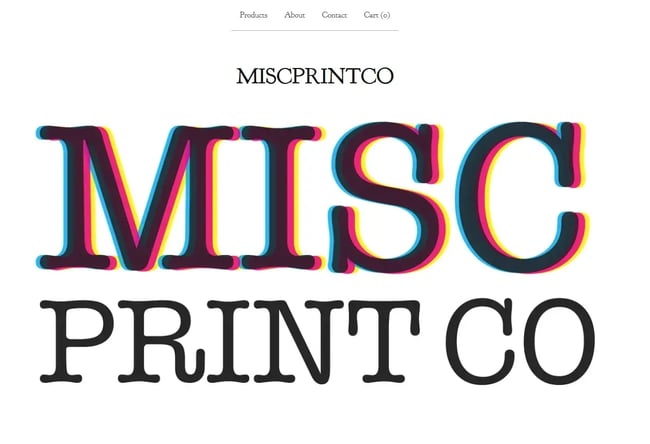
Okay, reader, I am 100% biased on this entry. I think it helps when you know the creative human behind a brand. And I just so happened to live with the driving force of MISCPRINTCO while studying for my degree. and I shared a house with a bunch of other artists, and it was such a fun experience.
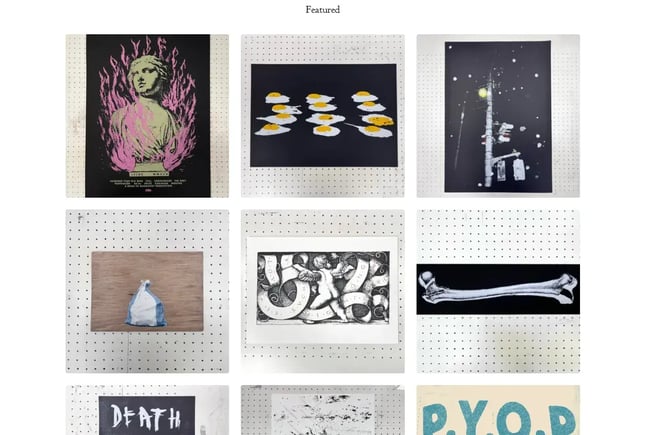
I always enjoyed Fraser’s spin on visual design, and I think it’s worth showcasing here. If I were to explain his work, I’d say it was a strange blend of whimsy and metal (like HEAVY metal) inspired visuals.
As for MISCPRINTCO, they sell their own print designs. But they also do screen printing for other creatives, including artists and musicians. I think the MISCPRINTCO portfolio clearly showcases the complete offer. And the fact that it’s hosted on Big Cartel makes it easy for folks to purchase a pre-printed design if that’s what they’re after.
Why this is a great example of a graphic design portfolio website:
- A lot of the other examples focus on landing commissions, without also selling personal work. But ecommerce considerations have been baked into the cake with this portfolio.
- It shows pictures of physical print designs, rather than just digital ones, which I think adds another dimension to the site.
What I like: This might be a bold and incorrect statement, but I don’t think I’ve seen many other portfolios on this list with an ecommerce element. Even if you don’t get in touch for screen printing services, there is still the option to purchase something before you leave the site. In this market, it helps to diversify income streams like this.
17.
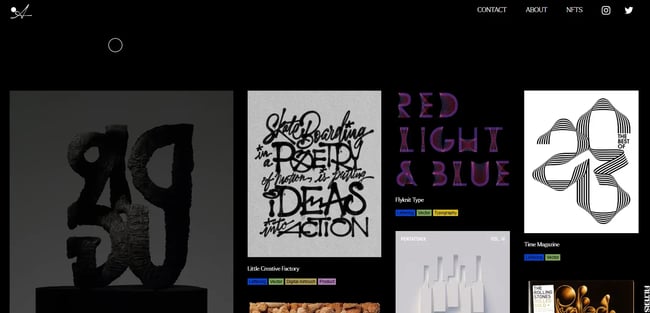
This graphic design portfolio is also a home for Trochut’s product design, animations, music, and NFTs.
It’s a great example for multimedia artists who want to present their work on a single website. It also works for creators with a big collection of work to show.

Why this is a great example of a graphic design portfolio website:
- The four-column layout of this site shows image thumbnails of varying sizes. Each column moves at a different pace as you scroll down the page.
- This motion feels dynamic and exciting, reinforcing this designer’s original takes on color, type, and layout.
What I like: I love the way the cursor has been animated. For context, it’s a colored circle with a circular outline that lags when you move it around. I think the way Trochut has animated their signature is also a unique and hyper-personalized touch. It starts as a single “A,” followed by the “l,” “e,” “x,” etc.
18.
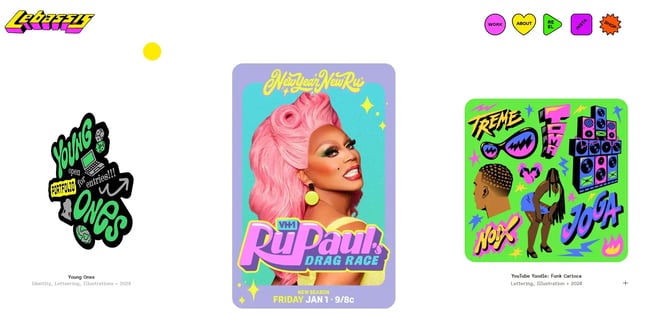
Sometimes a graphic design portfolio isn’t just about a style — it’s about a vibe. This exceptional portfolio comes from designer Leandro Assis.
From brand identity to hand lettering to package design, this portfolio displays a wide range of design skills and original style.
Why this is a great example of a graphic design portfolio website:
- This portfolio is enticing to the eyes. It’s fun, bright, and a little wild.
- What makes this portfolio excellent isn’t just the quality of the work; it’s the experience. Fun icons, engaging UX, and lots of white space make this bold and playful site a pleasure to peruse.
What I like: I love this designer’s bold style. It’s super colorful with an aesthetic straight from the 1990s. I also love that the portfolio design and layout mirror this style, with colorful, shaped icons in the top right and a bright yellow circle cursor.
19.
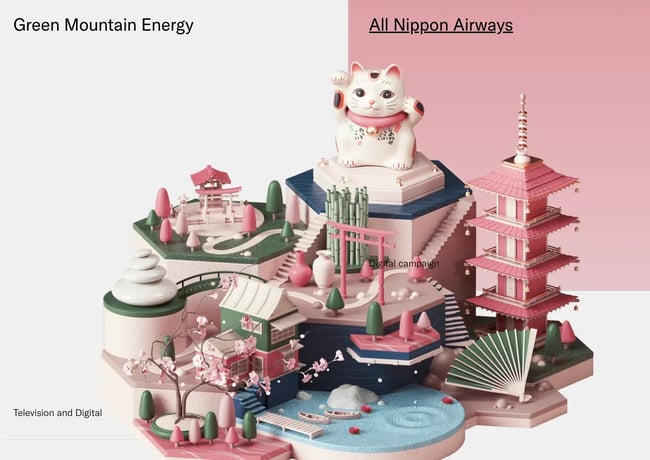
If you’re a self-taught graphic designer, you might have less guidance on where to start with your portfolio website. Look no further for inspiration than the interactive design portfolio for Peter Tarka.
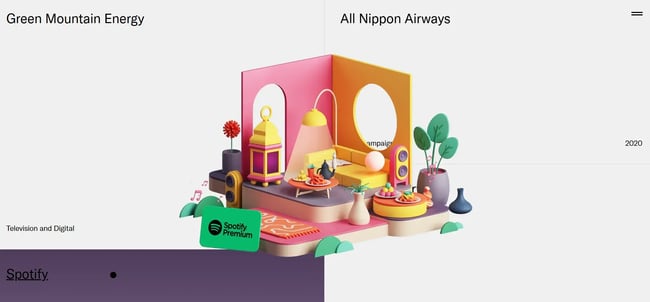
Best known for captivating 3D motion graphics, Tarka started with a love of architecture and vector graphics that has grown into a career working with top brands like Spotify, Google, and LG.
Why this is a great example of a graphic design portfolio website:
- The fewer clicks it takes to show people what you’re doing, the better. This site isn’t just low-click, it’s no-click.
- A simple scroll shows you the work, client, and completion date for 15 exceptional portfolio pieces.
- If you want to see more, a quick click at the top-right brings you to more work samples, links to other portfolio sites, and contact information.
What I like: The projects are laid out in a grid with work for a different brand represented in each section. When you click on each brand, a large sample from that project appears in the centre of the screen.
This unique layout emphasizes that he has worked with big brands and provides an opportunity to showcase each piece of project work. I love that the color of each square in the grid changes when you click on it, and it matches a color from the palettes used in the work sample.
20.
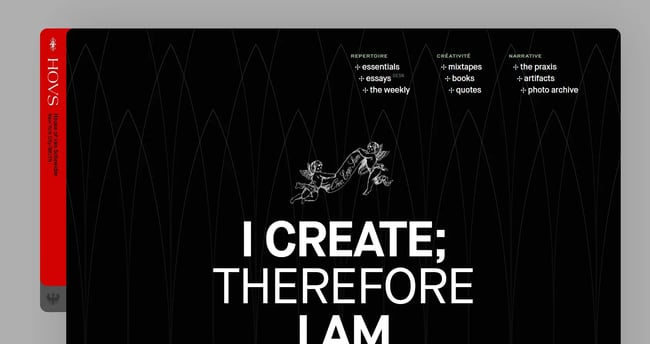
This graphic design portfolio website uses a range of type sizes and contrasts to emphasize the ideas it communicates. This is a great approach for entrepreneurial designers. It’s also smart for anyone who collaborates on their design work.
Why this is a great example of a graphic design portfolio website:
- A sticky header and big blocks of color and text make this graphic designer’s website interesting to explore.
- This site also uses scale well. It combines big images with both big and small text to emphasize each client project.
- There are good interactive elements. The menus at the top right are animated. They drop down when you first land on the website and disappear off-screen to the right as you scroll further down.
What I like: The site has a unique color scheme of grey, red, and black. And when you scroll down, different colors are introduced that match each work project sample. I didn’t expect to go from those initial muted colors to blue and yellow in a few scrolls. It makes the site stay visually interesting as you scroll from top to bottom.
21.
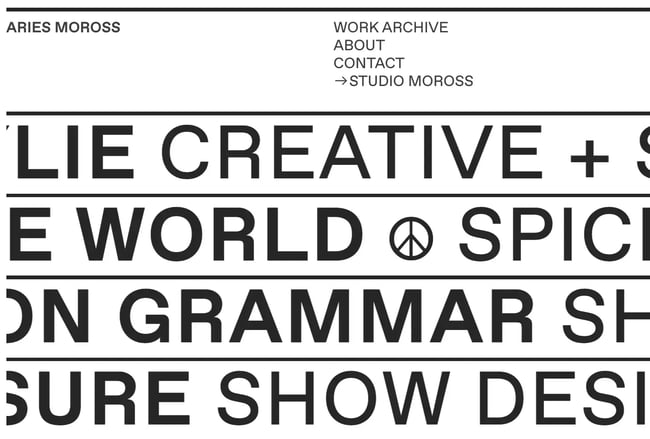
There are many ways to showcase a unique style, and this graphic design website highlights this designer’s recent work and a complete project archive. This is an excellent example for designers who also do illustration.
Why this is a great example of a graphic design portfolio website:
- Moross uses space effectively on this site.
- It’s easy to get an immediate sense of the designer’s distinct style.
- The simple navigation helps users refine their search to target a specific type of work, like hand-drawn fonts or editorial design.
What I like: I like how typography takes up so much of the homepage. It’s also animated and moves to the left, with each line moving at a different speed. It doesn’t show the complete sentences immediately, which actually draws your eye to the words, rather than distracts from them.
For example, I can see “Spice Girls 2019,” which makes me think, “Oh wow, this creative has worked with the Spice Girls.” It then makes me think, “What have they done with the Spice Girls?” Because of this, I kept reading and saw “Art Direction Spice World.” Overall, this is a bold approach that encourages folks to read more, even though the wording isn’t immediately apparent.
22.
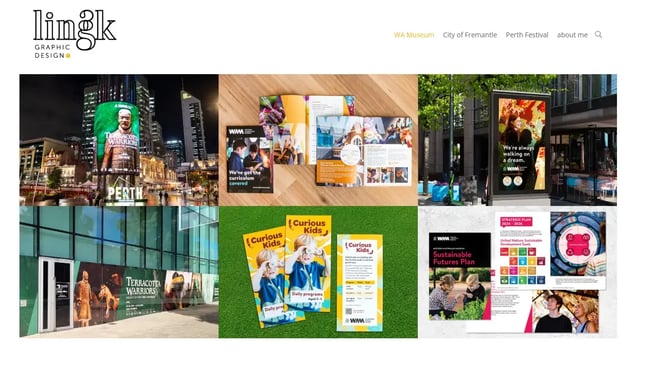
LingK’s portfolio features their latest project and showcases other industry niches. The website’s structure helps prospective clients quickly decide whether they want to work with this designer.
Why this is a great example of a graphic design portfolio website:
- It can be tough to convey how campaign materials for a complex event, like a wedding or conference, work together.
- This designer effectively shows the breadth and depth of work for each project and makes it easy to see the value of each deliverable.
What I like: The site is simple, with few bells and whistles, making it easier to see the designer’s work samples. As soon as I landed on the page, I saw six project examples with clear niches, such as exhibition branding and advertising.
23.
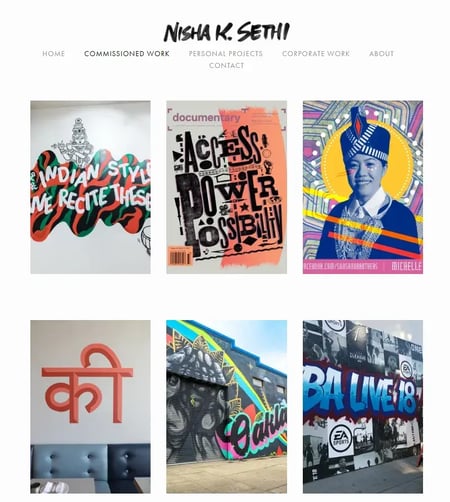
Sethi’s portfolio is simple and straightforward. It puts the spotlight on each design project. The “About” section also tells a clear story that encourages further questions and conversation.
It can be tempting to tell an audience everything on your website. But a great portfolio should offer enough samples to entice clients to reach out and learn more. You don’t want to add so much that it overwhelms. This website is a great example of offering just enough.
Why this is a great example of a graphic design portfolio website:
- This graphic design example combines hand-lettering, printmaking, and other media with digital design.
- While this designer works in a range of media, their portfolio shows a strong voice that is effective across many channels.
What I like: The designer’s work occupies only the middle third of the website. Less is definitely more here, as the extra white space and minimal approach really let the work breathe. This is a brave, creative decision because the work doesn’t take up much space. But this portfolio stands out from the list because of it.
Where to Find Inspiration for Your Design Portfolio
Looking for more design portfolio inspo? Grab the (it’s a free download) for over 70 examples of incredible websites, landing pages, and blogs.
Then, explore this list of successful designers and design studios. They are all great design resources for your personal portfolio website.
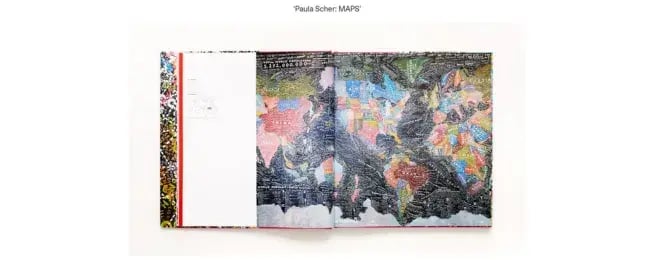
Paula Scher is one of the heavy hitters in graphic design, having shaped brandwork for Microsoft, Adobe, Tiffany & Co., Citibank, and the list goes on and on.
I personally love Scher’s early typography from the 1970s and early 80s. If you look at a snapshot of her work from this time, you can instantly see the Art Deco inspiration. But it also screams “1980s New York.” I love this blend of both historic and contemporary styles. In my opinion, the result is truly timeless art.
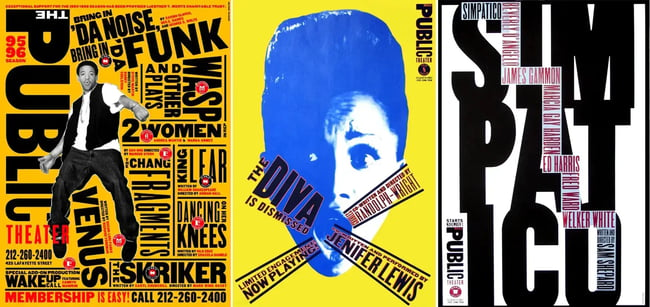
Her work is smart yet accessible, and she likes to inhabit the space between fine art and pop culture. Her ability to make work that is both recognizable and bold has won her hundreds of awards in the industry.
Michael Bierut is a living legend in design. He has worked for such legendary brands as Mastercard, Saks 5th Avenue, The New York Times, and Princeton University.
Aside from his commercial work, Bierut served as a senior critic for graphic design at the Yale School of Art for two decades. He served as President of the American Institute of Graphic Arts (AIGA) from 1988 to 1990 and later won the AIGA Medal in 2006.
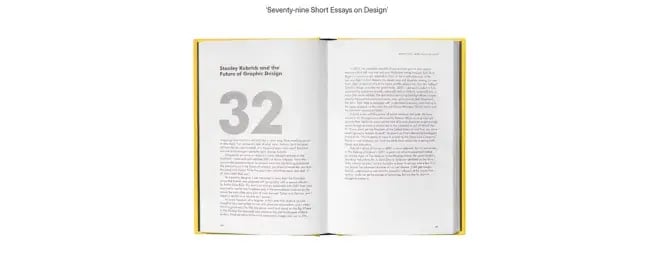
He has also written countless books, including , which personally inspired me during my time at art school. Although the book has no pictures, each essay uses a different typeface. I loved the mystery and the suggestive storytelling created by that design choice.
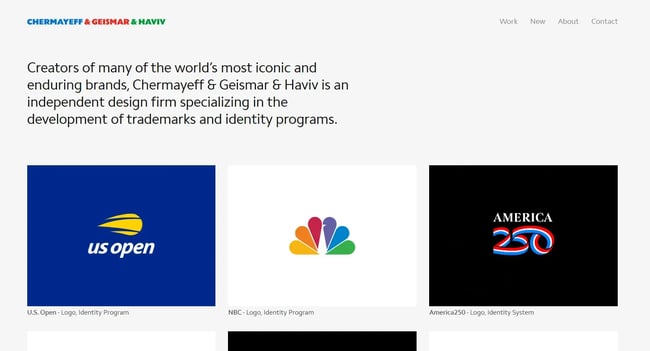
Chermayeff & Geismar & Haviv is a brand design firm that specializes in trademark and identity, with a focus on idea-driven design since 1957.
They’ve created some of the best-known trademarks around the world, such as the Animal Planet elephant, the NBC peacock, the Warner Bros. shield, and National Geographic’s yellow rectangle.
I love how simple the firm’s website is. There are no bells and whistles, just clear examples of exemplary design work, a straightforward explanation of what they do, and an obvious way to contact them.
I think you can afford to take a “Keep It Simple, Stupid” (KISS) approach like this when you’ve worked with such heavy-hitting brands and your reputation is so established in the industry.
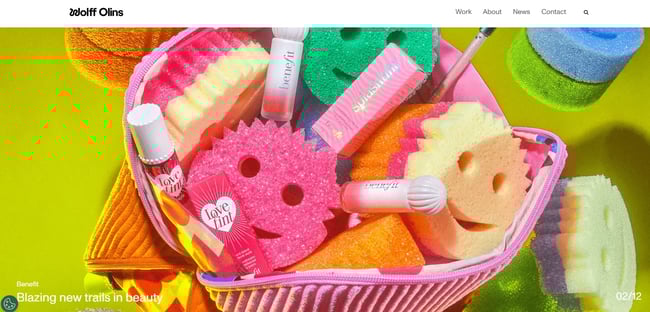
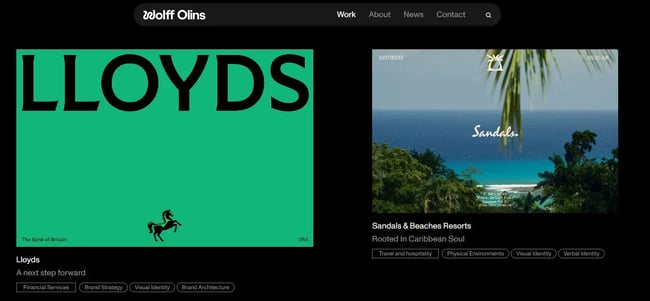
Wolff Olins is a global brand consultancy that has snagged the attention of several contemporary brands and delivered world-class branding.
Their clients include the growing social media giant TikTok as well as Uber, Instacart, and The Met. They are passionate about doing their best work, driving impact, and making a positive change in the world with their clients.
I am a fan of their portfolio because as soon as you land on the homepage, the brand consultancy’s best work is there, and it takes up SPACE… pretty much the entire screen to be exact.
The cursor also flits between “Prev” and “Next” depending on whether it’s at the left or right-hand side of the screen. So you can click through Wolff Olins’ modern branding masterpieces for Benefit, Lloyds, Patreon, and more.
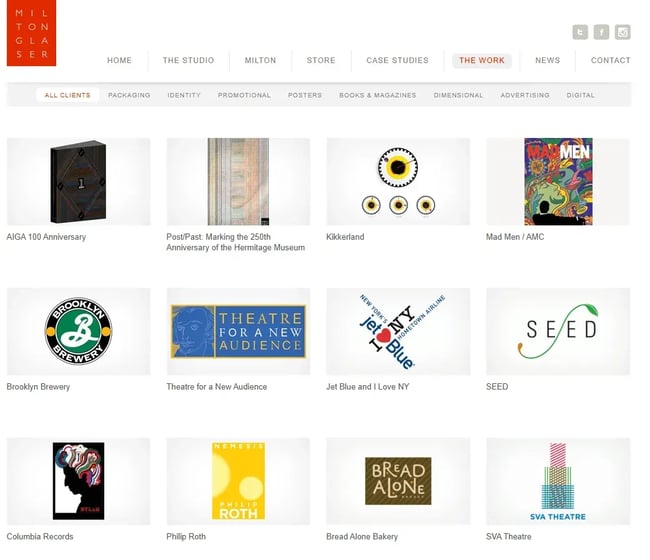
Milton Glaser is the powerhouse mind behind the typeface of New York Magazine and the perennial “I (Heart) NY” campaign. Milton Glaser Inc. more recently contributed key artwork for the final season of Mad Men.
Since the 1970s, Glaser and his visionary crew have designed and illustrated over 300 posters for clients ranging from publishing to commercial products to civil enterprise.
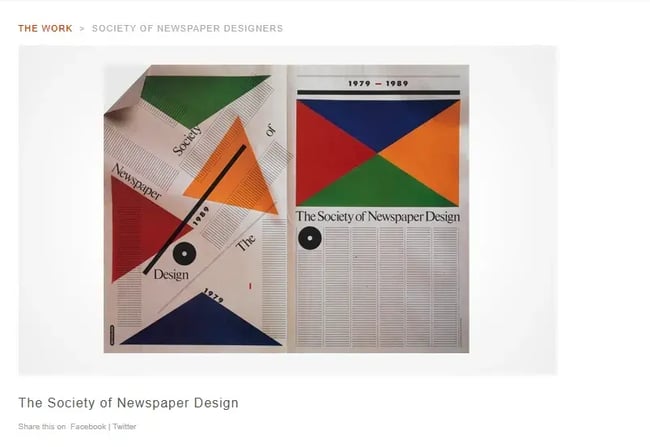
I love how Milton Glaser has laid out their online portfolio. It feels like a high-end gallery space, and I promise, if you click on any of the projects in this grid, you will leave inspired.
As for me? Glaser’s work for The Society of Newspaper Design featured above really gets my design creative juices flowing. It reminds me of Wassily Kandinsky’s work mixed with the boldness of Piet Mondrian.
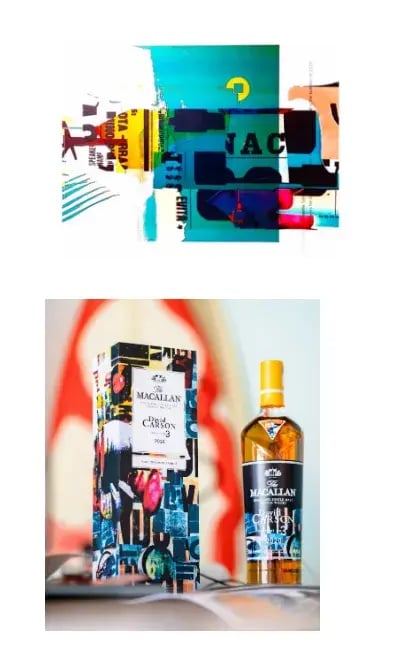
David Carson is known for taking the rules and scattering them to the winds in pursuit of great design from the standpoint of, “Why not?”
In 2014, he was awarded the AIGA gold medal and has an innovative approach to using typography as the art itself, rather than just writing.
He draws inspiration from urban art forms such as graffiti and rap and has worked with a seemingly endless array of clients, from American Airlines to MTV and Prince to Xerox.
I love his combination of collage, lettering, and bright colors. They give his work a street-art aesthetic that looks free-flowing yet polished at once. Trust me, this style is hard to master. It’s the equivalent of styling bedhead. It’s hard to make something look so effortless and fluid yet well put together.
How to Make a Graphic Design Portfolio
- Curate your best work and show a wide breadth of skill.
- Choose the right platform to showcase your work.
- Include a professional case study or client recommendations.
- Integrate your personality.
- Describe the creative process.
- Show non-client work or side projects.
- Show that you can work to a brief.
1. Curate your best work and show a wide breadth of skill.
, a HubSpot product designer, emphasizes the importance of quality over quantity when curating a graphic design portfolio.
She says, “I recommend selecting your strongest projects and making these the primary focus of your portfolio website.”
Ideally, your portfolio will feature your sharpest, most impressive 10-20 designs — undoubtedly, someone pursuing your portfolio won’t have the time to look at more, and if your first couple of projects are impressive enough, they shouldn’t need to.
But it’s equally critical you show potential clients your versatility. If you’ve dabbled in logo design as well as video animation, it’s good to include both kinds of projects in your portfolio.
From experience, this makes it easier to upsell to existing clients. For example, I was hired by one client to create a logo. Because I’d made my range clear from the start, before I knew it, I was designing pull-up banners, leaflets, and social media graphics for them, too.
2. Choose the right platform to showcase your work.
Investing in a quality website with a custom domain URL will pay off in the long run by demonstrating your professionalism to potential clients.
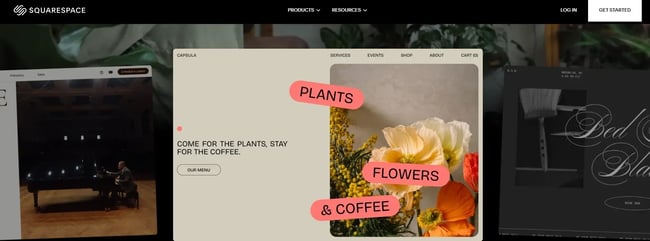
Having your own website helps you organize your portfolio to suit all your business needs — for instance, perhaps you’ll include Projects, About Me, and Contact sections so visitors can peruse your content and then contact you without ever leaving the site.
Take a look at this if you need help choosing a platform for your portfolio.
3. Include a professional case study or client recommendations.
Lindsay Burke told me it’s incredibly valuable to write out a case study to complement any website visuals.
She says, “Through a written case study, your site visitors can get a sense of your project’s background, the problem you were aiming to solve through design, and the process you took to arrive at a final deliverable.”
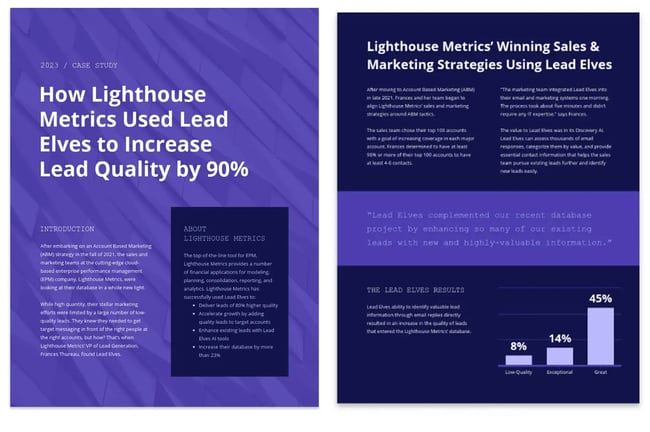
To build a strong case study, consider including the project background, the problem, the process, your deliverable, and any next steps.
In the process section of your case study, Burke suggests including research, experience mapping, persona development, wire-framing, sketching, usability testing, and iteration.
Plus, it will impress future clients if you can include recommendations from previous ones. It allows you to demonstrate professionalism. But more than that, there is no substitute for social proof. I display case studies and reviews as much as possible wherever I have online real estate, and that approach has always kept me busy with work.
4. Integrate your personality.
As you can see in the examples above, each portfolio is drastically different, reflecting the artist’s unique style. Someone checking out Tobias van Schneider’s portfolio will expect something vastly different from someone looking at LingK’s site.
Make sure your portfolio — including layout, background, and website title — reflects who you are as a designer.
I know it’s not exactly the same, but my is kinda wild. I love going there to share stupid jokes, memes, and goof around. In short, I don’t use it as a corporate platform in the way others might. But guess what? I also have people who want to work with me who found me because I made them laugh on LinkedIn.
Disclaimer: I can also back this approach up with a lot of positive reviews and strong samples of my work. As with many things in life, striking that balance between PIZAZZ, AKA personality, and substance is key.
5. Describe the creative process.
Each designer has a unique process when working with clients — and the sooner a potential client can learn about your process, the better.
It’s important you include context, so visitors can get a sense of how you handle challenges and how your designs solve real-world problems. Plus, including a description of your creative process can help a potential client figure out whether you’re capable of handling the scope of their project.
For instance, they might be unsure of your ability to handle graphic designs for mobile until they read how you single-handedly brainstormed and created the designs for another client’s mobile site. In this case, context is critical.
I’ve seen designers describe the creative process against individual projects on their websites, which I think works well. But you could also do a “here’s my general approach to design work” overview on the homepage, too.
6. Show non-client work or side projects.
, a former HubSpot designer, says, “Side projects are a great way to demonstrate your will to take initiative and your ability to balance multiple things at once. They’re also a great way to show some of the more experimental, creative ideas that you might not be able to show through your day-to-day work.”
If you’re just starting out, it’s acceptable to include side projects or non-client work so potential customers can get a sense of your ability and style.
I did this while building my portfolio during the last year of my illustration degree. I didn’t have official client work per se, but I had worked on different projects at art school. I’d designed book covers, illustrated books, and created posters, for example. I’d also entered prominent industry competitions. Each of those projects had specific requirements.
7. Show that you can work to a brief.
Building on the above point, if you’re just starting, aside from showcasing your style, I think one of the most important things is to show that you can work to a set brief. Side projects and working to a brief set by someone else are two different animals. A brief means you have had to work to someone else’s expectations and needs, rather than scratching your own creative itch.
Whichever route you take, your designs should address any concerns potential clients may have about your lack of career experience.
Graphic Design Portfolio Ideas
- Help a local business or startup with its design and brand.
- Create content for your own personal brand.
- Redesign an existing website.
- Create graphic design materials for a made-up company.
- Design a logo for a brand you love.
- Create a stock theme for WordPress.
- Take part in a design challenge.
1. Help a local business or startup with its design and brand.
One of the easiest ways to begin building your client base is by contacting nonprofits or local businesses in your area. Perhaps you think a local restaurant needs a new menu logo, or you want to help a gift shop with its online marketing materials.
Projects like these will help you better understand local marketing challenges and give you time to develop your skills in those areas. You never know what a pro-bono project could lead to next.
2. Create content for your own personal brand.
As you build personal brand content, take the time to make sure your marketing materials are cohesive and sleek.
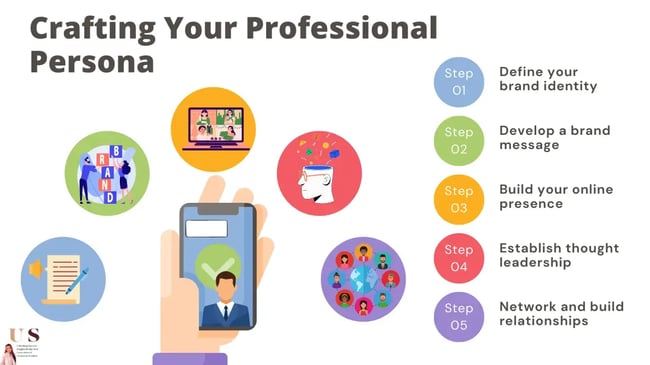
Design a unique logo for your brand. Next, start building your website, and add that same design across various materials, including your business card and resume.
This is also a great time to start a branded social media account and to create posts that show off your design skills and interests.
Clients are more likely to work with you if they can see the type of high-quality work you’re able to create for yourself.
3. Redesign an existing website.
Don’t wait for your dream client to give you a call. Instead, create a complete website redesign for a well-known brand to prove your skills to future clients. This is a well-known strategy already used by plenty of designers — just take a look at some of the impressive Behance mock-ups for brands like .
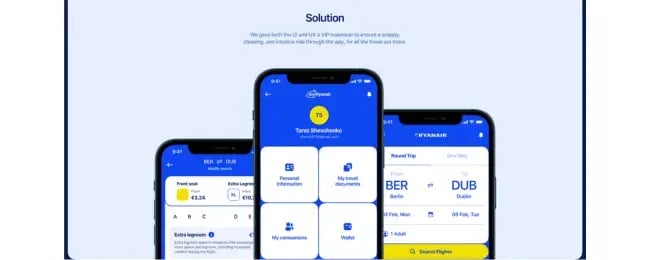
When I spoke to Amanda Chong about this tactic, she told me, “If you’re creating mockups for established brands to use as part of your portfolio, it’s important to pair this with a case study or description of the process that helped you arrive at your proposed design.
“Mockups are great at showing your visual design skills, but don’t necessarily demonstrate your ability to work in a real-world context, so you’ll want to take the time to explain how you would have approached it in a true business setting.”
4. Create graphic design materials for a made-up company.
If your designs are impressive enough, potential clients won’t care that you created them for a fictitious company. In fact, you could impress them with your innovation and creativity.
Consider showing your skills by putting together a creative brief for a fake company, complete with wireframes and sketches. for imaginary companies include:
- Branding
- Style guides
- Posters
- Billboards
- Social media ads
- Apparel graphics
- Wrapping paper
- Brochures and email newsletters
- Simple GIFs
- Animated infographics
- Trade show booths
- Branded wall art
- Pitch decks
- Book covers
- Packaging
In due time, real companies will take notice.
5. Design a logo for a brand you love.
Stick to the type of content you enjoy designing. If you’re particularly adept at making logos and are often inspired by the logos used by real brands, consider designing an alternative logo for a brand you like.
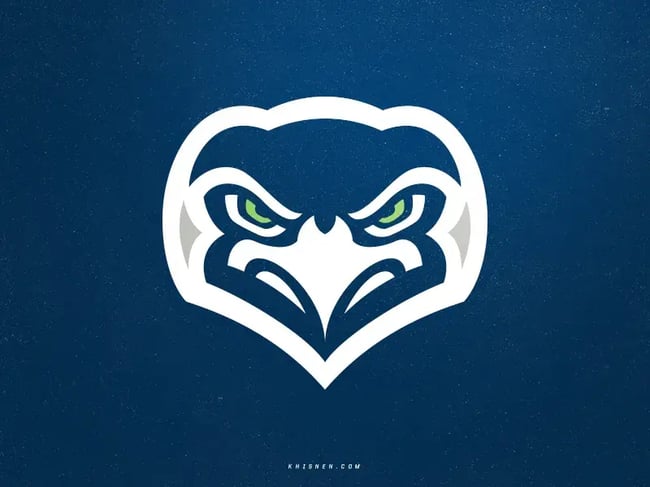
For example, take a look at these inspiring . While these NFL teams probably won’t make the shift, they’re great examples of the designers’ skills and creativity.
6. Create a stock theme for WordPress.
WordPress, a popular content management system, allows users to develop stock themes. Best of all, if your theme is approved, you can sell it as a premium theme for extra cash.
Begin by studying WordPress’s most popular themes, and consider how you can create an impressive alternative. Take a look at and this overview of how to create a child theme to learn more.
7. Take part in a design challenge.
To get inspired, practice your skills, interact with other designers in a community, and build your portfolio at the same time, or think about participating in a design challenge.
Design challenges can also help you uncover skills you didn’t know you had by forcing you to step outside your design comfort zone.
There are various daily, weekly, or monthly challenges that will send you prompts on things to design — for instance, try checking out the or .
Graphic Design Portfolio Tips
You’ve done the work, and now you’re pulling together your graphic design portfolio. Try these tips to make your graphic design portfolio stand out.
1. Make it clean and easy to navigate.
Design is about more than visual skills: It’s about communicating. So, the format of your portfolio — whether it’s printed or online — should be clear and simple to scan.
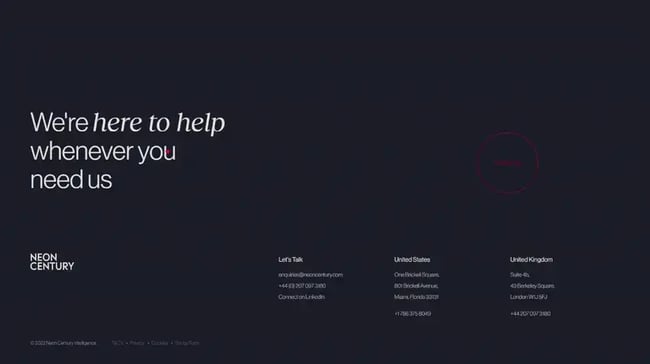
This point is especially important for graphic designer websites. It can be tempting to build a website that shows off the latest trends or to add Easter eggs that people need to hunt for. There’s a fine line between art and design, and those approaches can be super inspiring. But building a complex site can also mean that clients in a hurry could miss some of your best work.
For example, a graphic designer once sent his portfolio to a creative director friend of mine. Although the director liked the designer’s drawings, they couldn’t find the graphic design or web work mentioned in the resume.
With a little digging, they found a URL in one of the sketchbook drawings that led to the designer’s website.
This hide-and-seek process made it clear that the website was not easy to navigate, potentially causing the designer to miss out on an opportunity.
The same idea applies to the website’s design itself. Don’t go overboard to make your website unique — that may only confuse potential clients. Stick to web design conventions. These are standardized design practices that users are accustomed to and expect to see when visiting new websites.
Some examples include the usual horizontal navigation bar at the top portion of the screen, or having your logo on the top-left corner, which also doubles as a back button.
Hiding all your navigation menu items behind a hamburger icon on desktops, for instance, will throw users off and likely make them miss important details about your work. At the same time, too many menu items packed in mobile viewports will make your site a pain to navigate.
In other words, your website must be easy to use for both mobile and desktop visitors. Site builders like HubSpot’s drag-and-drop help you with just that — you can edit and preview your site's mobile and desktop versions to make sure your layouts are as user-friendly as possible before launch.
2. Display your unique personality.
Following web design conventions doesn’t mean you have to create a generic website, though. There are thousands of successful graphic designers out there, and you might be competing against some of them for your next client.
There are loads of other ways to make your portfolio really stand out. So, the best tip for a great one is to be yourself.
Whether you have a feel for typography, are talented with color, or have a way with words, show off the way that you see the world in your graphic design portfolio.
Think about every detail, and then execute to the best of your ability. Whether it’s the first version of your portfolio or the 200th, make it feel like something only you could create.
Just remember: Find the sweet spot between function and aesthetics.
3. Show your versatility.
A portfolio should show a range of different works, so you want to highlight what you can do. Some clients prefer a more streamlined look, while others are looking for more experimentation.
If you have clients from different industries, include some work from each industry. Then, edit your portfolio based on the kind of client you’re showing your portfolio to. For example, if you’re meeting with a client in real estate, show work samples from similar industries.
You’ll also want to show anyone who sees your portfolio what you can do. So, if you design logos, books, and motion graphics, include a little bit of everything in your portfolio.
4. Display your best work.
That said, try to limit your portfolio to your best work. Don’t include a piece in your portfolio just to show that you can do it.
The way that you edit your portfolio shows that you understand your strengths and know how to play them up. So, edit your portfolio to include only your best work.
If you’re great with one skill set but not as good with another, edit your portfolio to spotlight that skill. If possible, create portfolio pieces that show many skill sets at the same time.
For example, if you love hand lettering, a poster could emphasize your graphic design skills alongside this unique ability.
5. Include case studies.
I can’t say it enough: Include case studies. They tell the illuminating story of how you get your clients to their goals: their ideas, your ideas, your suggestions, and why, the compromises that worked, and how you completed the work.
Every client is unique and will teach you something new, so as you continue to work with different clients, build up a collection of these stories.
In other words, they lay out in plain view what goes on in your big, beautiful brain to future clients.
Learn from my mistakes, and try not to throw anything away without documenting it. That page of thumbnails might not be much to look at on its own, but this kind of work in progress is a great way to show prospective clients how you solve problems.
When you present case studies in your portfolio, start with the initial problem your client approached you with. Next, show what the conversation and ideation process looked like over time.
As you pull your case study together, don’t forget to include the solution you delivered.
6. Prominently display contact information.
If someone wants to talk to you, there are many places they can find you online.
But you want to make it easy for them. You don’t want to miss an important meeting because a client reached out to you with an email you don’t check anymore.
Most graphic designer websites have a contact page that has your contact information. Once you add this to your site, be sure to check that the links and forms are working.
The best graphic design portfolios are never finished.
Hopefully, you now understand why creating a graphic design portfolio matters (hint: It showcases your style and preferred niches and makes it easy for clients to work with you). That said, even if you know the value of a graphic design portfolio, getting started is another matter.
That’s why I shared 23 of my favorite online graphic design portfolios. I think each one has something unique about it that will get you thinking outside of the box, while possessing timeless elements that never go out of style. I sincerely hope these examples inspire you to get started building your portfolio as much as they inspire me!
If your creative juices are flowing, and you’re raring to go, you can follow the steps and tips outlined above to build on the graphic design work you’ve already completed.
Editor's note: This post was originally published in March 2019 and has been updated for comprehensiveness.
150+ Free Content Creation Templates
Access ebook, blog post, CTA, case study, and more content templates.
- Ebook Templates
- CTA Templates
- Blog Post Templates
- And more!
Download Free
All fields are required.
Form not available
You're all set!
Click this link to access this resource at any time.
Graphic Design

![How to create an infographic in PowerPoint [free templates]](https://53.fs1.hubspotusercontent-na1.net/hubfs/53/infographic-1-20260211-9183559.webp)
![AI in Graphic Design: The Pros, Cons and What it Means for Designers [+ Expert Insight]](https://53.fs1.hubspotusercontent-na1.net/hubfs/53/Untitled%20design%20-%202024-10-15T175328.927.jpg)
![How to create an infographic in under an hour [+ free templates]](https://53.fs1.hubspotusercontent-na1.net/hubfs/53/create-infographic-fast-1-20251029-7083334.webp)



![How to Create an Infographic Using Poll & Survey Data [Infographic]](https://53.fs1.hubspotusercontent-na1.net/hubfs/53/00-Blog_Thinkstock_Images/Survey_Data_Infographic.jpg)