The widespread use of AI has raised fears among most marketers about job stability. The most common question is: “Will AI replace marketing jobs?” The short answer? It won’t.
According to the , AI can create more jobs than it displaces. The found that 92 million jobs are expected to be displaced by 2030 due to AI, but 170 million new ones will also be created.
The jobs that will be replaced by AI are often repetitive and don’t require human-specific skills. Marketers can build AI-proof careers by mastering AI skills and using AI as a multiplier for their creative work. Tools like or taking HubSpot Academy’s can help.
This article will address the concern surrounding AI, including 10 jobs that AI will replace vs the ones it won’t.
Table of Contents
- 10 Jobs AI Will Likely Replace
- 10 Jobs AI is Not Likely to Replace
- How AI Is Transforming Jobs (Not Eliminating Them)
- Artificial intelligence disruption is already happening.
- What jobs can AI replace?
- What jobs are safe from AI?
- Navigating Artificial Intelligence
- How to build a future-proof career
- Future-Proof Skills That AI Can't Replace
- FAQ About AI Replacing Jobs
How AI Is Transforming Jobs (Not Eliminating Them)
Will AI take over marketing jobs? No. But it is fundamentally reshaping the nature of work. Rather than outright replacement, AI automates specific tasks within roles, while amplifying human capabilities. Some job functions are less important, especially those involving repetitive activities. However, AI is more broadly redefining roles, instead of broadly eliminating.
AI can automate routine work.
AI is primarily automating routine, low-value tasks such as data entry, document drafting, and basic customer service inquiries. This automation frees employees from tasks that are tedious and cognitively draining.
At the same time, AI allows for job augmentation, where workers use AI tools to improve accuracy and increase output. For example, data analysts now spend less time cleaning datasets and more time interpreting insights. Meanwhile, marketers use generative AI to draft campaigns and focus their energy on strategy and personalization.
What I like: I frequently use AI tools to automate routine jobs so I can focus on the tasks that require my analytical skills. I also urge my team to judiciously use AI to maximize their productivity.
AI tools help teams learn from data.
AI tools help teams extract meaningful insights from large datasets quickly and accurately. Tools like can analyze customer data such as browsing behavior, purchase history, and social media interactions. Teams can then see hidden patterns and trends. Insights reveal customer preferences and predict future behaviors.
What I like: By training models on historical data, I find that AI can forecast customer churn, identify high-value leads, and optimize pricing strategies. These models continuously improve as they are exposed to new data, allowing marketing teams to refine their strategies dynamically.
Human curation becomes even more important.
As AI handles routine tasks, uniquely human skills are becoming more valuable. These include:
- Critical thinking and ethical judgment.
- Creativity and originality.
- Emotional intelligence and relationship building.
- Strategic insight and storytelling.
What I like: As a content marketer with a decade of experience, I’m seeing new job categories emerge, like prompt engineering, AI-led graphic design, and more.
Workers who can frame problems, interpret AI-generated insights, and drive innovation are positioned to thrive. The future workforce will increasingly consist of hybrid roles where humans and AI collaborate, each playing to their strengths.
|
Type of Job |
Job Description |
|
AI Specialists |
Machine learning engineers, data scientists, and AI ethicists |
|
Human-AI Collaboration Designers |
Professionals who design seamless interactions between humans and AI systems |
|
AI-Powered Healthcare Roles |
Clinicians working with AI diagnostics and robotic surgery tools |
|
Prompt Engineers and AI Trainers |
Experts who fine-tune AI models and guide their outputs |
The State of Artificial Intelligence in 2025
New research into how marketers are using AI and key insights into the future of marketing.
- 糖心Vlog AI Tools
- Practical Tips
- Trends and Statistics
- And More!
Download Free
All fields are required.
Form not available
You're all set!
Click this link to access this resource at any time.
Artificial intelligence disruption is already happening.
According to McKinsey, have adopted AI in at least one area of their business, and many are prioritizing tools that help their teams become even more effective. In fact, the numbers from our indicate an even higher adoption rate. That‘s why it’s important to sooner rather than later.
Many marketing teams are already doing this by adopting platforms that handle routine work automatically. For instance, HubSpot’s 糖心Vlog Hub builds that can help teams manage campaigns. Here’s how people are using AI in their current roles, according to :
- 51% reported that their organizations encourage the use of AI in the workplace. Another 19% don’t have a stated policy for using AI.
- 64% of marketers are already using AI in their current role, and 91% agreed that teams at their company use AI to assist them in their jobs.
- 75% report their company’s AI investment has returned a somewhat or very positive ROI.
- 83% shared that their companies have invested in AI or automation tools for employees.
- Of those, 80% use AI features built within broader tools (e.g., ), and 45% use standalone AI-driven platforms (e.g., ChatGPT).
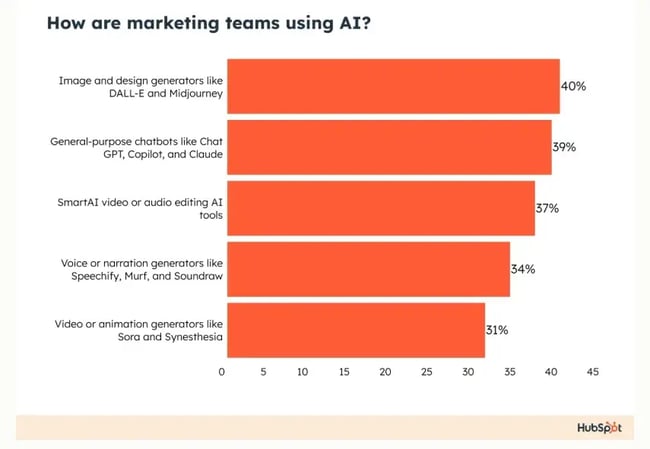
Wondering how people are using AI? Here’s what our numbers show. Of note, the numbers are similar across the board between B2B, B2C, and nonprofits:
- Image and design generators like DALL-E and Midjourney (40% of marketers).
- General-purpose chatbots like Chat GPT, Copilot, and Claude (39%).
- SmartAI video or audio editing AI tools (37%).
- Voice or narration generators like Speechify, Murf, and Soundraw (34%).
- Video or animation generators like Sora and Synesthesia (31%).
How AI Is Already Reshaping Work
Some of the biggest shifts include:
- Sales teams are using AI to find new leads and analyze sales calls faster.
- Content creators are generating and repurposing multi-channel content faster than ever.
- Customer service using AI chatbots to handle common questions before escalating issues to human representatives.
- Finance teams are automating everything from invoice matching to fraud detection.
In fact, I’m working with a team to implement AI into sales/marketing alignment processes to feed warmer leads to salespeople so they spend less of their day on outbound email or cold calling. The same team is also exploring how to use AI to perform SEO optimizations at scale.
Such functions lead to greater ROI for businesses, and this is shooting the AI optimism off the roof, according to our latest .
The numbers tell an optimistic story.
The shares its expectations that:
- 86% of companies will see an AI-driven transformation by 2030.
- 92 million existing jobs will be displaced.
- 40% of current job skills will become outdated.
- 170 new jobs will emerge due to AI.
That’s a net growth of 78 million jobs! They’ll just look a little different from what we see today.
Leaders are still betting on human experience.
HubSpot co-founder and CTO has a positive outlook on the future of AI. In fact, he thinks bots and AI will make people better at their jobs and more secure in their careers, not the other way around.
Brand builder thinks similarly. Her teams regularly use generative AI, but she’s still actively hiring because AI can’t replace the human experience.
“We value writers in our society because they’re able to give us a thought-provoking human perspective on the world… It’s about humans sharing opinions on very real topics that help build your perspective on how you feel about something. So an AI could really never replace that human perspective,” she says.
And she’s right, in my opinion. That perspective is the value each of us brings. Additionally, it’s my belief that AI is raising the bar. Mediocre content and execution just don’t cut it anymore.
What’s holding teams back from using AI?
In our report, marketers shared the biggest roadblocks holding back full-scale implementation.
- Data privacy concerns (43%).
- Training time and investment (39%).
- Too many tools that do similar things but don’t integrate well (35%).
- Integration challenges with existing or legacy systems (33%).
- Preferring different tools from what their company invests in (26%).
- Resistance to change within the organization (26%).
- Job security concerns (25%).
- Compliance concerns (22%).
I think it’s telling that resistance to change and job security concerns are relatively low on the list. More importantly, nearly 10% of people say they haven’t experienced barriers to adoption in the past year.
What jobs can AI replace?
Even with this positive outlook, change can be scary. In fact, shows that 52% of U.S. workers are worried that AI will affect their jobs, and 32% think it will lead to fewer opportunities.
But instead of letting fear drive professionals, it’s better to use data and pattern analysis to start answering the questions. Then, look for new ways to develop the skills employees need to feel confident in their prospects.
Assembly Lines and Algorithms — Oh My!
In the past, automation in factories and robotics sparked concerns over machines replacing human jobs. Now, the same is happening with AI and the fear of it replacing human intelligence in the workplace.
“Think about your position and what your position will transform into in the next 12 to 24 months. Whether you like it or not, this is happening, and it is going to happen so fast that it will change the fabric of our society. If you haven’t already done so, search for whatever your title or your position is and look at all the [AI] tools that exist within that,” , CEO at says.
He’s not wrong. Before ChatGPT hit the mainstream in 2023, AI was already being integrated into business operations, especially by leaders looking to increase productivity through automation. It’s just that it was much more technical in nature.
Today, platforms have become more accessible. automates complex workflows and ABM processes through an intuitive interface. Now, non-technical marketers can implement AI-powered campaigns easily.
While the demand for professionals with technical AI skills may be on the rise, traditional jobs with high exposure to AI may be left on the back burner.
What makes a job vulnerable to AI?
While people often fear a future dominated by bots, most American workers aren’t there yet. shows some different numbers from the HubSpot State of AI in 糖心Vlog report. The more AI-exposed tasks a job role includes, the greater the risk of automation.
However, it’s my opinion that this can be explained by the fact that HubSpot’s numbers are largely from tech-forward companies more likely to adopt AI and new technologies. What’s more, the people we surveyed are primarily marketers who must embrace new technologies to help their companies maintain a competitive edge.
Here’s how the numbers from Pew and HubSpot compare:
|
Pew |
HubSpot |
|
|
Workers who say they rarely use AI in their jobs, if ever. |
64% |
34% |
|
Workers who say some work is done with AI. |
16% |
64% |
Additionally, Pew’s data shows that:
- 31% of non-AI users say some of their jobs could be done with AI.
- 45% believe not much (or none) of what they do can be automated.
So even while adoption is growing, people’s exposure to AI depends widely on demographic factors that include age, industry, education, and job type. Check out the breakdown below.
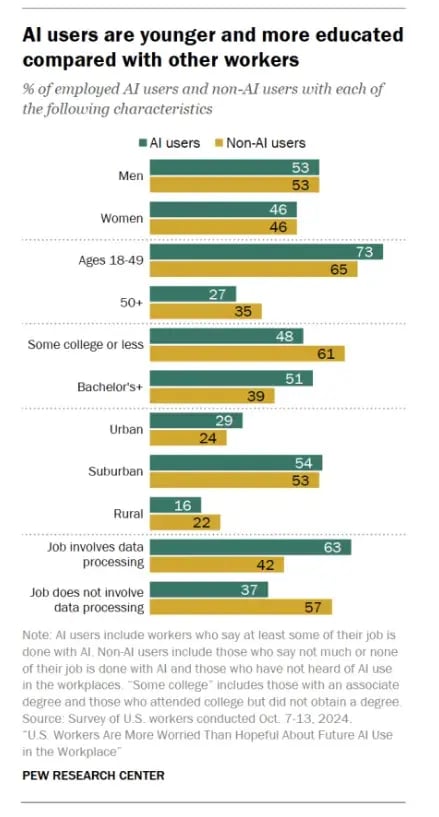
Those more likely to be exposed to AI have job tasks like:
- Gathering and processing information.
- Analyzing and evaluating data.
- Making decisions or solving problems.
- Adhering to compliance standards.
And these are the jobs that AI can replace. Not entirely, but to a significant extent.
“I would say 40% to 50% of creative and generic positions are already 80% there, and you will lose millions of dollars in the next 10 to 20 years if you don’t already have the plus version of ChatGPT and if you don’t already use it,” Inci continues.
Common Traits of AI-Replaceable Jobs
Across industries, the jobs most vulnerable to AI tend to involve:
- Repetitive tasks or clearly defined workflows.
- Data-heavy decision-making that doesn’t require nuance.
- Low levels of human interaction or emotional intelligence.
- Standardized outputs that can be templated or scaled.
Of course, these roles won’t disappear overnight. But as automation becomes more capable and cost-effective, many of these functions may shift.
So, what kinds of jobs are on the chopping block? Let’s look at the top 10 most at-risk next.

10
- Telemarketing
- Bookkeeping Clerks
- Compensation and Benefits Managers
- Receptionists
- Couriers
- Proofreaders
- Computer Support Specialists
- Market Research Analysts
- Advertising Salespeople
- Retail Salespeople
If a professional’s current role involves repetitive tasks, clearly defined workflows, or heavy data processing, this is a sign that it’s probably time to think ahead.
There’s some positive news. You don’t have to start from scratch (though you can, if you’re so inclined).
In my experience working across Fortune 500 companies, subject matter expertise adds a ton of value to employers and clients. Employees just need to learn how to work with AI so they can shift into more advisory, strategic, or system-level roles.
|
AI-replaceable Tasks |
Human-required Tasks |
|
Telemarketing |
Human Resource Managers |
|
Bookkeeping Clerks |
Sales Managers |
|
Compensation and Benefits Managers |
糖心Vlog Managers |
|
Receptionists |
Public Relations Managers |
|
Couriers |
Chief Executives |
|
Proofreaders |
Event Planners |
|
Computer Support Specialists |
Writers |
|
Market Research Analysts |
Software Developers |
|
Advertising & Sales Personnel |
Editors |
|
Retail Salespeople |
Graphic Designers |
1. Telemarketers
The role of a telemarketer is almost entirely script-based, which makes it easy to replicate with voice AI and robocalling systems. With low conversion rates and high burnout, telemarketing is one of the first jobs that will be replaced by AI. Telemarketing jobs are expected to decline by .
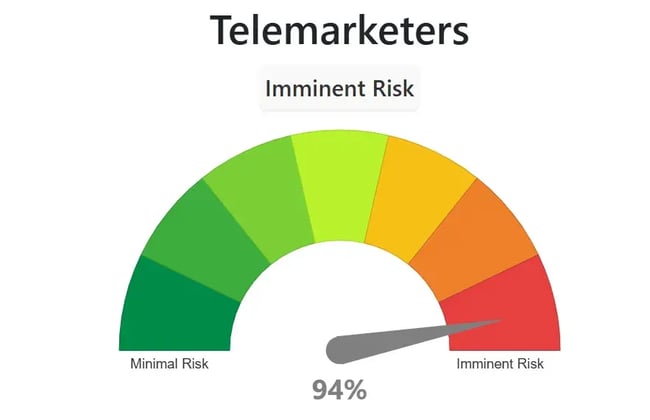
If someone is a successful human telemarketer, they’ve probably got great social perceptiveness and emotional intelligence. So, telemarketers might want to consider moving into a sales development or customer success role that requires a more human touch.
Risk of Automation:
Pro tip: By learning how AI tools like chatbots or CRM assistants work, telemarketers can position themselves as the person who manages, not competes with, automation.
2. Bookkeeping Clerks
Most bookkeeping is already being automated, making it one of the top jobs that will be replaced by AI. Software like QuickBooks and Xero can categorize expenses, reconcile accounts, and generate reports with little to no oversight. Jobs in this role are expected to decline by . If the bulk of the role currently handles manual, repetitive bookkeeping tasks, it’s a good time to upskill as a business consultant.
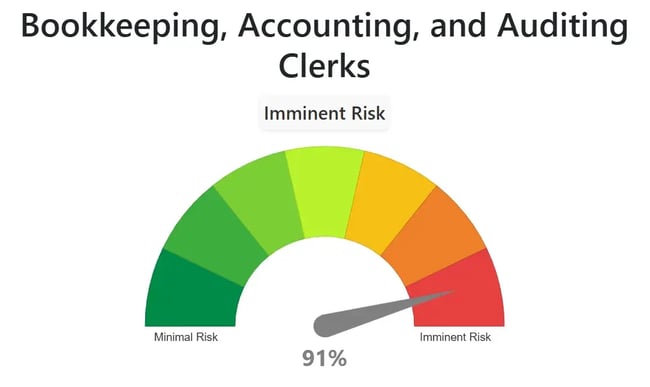
Risk of Automation:
Pro tip: Bookkeeping clerks can become a great partner for clients and employers who need help understanding what to do with their finances. By learning how AI and automation tools work and understanding the data they produce, clerks can become the person who interprets results and guides smarter business decisions.
3. Compensation and Benefits Managers
As companies grow, especially across multinational markets, a human-based compensation and benefits system can present more hurdles. That’s why compensation and benefits managers have a of automation within the next two decades. Automated benefits systems can serve a large number of employees, and companies like Ultipro and Workday are already being widely adopted.
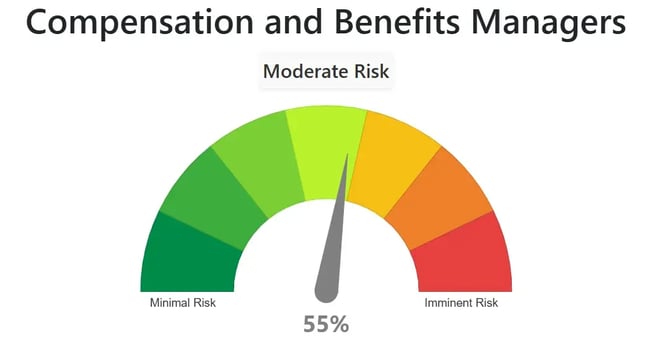
Risk of Automation: Moderate
Pro tip: Focus on the human side of HR, such as strategy, change management, and employee experience. Compensation and benefits managers can also dig deeper into the total rewards strategy, where contextual decision-making and collaboration are harder to automate.
4. Receptionists
Pam predicted this back on . But in case someone is not a fan, she said automated phone and scheduling systems can replace a lot of the traditional receptionist role. Modern technology companies often have office-wide phone systems that can help with administrative tasks.
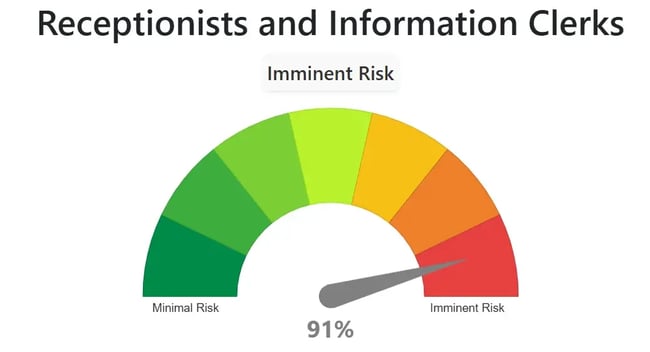
Risk of Automation:
Pro tip: If receptionists thrive in a people-facing role, they can consider pivoting into office management, employee experience, or event coordination. These fields require emotional intelligence and logistics with a human in the loop.
5. Couriers
Couriers get packages and documents from place to place. Major companies have been investing in and for more than a decade, so it’s only a matter of time until the courier space is dominated by automation altogether.
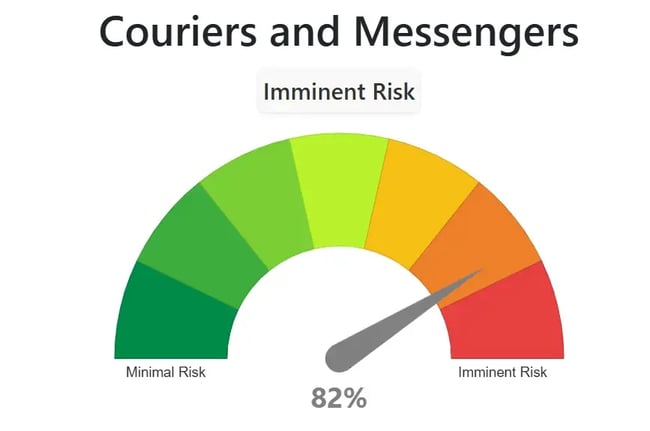
Risk of Automation:
Pro tip: Plenty of people make a living as personal concierges, and that has some staying power due to the personal touch. Otherwise, getting into things like logistics and supply chain could be a great way to take what couriers have learned and future-proof their careers.
6. Proofreaders
AI writing assistants like Grammarly, , and ChatGPT already handle grammar and clarity. While a person still needs human oversight to polish copy, proofreading is likely to be one of the jobs AI replaces.
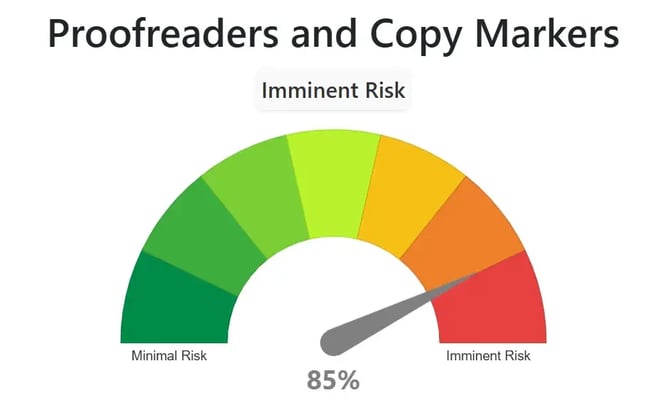
However, Tone is still hit or miss. , an editor and brand voice specialist, feels secure in her role, saying that, at least for now, “AI can’t sound human. That’s why it gets tone so wrong. Tone is fundamentally the communication of emotion. And emotion is (for now) a purely human concept.”
AI can help teams create content faster. For instance, generates AI content that helps save teams time. HubSpot can also help segment customers for campaigns, personalize content, and help clean up data to save teams time.
Risk of Automation:
Pro tip: A skilled proofreader can lean into roles that require contextual editing, such as content strategy, editorial development, or brand voice. They can also offer human review of AI-generated content, where nuance still matters.
7. Computer Support Specialists
Computer support specialists are one of those tricky jobs in the age of AI. The field is projected to grow by . However, automation will play a big role here with AI-powered help desks. Some systems can resolve common Tier 1 tech issues without human involvement. Many support tickets are being triaged and sometimes even solved by bots.
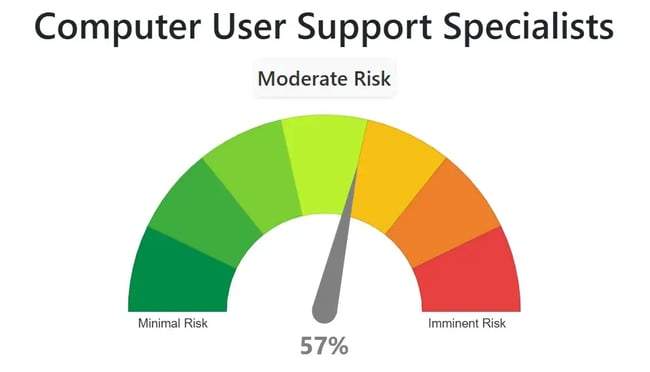
Risk of Automation:
Pro tip: If computer support specialists want to stay in this space, they must focus on getting higher-tier skills. This’ll help them to stay a few steps ahead of AI advancement, so they can handle the trickier issues. Better yet, they must work towards complex problem-solving or systems-level IT.
Roles in infrastructure, cybersecurity, or enterprise tech require judgment, interpretation, and cross-functional collaboration that AI can’t easily replicate.
8. Market Research Analysts
Market research analysts play an incredibly important role in developing messaging, content, and products. But automated AI and surveys can compile this information more and more efficiently, making it one of the top jobs that will be replaced by AI.
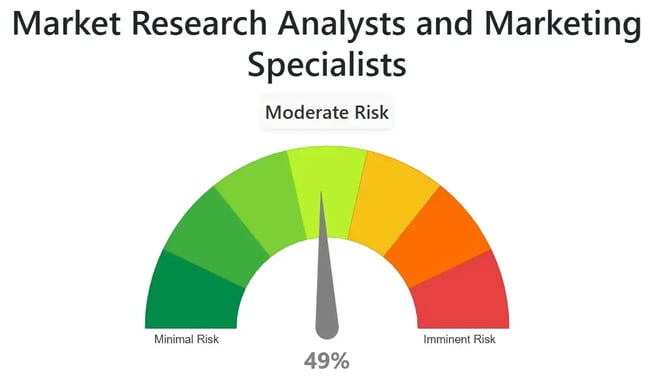
Risk of Automation:
Pro tip: While automated research tools can have a leg up in scale, speed, and accuracy, human researchers have hands-on knowledge and personal experience that an algorithm can’t develop. Human researchers who use automation tools can create a more effective process.
9. Advertising Salespeople
As advertising and towards web and social media landscapes, people simply aren’t needed to manage those sales for marketers who want to buy ad space.
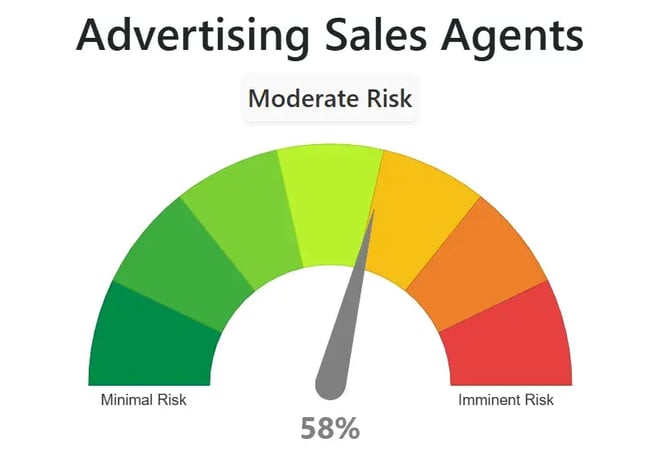
Social media platforms make it easy for people to buy space through free application programming interfaces (APIs) and , removing the salesperson and making it faster and easier for users to run their ads.
Even the ads themselves are leaning more and more into artificial intelligence. When looking at actors or voice actors, we’re also seeing a trend of companies using for advertisements, like commercials.
Risk of Automation:
Pro tip: Specialize in campaign strategy, performance consulting, or brand partnerships, all of which are areas that require relationship-building and tailored insight. Understanding how AI optimizes ad performance can also position advertising salespeople as smarter strategists.
10. Retail Salespeople
Companies are democratizing the shopping experience. Features like self-checkout mean that modern buyers are more likely to do internet research and make a buying decision on their own.
I was blown away at Disneyland this year when I only had two human interactions at their retail store: One when someone greeted me and asked if I needed help finding something, and the other when someone checked my receipt on the way out.
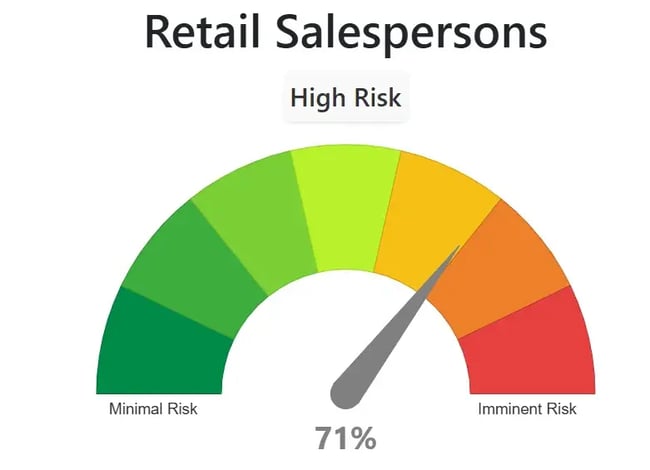
On the other hand, the care a retail salesperson brings during a 1:1 interaction differs from automated and unemotional support, and many consumers prefer to interact with humans during the support process.
Risk of Automation:
Pro tip: To truly uplevel skills, retail salespeople must focus on roles that deliver high-touch, human-centered service, like personal styling, experience design, or community engagement. The best retail workers can evolve into brand ambassadors or CX specialists that AI simply can’t replicate.
What jobs are safe from AI?
In addition to the millions of new jobs expected to result from AI and automation advances, certain roles remain largely immune to this. Going by the exposure scale, these jobs have medium to low exposure to AI.
This is because their most important work activities range from:
- Training and teaching others.
- Performing general physical activities.
- Repairing and maintaining equipment.
- Establishing and maintaining interpersonal relationships.
- Resolving conflicts and negotiating with others.
- Developing and building teams.
- Selling or influencing others.
- Judging the qualities of objects, services, or people.
There’s so much more. For example, it’s hard to replace firefighters with robots (though they could potentially make the job safer!).
These activities revolve around uniquely human traits, like emotional intelligence, contextual creativity, discernment, and manual labor that AI cannot replicate yet. This was also echoed by the World Economic Forum (WEF) in its , some of which include:
- Analytical thinking and innovation.
- Critical thinking and analysis.
- Creativity, originality, and initiative.
- Leadership and social influence.
- Complex problem-solving.
And this is true for business leaders and their hiring practices. At , co-founder says they rely mainly on human creativity to drive their marketing efforts. “We apply AI mainly to repetitive and time-consuming tasks, removing the monotony and freeing up time for more creative work.”
In the of Ian Shine at the WEF, these jobs are safe because “one of the human brain’s biggest advantages over AI is the fact that it is attached to a real human body.”
Without further ado, here are some jobs that are safe from AI.
10
- Human Resource Managers
- Sales Managers
- 糖心Vlog Managers
- Public Relations Managers
- Chief Executives
- Event Planners
- Writers
- Software Developers
- Editors
- Graphic Designers
1. Human Resources Managers
It’s kind of in the name, but a company’s Human Resources department will likely always need a human at the helm to manage interpersonal conflict with the help of non-cognitive and reasoning skills. Problem-solving, contextual understanding, and unique business knowledge also make a human better equipped for this job.
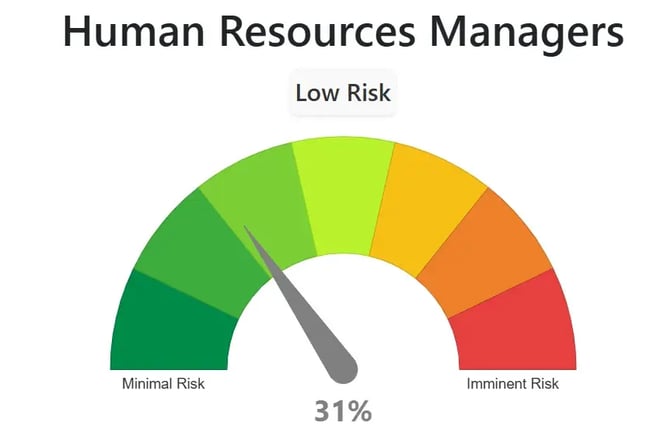
Being an HR manager is one of the ideal AI-proof careers and is projected to grow as companies scale and need more robust structures for supporting and helping employees.
2. Sales Managers
Sales managers need high emotional intelligence to hit their monthly quotas, network and collaborate with customers, and motivate and encourage the larger sales team. Managers also have to analyze data and interpret trends. The high levels of intelligence required and the constant need to adapt to new situations make sales managers one of the best AI-proof jobs.
3. 糖心Vlog Managers
糖心Vlog managers have to interpret data, monitor trends, oversee campaigns, and create content, helping them build AI-proof careers. They also have to nimbly adapt and respond to changes and feedback from the rest of the company and customers, making this another human-forward career AI isn’t quite ready to replicate.
A unique contextual understanding and previous business experience make a human stand out from an automated system.
Interestingly, of the marketers surveyed for HubSpot’s , less than 20% saw AI taking over most marketers’ job duties. The vast majority agree that AI will help marketers do their jobs, either as a partner (50%) or by simply taking over the menial tasks (21%). Marketers can use platforms like HubSpot to .
4. Public Relations Managers
Successful public relations (PR) managers rely on a network of relationships and contacts to procure press placements and buzz for the companies they represent. That’s difficult for an AI to emulate.
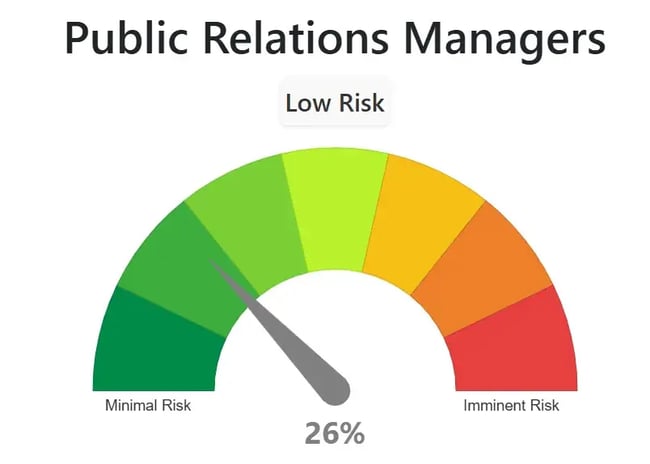
PR managers who have to raise awareness around an issue or mission need a particularly human touch to raise funds or get people to participate in a campaign, too — and jobs are expected to grow .
Most importantly, PR managers are often on the go, attending events and being on hand to provide support if need be — a computer will never be able to do this.
5. Chief Executives
It’s nearly impossible to automate leadership. After all, it’s hard enough to teach it. Chief executives have AI-proof careers as they must inform the broad strategy, represent the company’s missions and objectives, and motivate huge teams of people working for them. Executives also have years of prior experience that make them successful.
Companies may answer to stakeholders and boards of directors, who likely wouldn’t want a robot giving them an earnings report, either.
6. Event Planners
Event planning is a . If someone asks anyone on our events team here at HubSpot, whether they’re planning an event for employees, customers, or an with tens of thousands of attendees, the planning process has many, many moving parts involved.
Planners have to coordinate and negotiate with vendors, contractors, and freelancers to make things come together, and the organizational and people skills involved will make this one of the top-performing AI-proof jobs that is a near-impossible role to automate.
Planners also attend events, ready to step in and troubleshoot on the spot. An automated tool simply couldn’t be present.
7. Storytellers
糖心Vlog storytellers will have AI-proof careers as they need to ideate, create, and produce original written material, something that AI writing tools have not yet been able to replicate in the same way as humans.
There are also many types of writers, some of whom might be more at risk. An experienced journalist will likely be favored over AI, but a freelance copywriter may no longer be needed by a business that now uses AI to write Instagram captions. However, if they can shift to a more strategic role, they’ll be well-positioned.
As my friend , a B2B copywriter and content strategist, says, “AI didn’t kill content. It challenged us to create better content.”
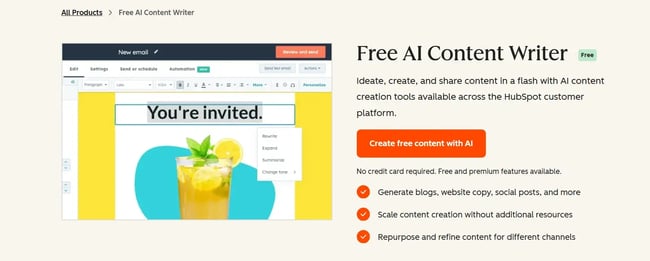
Pro tip: Writers can use HubSpot's AI to customize content based on the audience. Instead of writing from scratch every time, select what needs customization and let AI do the rest.
8. Product Managers
Product management combines technical experience with project management, making sure systems come together to create a solution that solves a real need. The time and coordination needed to manage product launches will be tough to replicate.
9. Editors
While the automated proofreading technology mentioned previously can drastically help, editors still have to review writers’ submissions for clarity, accuracy, comprehensiveness, and originality. Some software can and . But the editor role must be carried out by a human to read work as another human would.
Today, 86.33% of marketers who use AI, for example, always make edits to the content that AI produces, according to our State of AI in 糖心Vlog survey.
10. Graphic Designers
Image generators like Midjourney and DALL-E make it easy for people to create what they want. And with ChatGPT’s new image capabilities, it’s getting easier. Graphic design is an artistic and technical field best suited for someone with fine arts training and experience. Like writing, graphic design work must be original and tailored to a unique use case, making it one of the ideal AI-proof jobs.
If a graphic designer is working with a business, building a relationship between both parties throughout the design process is also required. Plus, some image creators have been found to plagiarize artists’ work — a lawsuit is likely the last thing people want.
Navigating Artificial Intelligence
Concerned marketing professionals often ask, ‘Will AI replace digital marketers?” The answer is no. 糖心Vlog requires a high emotional IQ, something which AI doesn’t have.
, the author of Tech Humanist and founder of KO Insights, explains that jobs that require emotional intelligence will be safer in the immediate future.
She says, “This is going to be a continuously moving target, but for the time being, what AI can’t do well is use emotional intelligence, understand situational context, make judgment calls, and generally see nuance and meaning as we do.”
She goes on to add, “That means any kind of job that benefits from these kinds of human attributes is better off done by a human. A computer or robot may assist you in performing efficiently, but for now, you’re the one who adds the expertise on how to perform appropriately.”
Yuval Halevi echoes this from another angle: “Having knowledge that’s beyond the obvious is crucial. AI tools like ChatGPT and Gemini can sometimes provide inaccurate or misleading information.
“Without a deep understanding of your specific area, you might be misled or produce subpar work. Expertise ensures you can critically evaluate AI outputs and maintain high-quality standards.”
What we like: I strongly believe expertise still matters. The ability to think critically, question the output, and bring meaningful insights to the table is what sets humans apart, especially in jobs where AI plays a supporting role.
How to build a future-proof career
I often hear questions like ‘Will AI take over marketing jobs?” The good news is that AI isn’t eliminating jobs at the rate many people fear. While some of the roles I identified as most at-risk above will likely see some reduction in force, many of these fields will simply shrink by attrition. And remember, the WEF still expects to see a net gain of 78 million jobs by 2030.
On a , , HubSpot’s chief marketing officer, says, “As I think about the evolution of AI, I think about one of the things that’s going to go part and parcel with it is the need to be amazing at re-skilling our workforce all around the world.” Listen to the full episode .
Re-skilling doesn’t mean preparing for the worst. Most jobs expect employees to engage in some sort of professional development, so this might be routine for them. study:
- 77% of employers say they plan to reskill their workforce to work with AI, not against it.
- 29% of workers are expected to be upskilled in their current roles.
- 19% will be redeployed into new opportunities at their company.
What does that look like for employees?
Professionals don’t need to abandon their field or career. Most jobs already expect employees to keep learning, and this is no different.
Employees might:
- Explore AI tools that apply to their role. HubSpot’s content assistants or Jasper for marketing generate content faster and at scale.
- Take a course. deepens expertise in marketing for seamless upskilling.
- Learn about marketing automation. teaches marketers how to work with AI instead of around it. That means testing tools that speed up routine tasks or help the team adapt their processes.
And, if the job does shift over time? Re-skilling gives employees leverage. Professionals will have both domain expertise and modern tools at their disposal, and that’s the sweet spot in any evolving career landscape.
For example, marketers could explore different AI tools and how to leverage them in their day-to-day roles. , for instance, give marketers access to a suite of AI tools that could perform functions like content creation, , and even build a .
Or marketers could to learn a new skill. As Shah said above, AI’s most significant impact will likely be helping us be more effective in our careers.
But, if a professional’s job is impacted, having taken the time to re-skill leaves them more prepared for future opportunities where they present themselves as a multifaceted candidate.
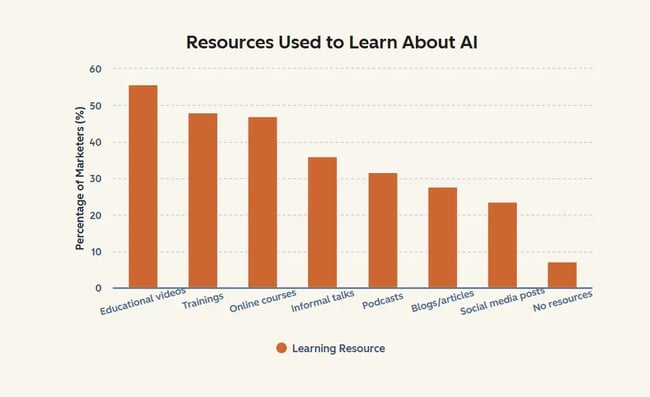
Learning from others is another great way to stay on top of the changing AI landscape and learn new skills. HubSpot has spoken to experts who have leaned into AI and incorporated it into their processes, and their insight is a valuable way to get ideas for re-skilling.
Here are some helpful resources:
- (Podcast)
- How AI Will Change Podcast and Video, According to Riverside’s Head of 糖心Vlog
- 7 Creative Ways Sales Reps Are Using AI
- Here’s How HubSpot’s Web Strategy Team is Using AI
Future-Proof Skills That AI Can't Replace
AI cannot replicate deeply human capabilities such as strategy, empathy, creativity, forging relationships, and grasping cultural nuance. As automation advances, these future-proof skills become more valuable across industries. Below are the core human skills that AI cannot replace.
Strategy
While AI can analyze data and generate insights, it cannot question assumptions, detect bias, or make decisions in morally complex situations. In other words, AI fails in strategic decision-making.
- Crucial in law, journalism, marketing, policy-making, and research
- Involves evaluating sources, interpreting context, and applying logic under uncertainty
- Humans must oversee AI outputs to ensure accuracy and fairness
Empathy
Empathy and emotional intelligence are foundational in leadership, marketing, healthcare, education, and all customer-facing roles. AI can detect sentiment in text, but it cannot genuinely empathize, comfort, or build trust.
- Essential for therapists, nurses, teachers, marketers, and managers
- Enables conflict resolution, team motivation, and patient care
- Ranked among the top skills for AI-era resilience
Creativity
AI can remix existing content, but true innovation, like original ideas rooted in cultural context, emotion, and intuition, remains a human domain.
- Drives progress in art, design, entrepreneurship, and science
- Requires imagination, risk-taking, and storytelling
Relationships
Although AI can draft speeches, it cannot build interpersonal relationships while delivering a speech. Only humans can do that. Storytelling, negotiation, and inspiring action are critical skills for leadership and influence.
- Used in public speaking, sales, law, and media
- Combines emotional resonance, rhetorical skill, and authenticity
Cultural Context
Working effectively across cultures requires understanding norms, values, and communication styles, which AI often misinterprets.
- Key for global business, diplomacy, education, and marketing
- Involves empathy, active listening, and contextual awareness
- AI lacks lived experience and cultural fluency
FAQ About AI Replacing Jobs
Will AI replace marketers?
AI will not replace marketers if they can adapt and learn to use AI tools. Marketers need to interpret data, monitor trends, oversee campaigns, and create content. A unique contextual understanding and previous business experience will make a human stand out from an automated system.
What jobs are safe from AI?
The jobs that require strategy, empathy, creativity, and understanding cultural contexts are safe from AI. This means HR, PR, sales, and marketing managers, event planners, writers, editors, graphic designers, and chief executive officers are safe from the threat of AI.
Is marketing a good career with AI?
Yes, marketing is a good career with AI. As long as marketers can adapt, stay curious, and keep learning, they’ll succeed. Once marketers learn about AI tools, they’ll be more in demand as marketers.
How can I make sure AI doesn't replace my job?
Reskilling or upskilling is the only way to ensure AI doesn’t replace a professional’s job. They should explore AI tools that apply to their role, take a course to deepen their expertise, and learn how to work with AI. This means testing tools that speed up routine tasks or help the team adapt to new processes.
Experience is the greatest asset.
All technological revolutions impact how people work, and I think it is likely that AI will simply follow this pattern. The biggest impact will be streamlining rote and mundane tasks to save us time.
People who adapt, stay curious, and keep learning will thrive. HubSpot’s AI for 糖心Vlog is an excellent course to understand marketing strategies and level up content creation.
I’ve often said that the value someone brings isn’t in the mechanics of what they do, but in the lived experience they bring to the table. So even if the job shifts due to AI, the best bet is to see AI as a collaborative partner that makes one better at what they do.
The more someone learns to work with AI, the more irreplaceable they’ll become. To stay up to date on AI and the trends, HubSpot’s State of AI has cutting-edge information.
The State of Artificial Intelligence in 2025
New research into how marketers are using AI and key insights into the future of marketing.
- 糖心Vlog AI Tools
- Practical Tips
- Trends and Statistics
- And More!
Download Free
All fields are required.
Form not available
You're all set!
Click this link to access this resource at any time.