When someone searches for “food pantry near me,” “donate to refugee families,” or “animal shelter volunteer opportunities,” SEO for a nonprofit determines whether that person finds your organization.
SEO, specifically for nonprofits, is the process of optimizing your website to increase organic visibility when people search for topics like fundraising or volunteer opportunities, or other aspects that promote your mission.
It helps search engines and answer engines understand the pages that explain programs, accept donations, and recruit volunteers. In 2025, organic search accounted for . That’s too large to leave on the table.
Table of Contents
- What is nonprofit SEO?
- Why Nonprofits Should Invest in SEO
- Nonprofit Website SEO Best Practices
- How to Get Started with Nonprofit SEO
- How to Measure SEO Success
What is nonprofit SEO?
Nonprofit search engine optimization (SEO) is the process of improving a nonprofit website so search engines can find, understand, and rank its pages for mission-relevant searches. It connects organic visibility to real outcomes:
- Donations
- Volunteer signups
- Program participation
- Public awareness
- Local service discovery
A nonprofit website should match the language people use when they need help, want to give, or want to join, in addition to explaining what the organization does.
For example, if a nonprofit is geared towards wildlife conservation, it would want to rank high organically for terms related to wildlife conservation. The higher a website or page ranks in the search engine result pages (SERPs), the more likely users are to see it and click on it.
.png)
Complete SEO Starter Pack
An introductory kit to optimize your website for search.
- Increase your organic traffic.
- Plan your keyword strategy.
- Debunk SEO myths.
- Build a blog strategy.
Download Free
All fields are required.
Form not available
You're all set!
Click this link to access this resource at any time.
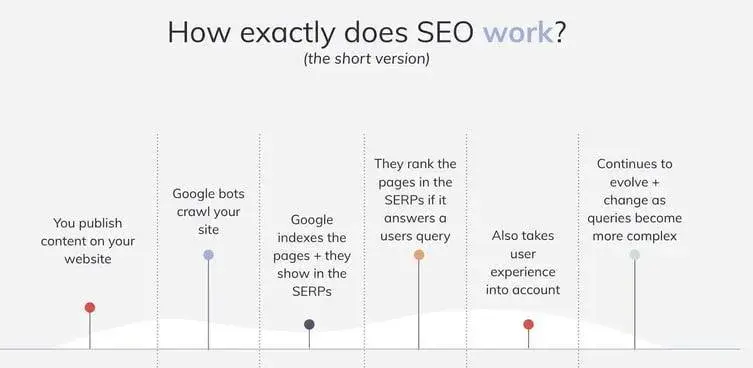
How Search Engines Work
Search engines work in three steps: crawling, indexing, and ranking.
- Crawling means Google discovers public pages.
- Indexing means Google analyzes and stores information from those pages.
- Ranking means Google chooses which indexed pages best match a searcher’s query.
For a nonprofit, this means every important page needs a clear purpose:
- A donation page should explain who benefits, how funds are used, and what action to take.
- A volunteer page should explain roles, time commitment, location, and next steps.
- A program page should explain who qualifies, where the service operates, and how someone can apply.
Search engines also consider context such as location, language, device, page quality, and relevance.
Why SEO Matters for Your Nonprofit
Imagine how many people Google or ask ChatGPT, “How to help Ukrainian refugees.” SEO helps your nonprofit be seen in Google search results and across different LLMs. It also helps nonprofits become more visible to large donors.
Small nonprofit teams can still make SEO work, even with limited budgets and staff time — as long as they use the right marketing tools and tactics.
Why Nonprofits Should Invest in SEO
SEO gives nonprofits a long-lasting visibility channel that keeps working after a page is published, improved, and linked from other relevant pages. Paid campaigns can drive fast reach, but organic pages can continue attracting supporters even after the ad budget pauses.
From my experience, SEO rarely feels urgent across nonprofits until the team sees the missed demand. You don’t want to pay for this costly mistake.
1. Cost-effective Growth
SEO can keep generating meaningful visits to your website’s pages for years. Marketers can also repurpose strong program pages, donation FAQs, or local resource pages into content for social posts, email appeals, and direct outreach without starting from zero.
2. Stronger Trust and Credibility
Helpful search content builds credibility before a supporter takes action. A donor wants to know where the money goes. A journalist wants facts that can be checked fast.
When I worked as a fundraiser, no matter the donor size, they all asked about publicity and the website. They were browsing completed project stories, about the foundation, awards, and financial reports. Donors evaluate your foundation closely when considering generous donations.
3. Reach Supporters With High Intent
SEO captures people who already show intent through search language. People who want help usually type in “Donate,” “volunteer,” “near me,” “apply,” “eligibility,” “open today,” and “help with.” If your nonprofit’s website is optimized, Google will show you among the competitors.
Supporters also ask ChatGPT, Gemini, or Google AI for organization recommendations, local help, and donation options. Google says its generative and quality systems, so strong SEO fundamentals still matter for AI visibility.
4. Build Long-term Visibility
SEO compounds when useful pages earn links, answer related searches, and support each other through internal links. Over time, the website becomes easier for people and search engines to understand. That automatically leads to more donations and growing brand awareness.
Nonprofit Website SEO Best Practices
Here are the five best SEO practices to focus on for nonprofits this year.
1. Start with smart keyword research.
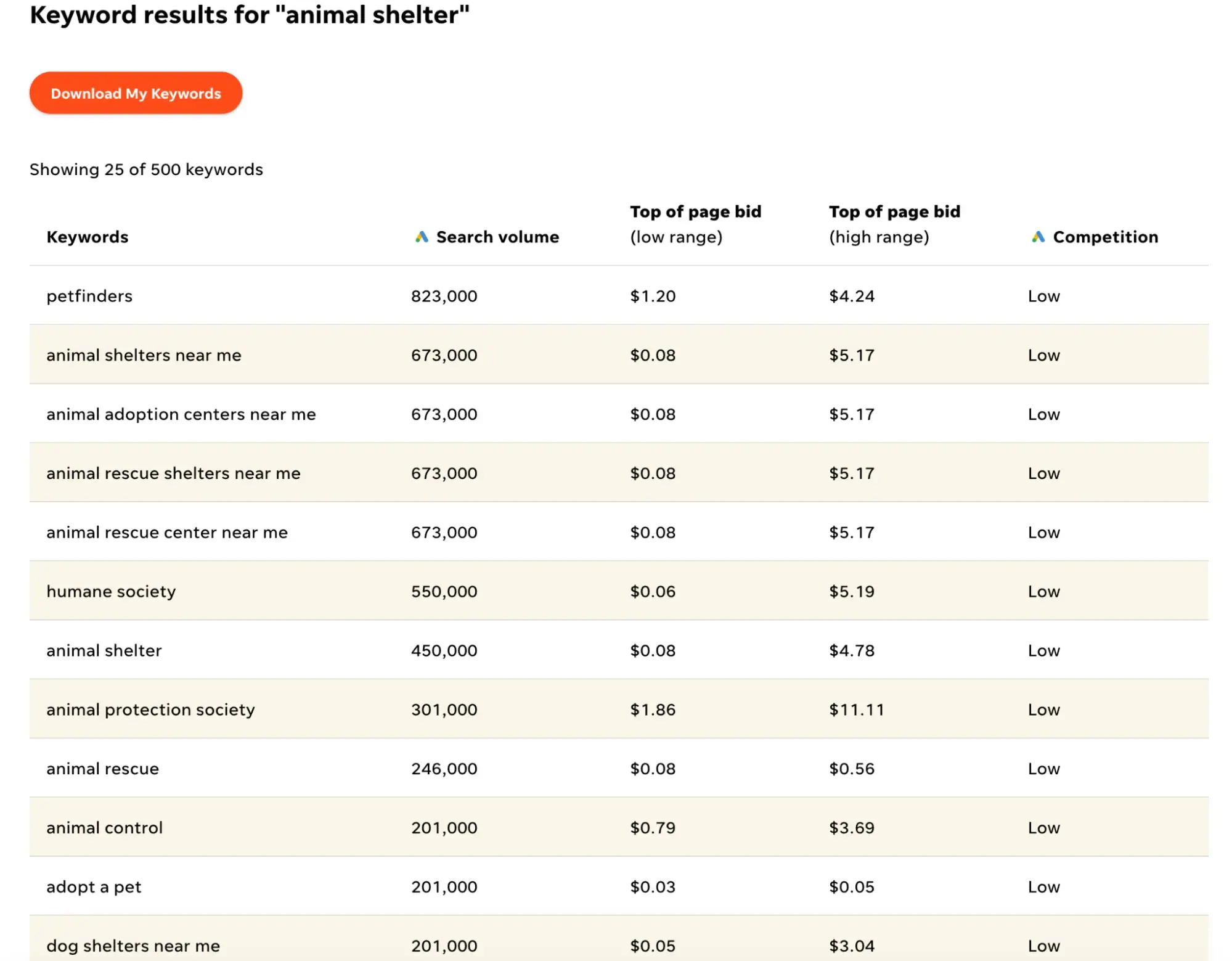
Smart keyword research finds the words that donors, volunteers, program participants, and community partners already use. Internal program names rarely match public search language, so the first job is translation.
- Short keywords are broad terms like “animal shelter,” “food bank,” or “mental health nonprofit.”
- Long-tail keywords are more specific phrases like “volunteer at animal shelter in Boston” or “free mental health support for teens in Austin.” Long-tail keywords usually show clearer intent and often fit small nonprofit teams better.
Search intent should guide every keyword decision:
- Informational intent means someone wants to learn.
- Navigational intent means someone wants a specific organization or page.
- Transactional intent means someone wants to take action, such as donating, registering, applying, or volunteering.
Use a small charity search engine optimization tool stack to get started: or l. ChatGPT can brainstorm seed topics from donor questions, volunteer objections, program names, and service language. Treat the output as ideas to validate. Map those SEO keywords to pages.
2. Create pages that answer real questions.
SEO content should answer specific user questions directly. A nonprofit page should not make visitors hunt through mission language before they find the practical answer. Helpful pages also support answer engine optimization (AEO) because answer engines, like ChatGPT, Perplexity, and Gemini, need clear, extractable information. Each core page should answer one main question first.
- Donation page: Where does my gift go?
- Volunteer page: What can I do, when, and how do I sign up?
- Program page: Who is eligible, where is the service available, and what happens next?
- About page: Who runs this organization, and why should people trust it?
- Impact page: What changed because supporters gave time or money?
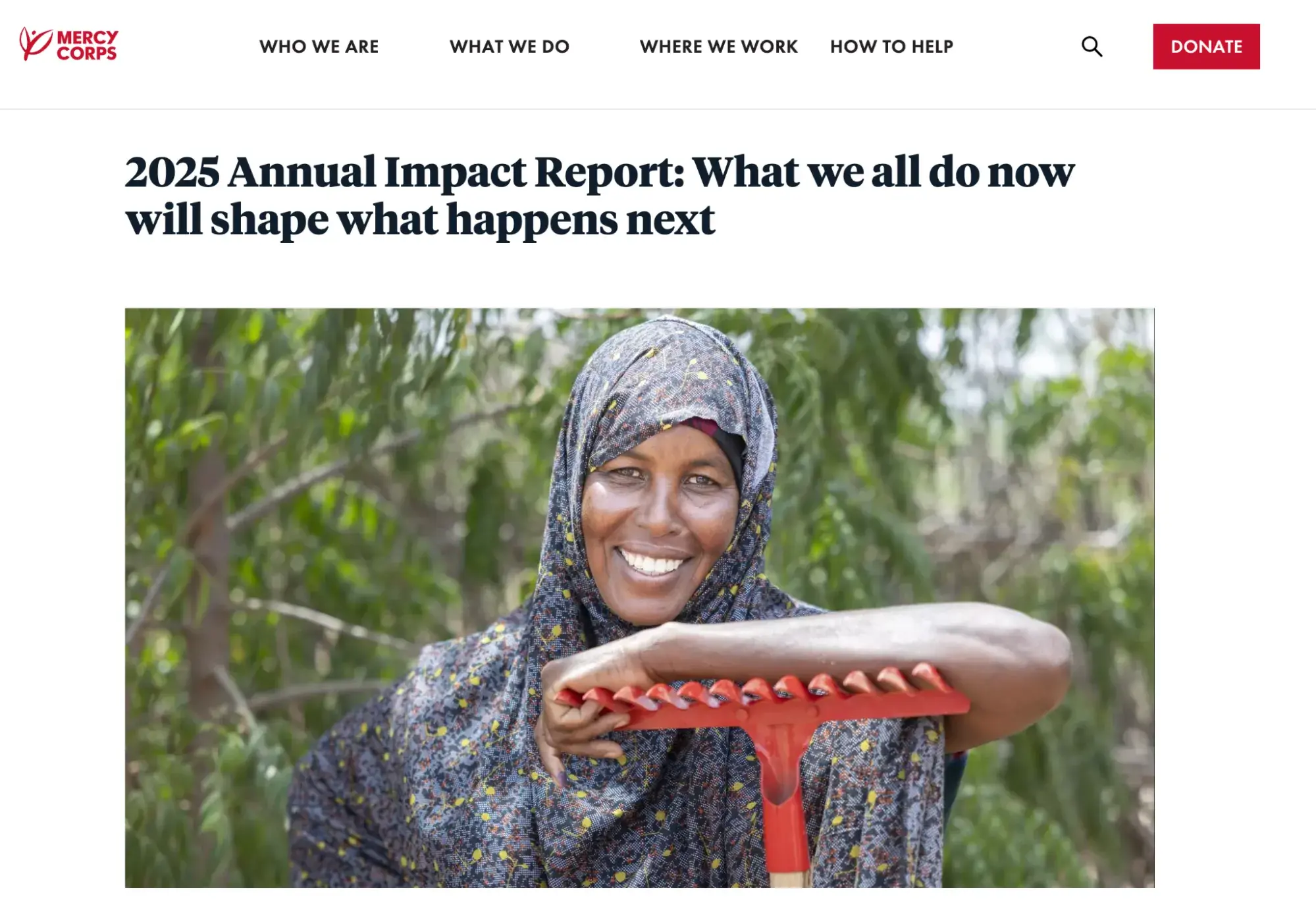
In my experience, even small nonprofits must create a landing page for their public annual and financial reports. Donors and supporters can then see exactly how the money is distributed and decide whether they want to support you. Not having this page looks suspicious.
3. Optimize on-page SEO for search and answer engines.
On-page SEO optimizes titles, headings, content, metadata, and internal links. AEO revolves around clear entities, clear answers, and trusted source material. Use this AEO checklist before publishing or refreshing an important page:
- Write a title tag that names the topic, cause, and location when relevant.
- Use one direct H1 that matches the page’s main purpose.
- Structure H2s and H3s around real questions.
- Add a concise answer block near the top of each important section.
- Define programs, services, and eligibility in plain language.
- Clearly name the organization, location, program, audience, and service area.
- Add internal links to donation, volunteer, program, About, and impact pages.
- Use descriptive alt text for images.
- Update metadata so search snippets explain the page’s value.
- Add FAQ sections where donors, volunteers, or participants have repeated questions.
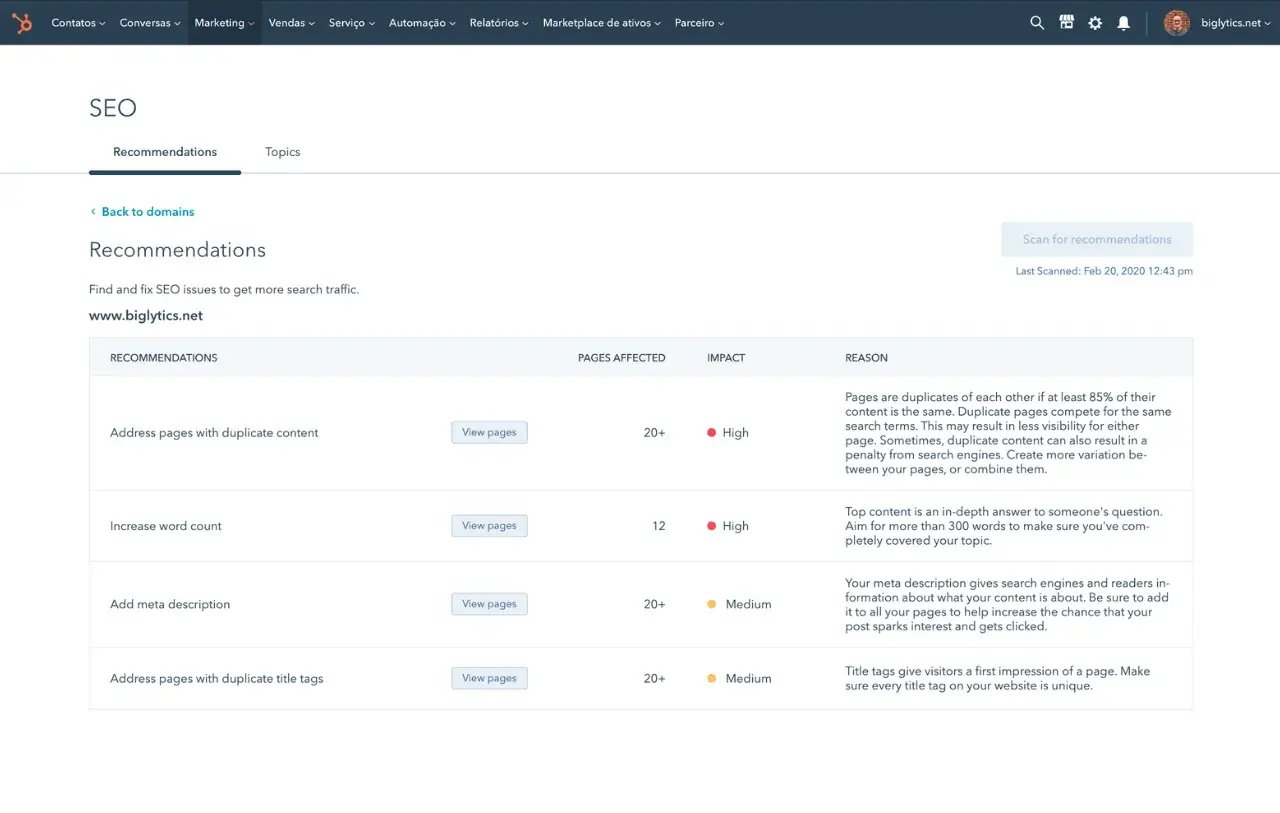
helps marketing teams plan their content strategy, get prioritized recommendations to optimize their site, and measure the ROI of their SEO efforts.
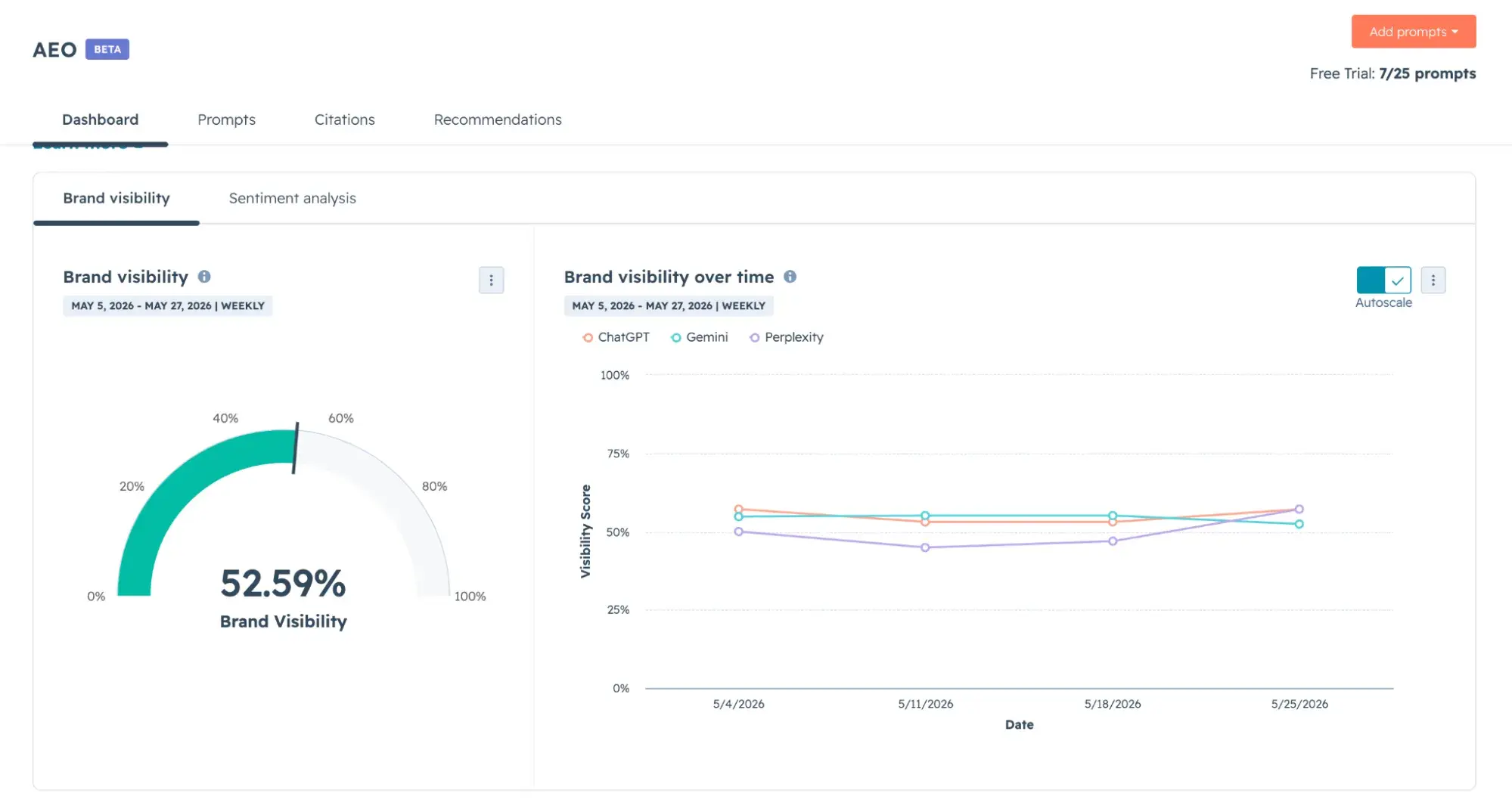
Once the pages are published, wait a few days for search and answer engines to crawl them. Marketers can then use to measure their nonprofit’s AI visibility compared to competitors and get prioritized recommendations to improve how their organization appears across ChatGPT, Perplexity, and Gemini. HubSpot AEO also analyzes the sentiment of a brand in AI-generated responses.
4. Make key pages fast, mobile-friendly, and easy to act on.
Mobile-friendly websites improve user experience and search performance. Google uses the , which makes mobile usability a core SEO requirement.
For nonprofits, mobile optimization deserves extra attention because many urgent searches occur on mobile devices. In fact, mobile users represent 52% of nonprofit website visits, according to the . There are several tools available to test a website’s mobile-friendliness:
5. Strengthen trust signals and backlinks.
Backlinks from trusted, relevant sources help search engines and visitors understand that the nonprofit has real community credibility. For nonprofits, the best link building often comes from work already happening offline. Practical and easy to obtain backlink sources include:
- Partner nonprofits
- Local government directories
- Global press and local media
- School and university pages
- Coalition pages
- Sponsor pages
- Event listings
- Grant announcements
- Resource directories
Pro tip: Trust signals should sit on the website, too. Add partner logos where allowed, link to annual reports, show current program details, name leadership, and keep contact information consistent.
Complete SEO Starter Pack
An introductory kit to optimize your website for search.
- Increase your organic traffic.
- Plan your keyword strategy.
- Debunk SEO myths.
- Build a blog strategy.
Download Free
All fields are required.
Form not available
You're all set!
Click this link to access this resource at any time.
6. Strengthen your local SEO presence.
Local SEO supports visibility for community-based nonprofits when people search by city, neighborhood, county, service area, or “near me” intent. Keep these local SEO best practices in mind.
- Create a Google Business Profile. Claim and verify the profile, then add category, address, or service area, phone, website, hours, photos, and updates.
- Add location-based keywords: Use city, neighborhood, county, and service area language on relevant pages.
- Maintain citation consistency. Keep name, address, phone, and website consistent across directories.
- Build local backlinks. Earn links from city pages, schools, partner sites, sponsors, and local media.
- Be proactive with reviews and replies. Respond where appropriate and keep information current.
EMBED:
How to Get Started with Nonprofit SEO
A small nonprofit team can start SEO without building a huge content operation. The first pass should focus on visibility gaps, such as five pages that would create the most value if more people found them tomorrow.
Step 1: Claim and complete your Google Business Profile.
Google Business Profile is the fastest local SEO win for nonprofits with service locations, events, donation drop-off points, or community programs. A complete Google Business Profile helps people find the nonprofit on Google Search and Maps. To be ranked high in Maps, add the essentials to a Google Business Profile account:
- Organization name
- Primary category
- Address or service area
- Phone number
- Website link
- Regular and special hours
- Photos of the location, team, services, or events
- Program, donation, volunteer, or appointment links
- Current updates and event posts
Once the profile is seen on Maps, start sharing updates, announcements, offers, and event details directly on Search and Maps. For nonprofits, this will support food distribution days, volunteer orientations, and fundraising events. All of this helps organizations land at the top of Google listings for this query.
Step 2: Build a small keyword map.
A keyword map assigns the right search terms to the right pages. It prevents multiple pages from competing for the same phrase and helps the team choose which pages to improve first.
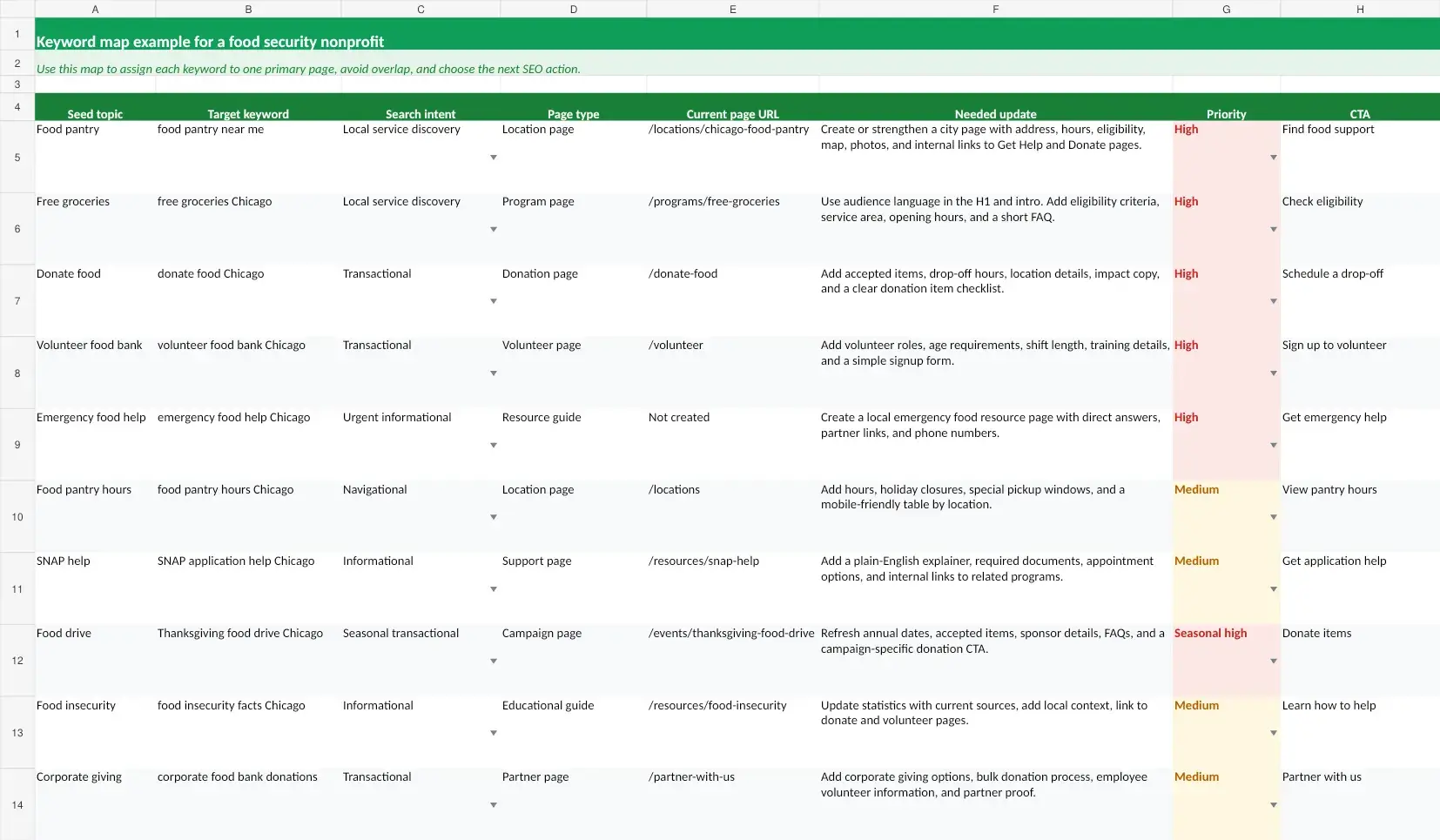
Start with five seed (core) topics tied to the mission. For example, a food security nonprofit could start with “food pantry,” “free groceries,” “volunteer food bank,” “donate food,” and “emergency food help.” Then use the free keyword tools to expand and validate the list. After that, that includes these fields:
- Target keyword
- Search intent
- Page type
- Current page URL
- Needed update
- Priority
- CTA
Step 3: Optimize your most important pages.
Each page should have one primary keyword, clear headings, direct answers, internal links, and a visible CTA. Don’t stuff keywords into copies. The point is to make the page easier to understand and act on through clear writing and a well-defined page hierarchy.
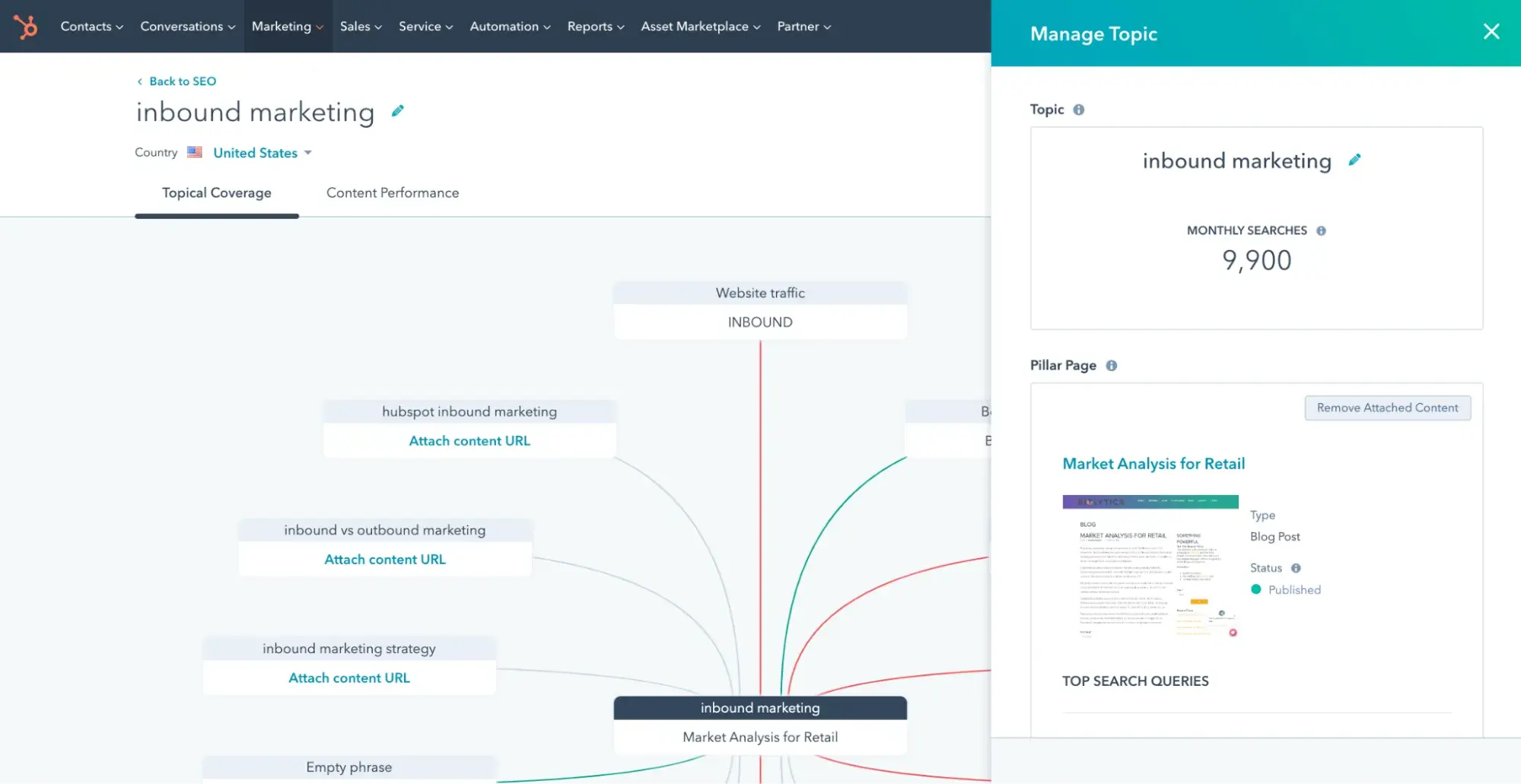
helps simplify SEO by surfacing prioritized recommendations, organizing your content strategy around topics, and connecting SEO performance to your broader marketing efforts. It’s a practical way for nonprofits to build search authority without needing a dedicated SEO team.
Featured reading:
- 5 Keys to Building Your Nonprofit 糖心Vlog Plan
- Mastering Social Media for Nonprofit Promotion: Insights and New Data from Experts
Step 4: Add answer-ready sections to important pages.
Answer engines (LLMs) tend to work better with clear entities and clean relationships. Answer-ready sections make pages more useful for searchers and easier for answer engines to parse. They should answer a specific question in the first sentence, then add context.
Example:
A program page could include a section titled “Who qualifies for emergency food support?” The first sentence should answer the question directly. The following sentences can explain documents, service area, hours, and how to apply. Here’s where to add answer-ready sections to the page content:
- A short definition (what a program is about)
- Eligibility criteria
- Step-by-step process
- Local service area
- Donation use explanation
- Volunteer commitment details
- FAQ block
- Contact or next action
Step 5: Publish helpful resources.
Even one strong resource can attract organic traffic, earn links, and build trust. The resource, however, should match a real audience question, not a vague awareness topic.
A domestic violence support nonprofit might publish an article titled “How to make a safety plan in Austin.” An animal welfare nonprofit might publish “What to do if you find a stray dog in Denver.” Good nonprofit resource formats include:
- Local service guide
- Donation FAQ
- Volunteer checklist
- Eligibility explainer
- Cause education guide
- Resource directory
- Event preparation guide
- Annual impact summary
Pro tip: Don’t end with information only. Guide the reader toward the next step: call, apply, donate, share, or refer.
How to Measure SEO Success
Measuring SEO success includes organic traffic, rankings, conversions, and engagement. Some goals for a nonprofit might include having more priority keywords move into the top 10 positions, increasing AI citations, or increasing organic conversions.
Measurement, however, should stay simple enough for a small team to repeat every month. Most importantly, don’t track vanity metrics such as pure organic traffic. Track the metrics that connect to action:
- Organic visits to priority pages
- Rankings for priority keywords
- Donation page visits and donation completions
- Volunteer page visits and signup completions
- Program inquiries
- Local profile views and actions
- Engagement on resource pages
- AI visibility for priority prompts
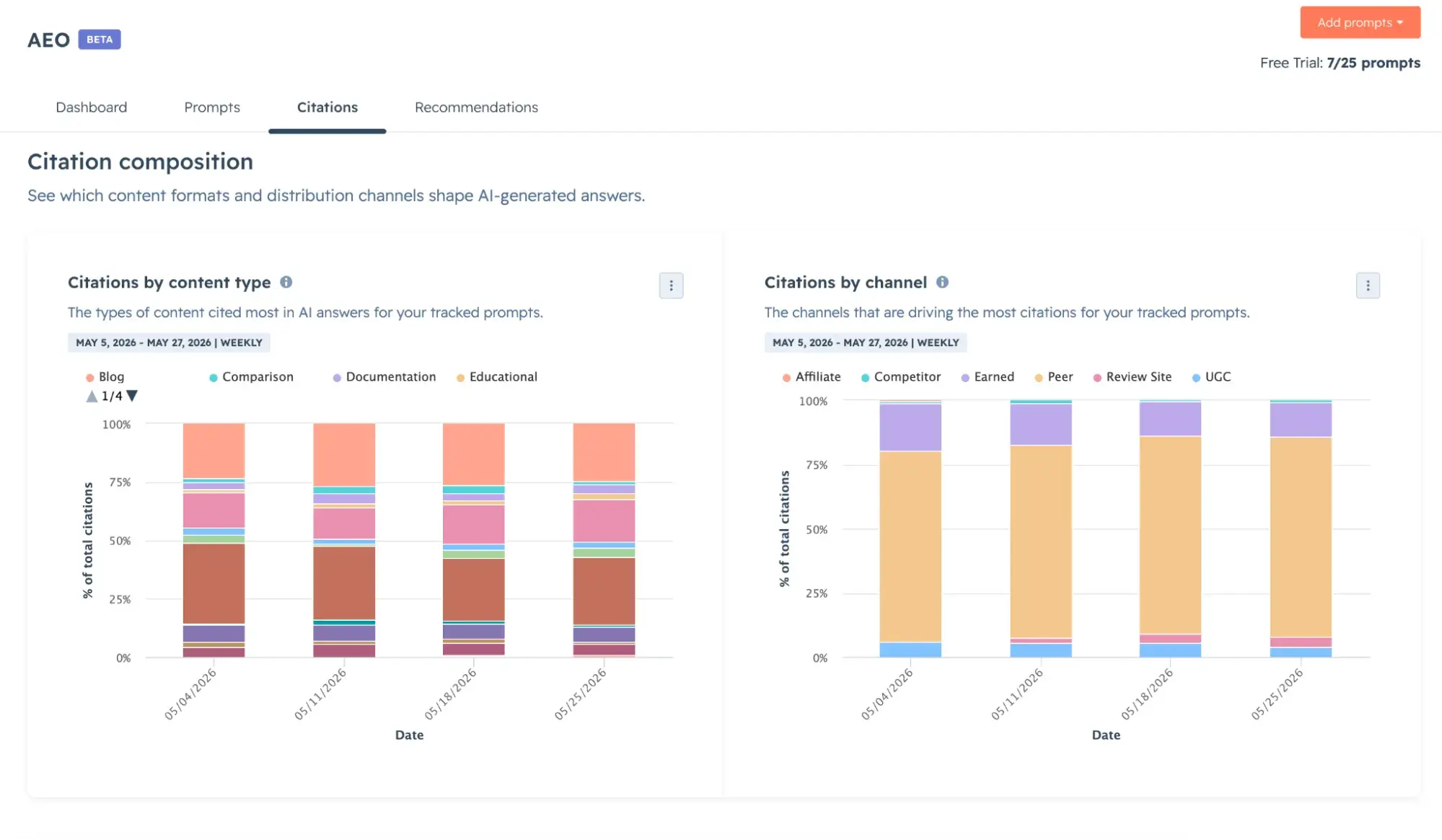
To understand how AI answers surface your charity, start with HubSpot’s free — a one-time brand perception analysis across ChatGPT, Perplexity, and Gemini. For ongoing tracking, automatically suggests prompts to monitor, analyzes your share of voice against competitors, and identifies which channels are driving citations.
Make your nonprofit discoverable in Google and LLMs.
Investing in an SEO strategy and working on it over time will pay off immensely for a nonprofit in the long run, and it’s cost-effective. While it may take up to six months, teams will see an increase in organic and qualified traffic that will help increase visibility for their mission and create better engagement.
Answer engines, however, can pick up and send traffic to a website within days.
When I joined the charitable foundation as a fundraiser, there was no website. I had to invest one month to develop it from the ground up and optimize it for SEO. Without it, international and institutional donors didn’t deem us trustworthy.
Start small. Create only necessary pages, but follow SEO best practices to make them “right” for search and answer engines. Track how AI visibility changes over time in HubSpot AEO, and use Google Analytics for the rest of the SEO metrics.
Complete SEO Starter Pack
An introductory kit to optimize your website for search.
- Increase your organic traffic.
- Plan your keyword strategy.
- Debunk SEO myths.
- Build a blog strategy.
Download Free
All fields are required.
Form not available
You're all set!
Click this link to access this resource at any time.
SEO