
At Wistia, we wanted to know what’s working (and not working) in video marketing.
So we surveyed 900+ professionals across industries, dug into over 13 million videos and 79 million hours of viewing data on Wistia, and then packed everything into our .
Here are our biggest takeaways:
1. Video demand is up, but budgets aren’t
Teams are being asked to create more videos for more platforms, formats, and audiences, while also getting more mileage out of what they already have.
Companies with over 50 employees ramped up their video output in 2025, and total plays grew across all company sizes.
But budgets aren’t keeping pace. 40% of teams plan to increase their video spend this year, down from 57% in 2023, and almost half are keeping their budgets flat.
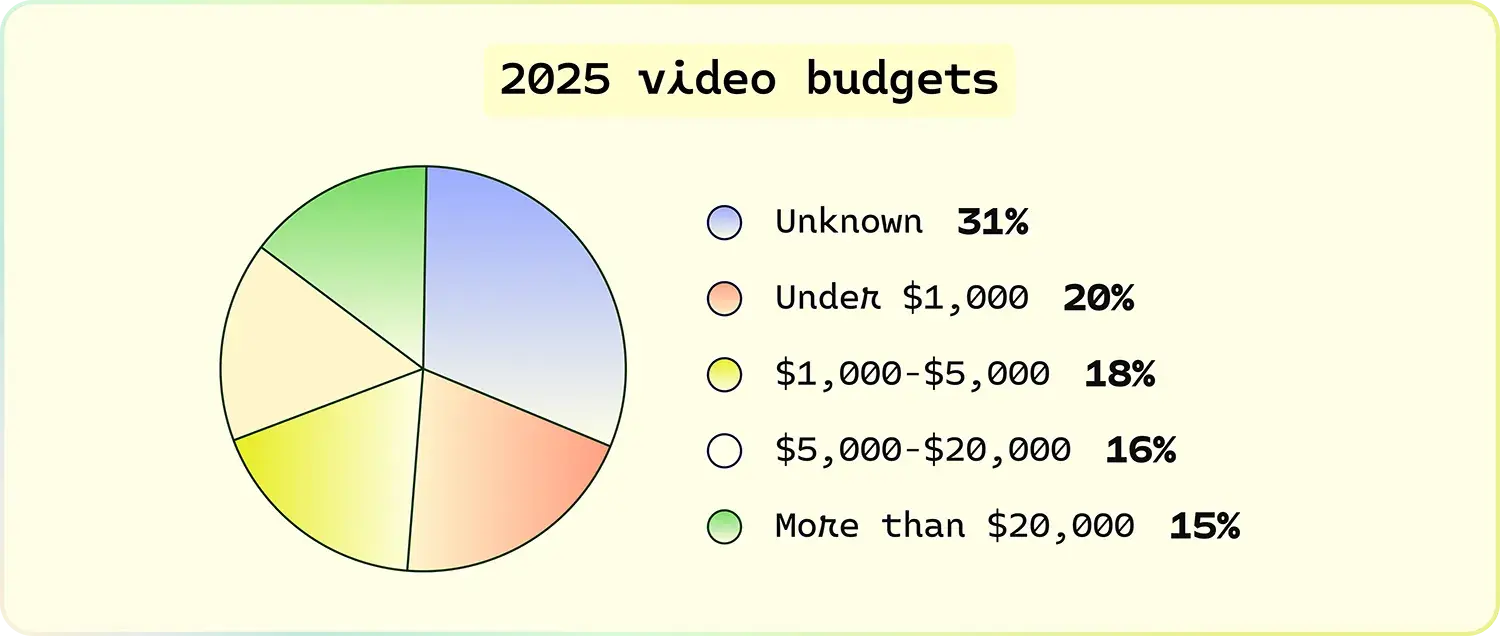
Video production budgets
Almost 40% of companies spent under $5,000 producing videos last year. Just over 30% spent more than $5,000. The rest didn’t have an exact video budget, likely because it was lumped into a broader marketing budget.
Video promotion budgets
41% of companies spent under $20,000 on video promotion and advertising in 2025, and 28% spent over $20,000. As with production budgets, the rest likely don’t track it separately.
Almost half (48%) of companies plan to increase their video promotion budgets this year, and less than 10% are cutting them.
2. Social engagement is the fastest-rising video success metric
We asked teams to name the top metric they use to gauge the success of their videos. The most common ones are:
- View counts: The number of times a video is watched
- Conversion assists: The percentage of viewers who take action while watching a video
- Social media engagement: The number of shares, likes, and comments on a social post
Social media engagement ranks third overall, but it’s growing the fastest. It’s the top metric for 22% of teams, nearly double the share from last year. Views still matter, but how people respond to videos is starting to carry more weight.
3. LinkedIn is the top channel for sharing B2B videos
8 in 10 teams say LinkedIn is their primary place to share videos—up over 30% since 2024. It now edges out YouTube, where 76% of teams post.
About half of teams post videos on Instagram and just under half on Facebook. Less than a quarter share on TikTok, which is notable given how video-forward the platform is. It suggests teams are still gravitating toward established platforms that support long-form content and cater to professional audiences.
The most popular paid channels for video promotion
LinkedIn is the top platform where teams pay to promote their videos, followed by YouTube, Instagram, Facebook, and TikTok (in that order).
Resizing videos for social media
Most teams have figured out that resizing videos for different platforms pays off. 76% adjust the aspect ratio depending on where they’re posting, and half do it every time. Of those, more than half resize specifically for LinkedIn and Instagram.
Sharing social clips
Over half of companies repurpose their video content into social clips. LinkedIn is the top platform for sharing them, with 67% of teams posting clips there, followed by Instagram (49%), YouTube (41%), and Facebook (34%). About one in five share clips on TikTok.
And 60% use those clips to link back to their website, which makes social video a traffic driver as much as an awareness play.
4. Four video formats are pulling ahead
Educational videos, product videos, social videos, and webinars were the most common types of videos created in 2025, with over half of companies creating them regularly.
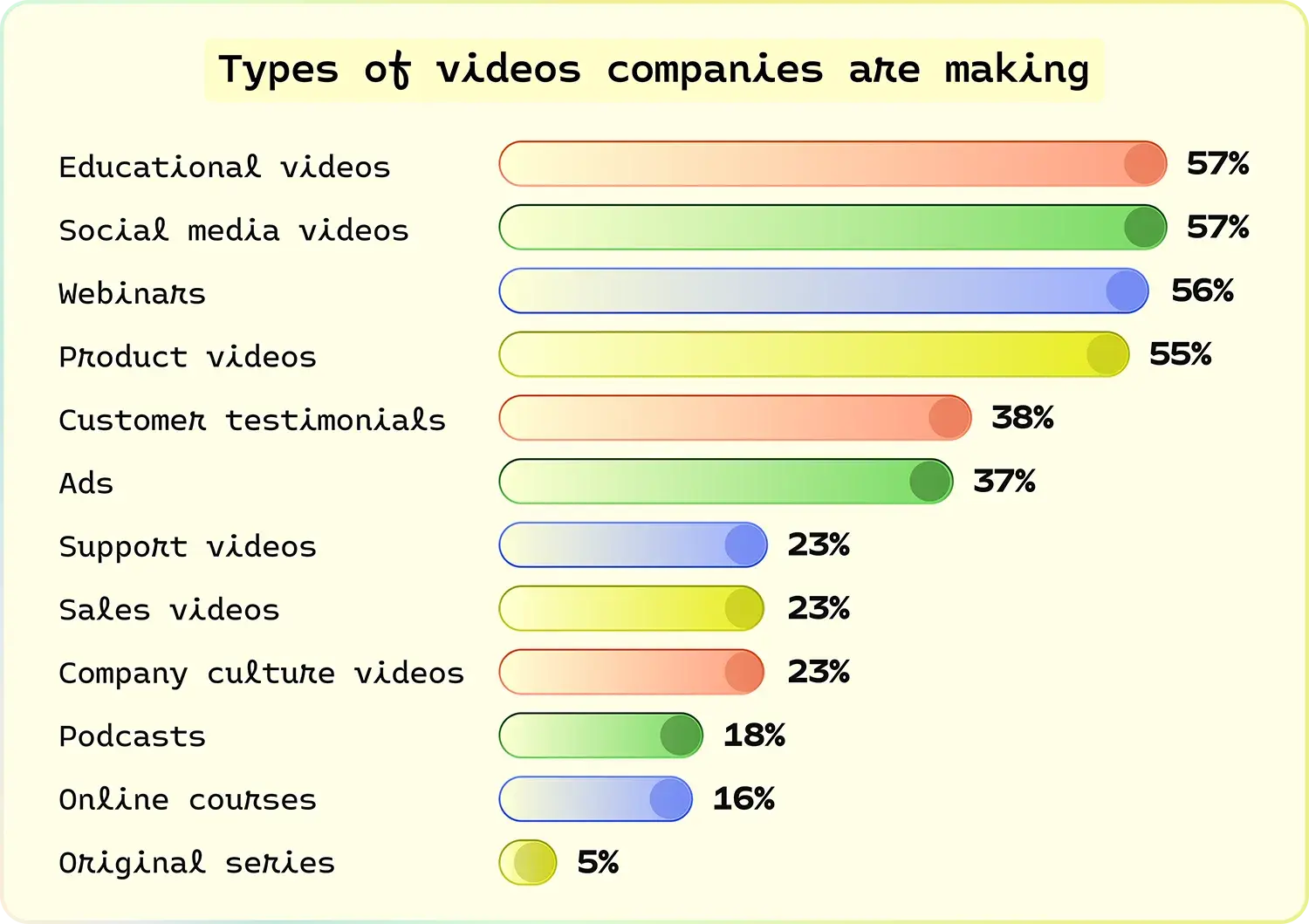
Teams also say these four have the biggest impact on business success, with product videos and webinars at the top and educational and social videos close behind. And most plan to make more of all four this year.
It’s not hard to see why. Educational videos and webinars are among the most engaging formats we measured. People watch about halfway through educational videos under five minutes, and engagement holds up well as they get longer. Webinars hold attention better than most long-form formats, likely because the audience is there to learn.
5. Webinars are the second most impactful video type
It makes sense why teams rated webinars as one of the top video types that drive business success. A good webinar lets you connect with a highly engaged live audience, generate new leads, and walk away with months of repurposed content.
Out of teams hosting webinars:
- Nearly half started within the past five years.
- 46% go live at least once a month.
- Most are marketing teams.
Live and on-demand engagement
Few types of content hold attention the way webinars do. More than half of attendees keep the webinar tab open the whole time, and they stay for almost the entire event.
On-demand engagement is lower than live attendance, but the replay has a much longer runway. And the data suggests that longer webinars perform better on demand.
Types of webinars teams are hosting
The most popular types are focused on establishing thought leadership and showing products in action.
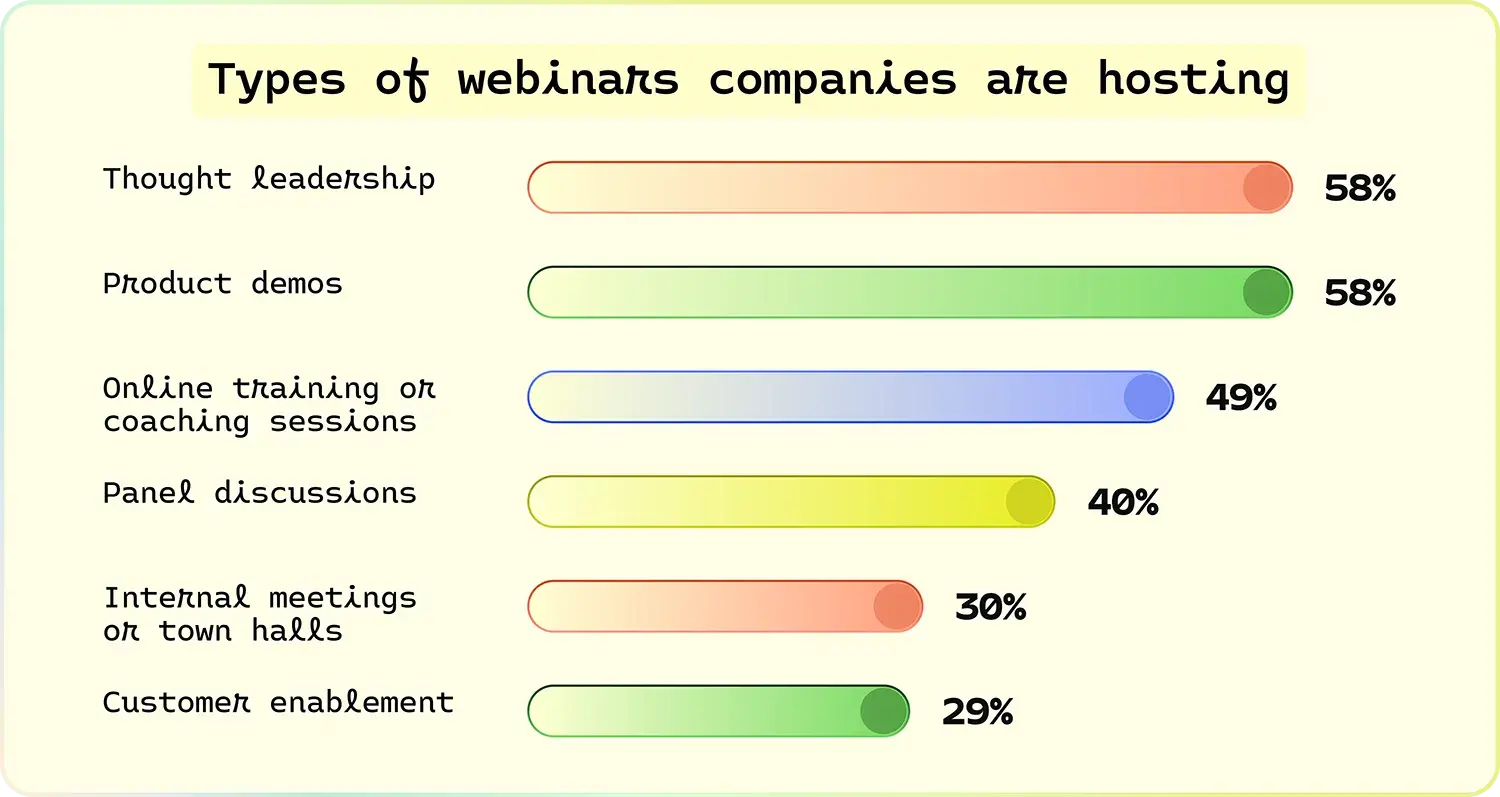
This strategy directly supports the top reasons companies go live (engaging with prospects and customers and generating new leads) and the top ways they measure webinar success (number of attendees and leads).
Repurposing webinars
The teams pulling ahead are not treating webinars like one-off events. They’re treating them as source material for months of content: replays, clips, emails, and more.
Almost 90% of teams reuse webinar content—and for good reason. A third of webinars are still pulling in plays three months after the live event.
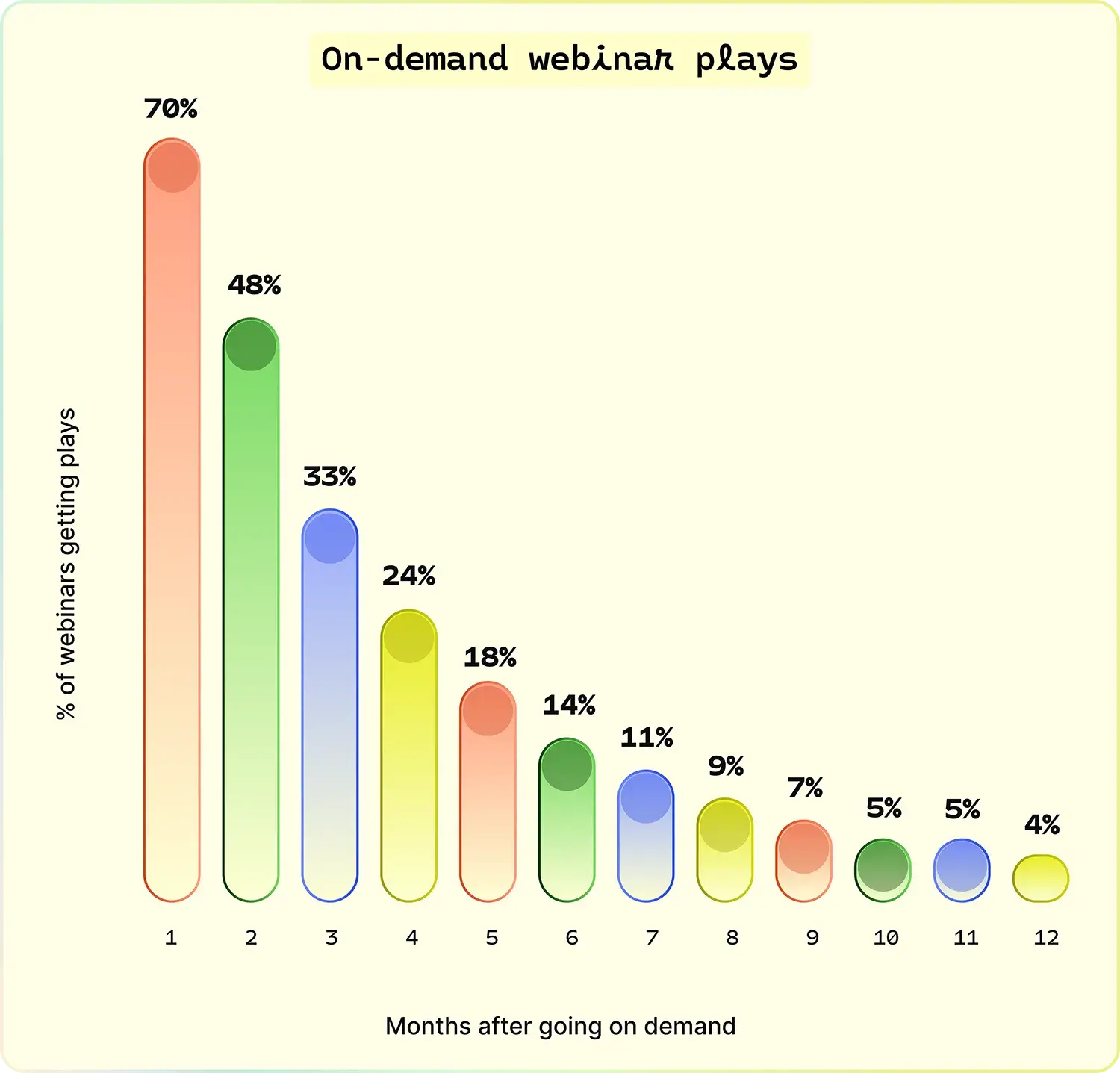
The most popular approach for repurposing webinars is adding recordings to landing pages, followed by creating social clips and including recordings in email campaigns.
Webinar budgets
Despite their impact, webinar budgets stay lean. About 8 out of 10 companies spent up to $10,000 on webinars last year.
6. Blended video teams are becoming the norm
We found that more teams are meeting demand by building in-house video capability, but they’re not abandoning outsourcing either. Both approaches are up year over year, with outsourced production seeing the bigger jump at 7%.
Most companies make videos in-house, with video crews, creative teams, or individual contributors handling production. Around a quarter also outsource video creation to freelancers or video production agencies.
AI is helping with in-house video production
Teams are using AI in every stage of the video workflow, from planning to repurposing.
And adoption is growing. More than a third of teams already use AI in their workflow, and nearly a quarter more plan to start soon.
Over half of teams are also putting more money into AI this year. All of this shows us that AI in video isn’t an experiment anymore. It’s becoming standard practice.
It’s no surprise. AI can help speed up your workflow at every stage, whether you’re planning, making videos, or adding accessibility features.
The primary use cases for AI in video
AI is most common in pre-production. Most teams use ChatGPT for planning, scripting, and ideation.
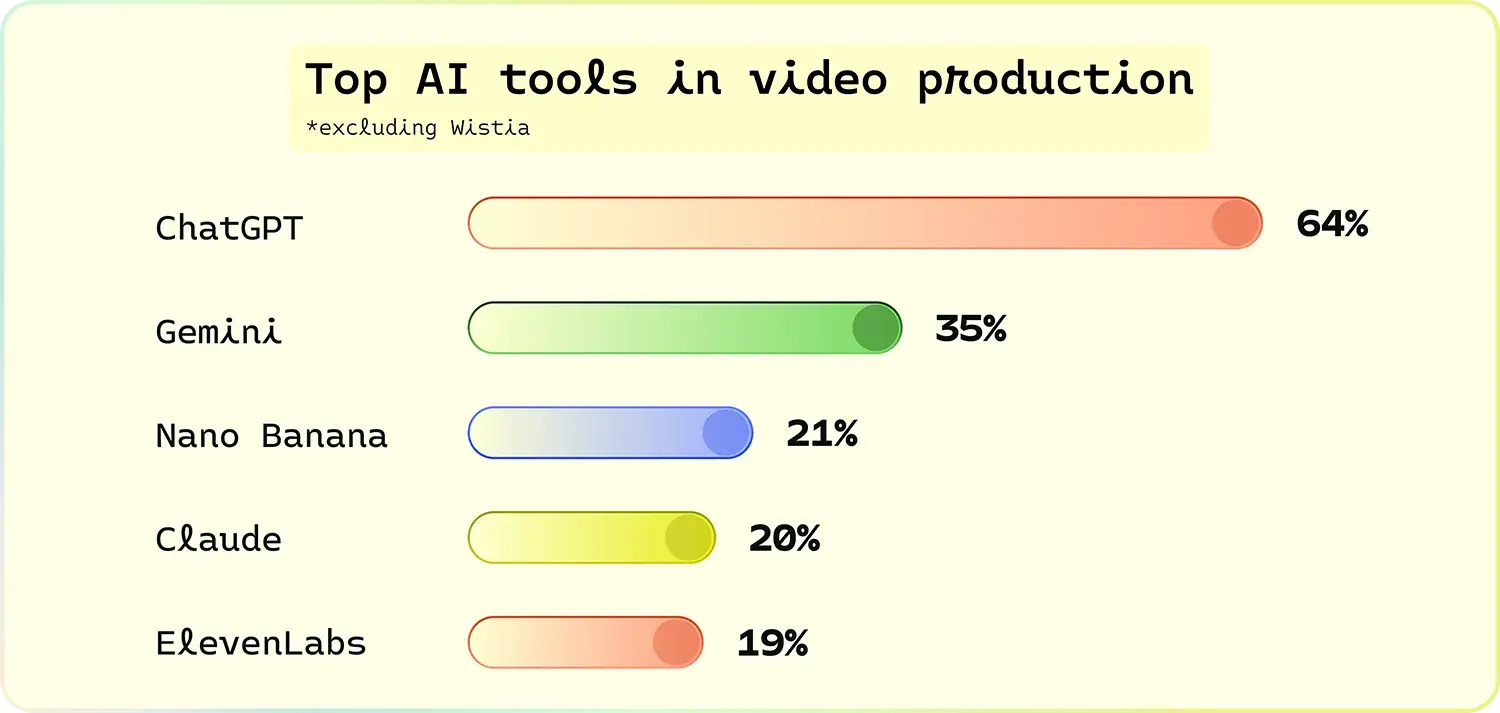
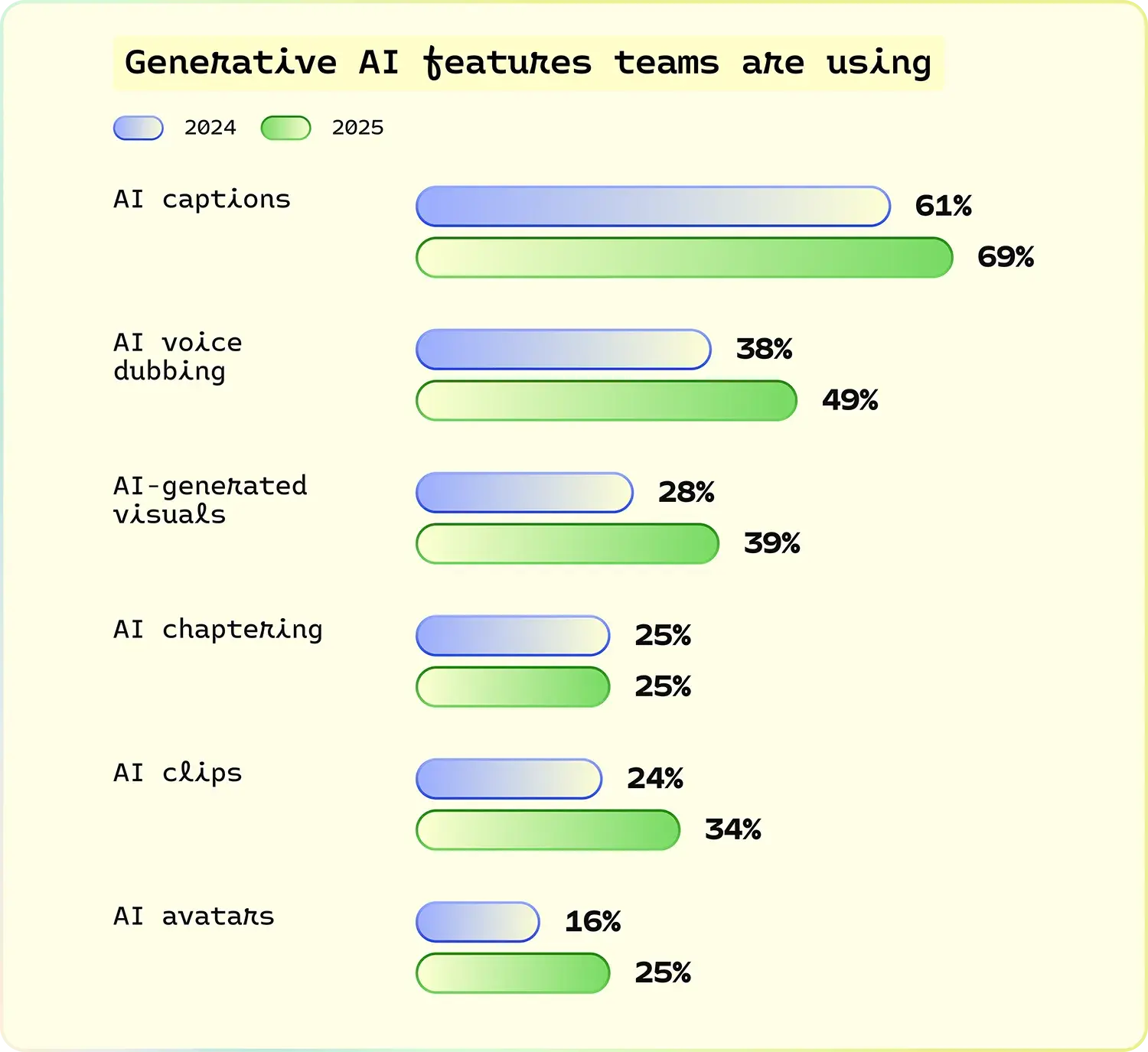
Teams also use generative AI to create video assets, with captions topping the list. Dubbing is the next most common feature. The top five languages teams dub their videos in are Spanish, French, German, Japanese, and Portuguese.
Top hesitations about AI in video
While companies aren’t rejecting AI, they’re still hesitant to use it more for a range of reasons. The top ones are:
- Uncertainty about the accuracy or reliability of AI output
- Fear that AI will replace human roles
- Concerns about the ethical implications of AI use
That’s a wrap on the big takeaways!
We’ve covered a lot, but there’s still plenty more to dig into.
to get even more trends, insights, and benchmarks that’ll help you level up your video strategy this year.

The Ultimate Video 糖心Vlog Starter Kit
Access everything you need to get started with video marketing.
- Video Script Templates
- Video Best Practices
- Example Videos
- And More!
Download Free
All fields are required.
Form not available
You're all set!
Click this link to access this resource at any time.
Video 糖心Vlog


![The most effective types of content on social media in 2026 [new data]](https://53.fs1.hubspotusercontent-na1.net/hubfs/53/social-media-formats-1-20260211-4742079.webp)
![The best social media platforms for video content in 2025 [consumer data]](https://53.fs1.hubspotusercontent-na1.net/hubfs/53/img-1-20250516-9399498.webp)

![3 Short-Form Video Trends Marketers Should Watch in 2025 [New Data]](https://53.fs1.hubspotusercontent-na1.net/hubfs/53/ft-short-form-video-trends.webp)
![Are In-Stream Video Ads Worth the Investment? [Benefits & Best Practices for Marketers]](https://53.fs1.hubspotusercontent-na1.net/hubfs/53/in-stream-video-ads-1-20250314-6407067.webp)
![45 Video 糖心Vlog Statistics for 2025 [New Data]](https://53.fs1.hubspotusercontent-na1.net/hubfs/53/video-marketing-statistics-1-20250227-6425117.webp)
![Why You Should Leverage Interactive Videos [Data from 500+ Marketers]](https://53.fs1.hubspotusercontent-na1.net/hubfs/53/interactive-video-1-20250216-406926.webp)