
AI sales tools have transformed how revenue teams work. In 2026, sales professionals using these platforms report saving over , while improving forecast accuracy and pipeline visibility.
As a freelance writer for B2B SaaS companies, I wear many hats, including that of a salesperson. Just last week, I was juggling multiple projects when I realized I’d forgotten to follow up on a warm lead. My heart sank. That potential client had shown genuine interest, but in the whirlwind of deadlines, they’d slipped through the cracks.
So I started exploring AI tools for sales to streamline my sales process and avoid such mistakes in the future. I’ve tested multiple platforms and handpicked the top options based on real-world performance, integration capabilities, and measurable ROI.
This guide covers everything from unstructured AI tools like ChatGPT to comprehensive sales AI software platforms with built-in intelligence.
Table of Contents
- The Types of AI Sales Tools: What You Need to Know
- AI Sales Tool Features to Look For
- AI Sales Tools Comparison Table
- Best AI Sales Tools by Category
- How to Implement AI Sales Tools Successfully
- Frequently Asked Questions About AI Sales Tools
The Types of AI Sales Tools: What You Need to Know
AI sales tools fall into two distinct categories — unstructured AI tools and AI-enabled sales platforms — each serving different needs within the sales process.
Understanding these differences helps sales teams select the right combination of tools for their specific workflows and revenue goals.
Unstructured AI Tools (LLMs) for Sales
Unstructured AI tools, or Large Language Models (LLMs), are general-purpose platforms such as ChatGPT and Claude that generate text from user prompts.
These tools generally don’t connect directly to CRM systems or sales databases.
Instead, they serve as versatile writing assistants, helping sales professionals create emails, proposals, call scripts, and other content.
Sales teams use LLMs for specific content creation tasks:
- AI email drafting tools can generate personalized outreach messages when given prospect information and context about the company or its pain points. Sales teams using these AI sales prospecting tools report significant time savings in initial outreach.
- Sales documentation tools help create SOPs, training materials, and process documentation that standardize sales approaches across teams.
- Content repurposing tools adapt existing messages for different audiences, channels, or stages of the buyer journey without starting from scratch.
The limitation of LLMs is the need for manual data input. Sales professionals typically copy prospect information, paste it into the tool, then transfer the generated content back to their email client or CRM.
This extra step creates friction in workflows, though the content quality often justifies the effort. Users don’t have to worry about this, though, if they’re a HubSpot customer and ChatGPT user. The can be used to access HubSpot context in ChatGPT.
AI-Enabled Sales Platforms
AI-enabled sales platforms integrate artificial intelligence directly into existing sales tools and workflows. Unlike standalone LLMs, these platforms connect natively to CRM systems and communication tools like email clients. This native connectivity enables contextual recommendations drawn from real sales data.
These platforms automate tasks that LLMs can’t handle:
- Data entry and enrichment: AI-enabled platforms like automatically capture contact information, log interactions, and update CRM fields without manual input.
- Predictive analytics: These tools analyze historical sales data to forecast revenue, score leads, and identify at-risk deals. 贬耻产厂辫辞迟’蝉 , for instance, predicts future revenue based on pipeline data and deal velocity.
- Real-time guidance: During sales calls, platforms like Gong provide live battle cards, competitor talking points, and objection handling scripts based on what prospects say in the moment.
- Workflow automation: AI-enabled platforms trigger specific actions based on prospect behavior. When a high-value lead visits a pricing page, the system can automatically notify the assigned sales rep and suggest next steps.
The key advantage of AI-enabled sales platforms is seamless integration. Sales professionals don’t switch between multiple tools or manually transfer information. Everything happens within their existing workflow.
LLMs vs. AI-Enabled Platforms: Comparison
|
Feature |
Unstructured AI Tools (LLMs) |
AI-Enabled Sales Platforms |
|
Examples |
ChatGPT, Claude, Google Gemini |
HubSpot Sales Hub, Gong, Apollo AI, Salesforce Sales Cloud |
|
Primary Function |
Text generation and content creation |
Sales automation, analytics, and workflow integration |
|
CRM Integration |
No direct integration (manual copy/paste required) |
Native integration with CRM systems and sales tools |
|
Data Access |
Requires manual input of prospect/company information |
Automatically pulls data from CRM, email, and call records |
|
Best Use Cases |
Email drafting, sales scripts, proposals, and content repurposing |
Lead scoring, forecasting, call analysis, pipeline management |
|
Real-Time Guidance |
Not available |
Provides live recommendations during sales calls and meetings |
|
Automation Capabilities |
Limited to content generation |
Automates data entry, scheduling, follow-ups, and task assignment |
|
Learning Curve |
Minimal (prompt-based interface) |
Moderate (requires setup and CRM familiarity) |
|
Pricing |
Free to $20-25/user/month |
Varies widely ($50-$2,500+/month depending on platform) |
|
Best For |
Individual contributors needing content support |
Sales teams needing end-to-end process automation |
|
Time Investment |
Quick setup, but manual data transfer |
Initial setup time, but saves hours daily after implementation |
How Top Sales Teams Use Each Type
According to , which surveyed over 1,500 business professionals, sales teams are adopting both tool types for complementary purposes.
Seventy-nine percent of sales professionals use AI to automate manual tasks. These teams typically rely on AI-enabled platforms like or Salesforce Sales Cloud to handle data entry, meeting scheduling, and CRM updates.
Teams using Breeze could see per week and an increase in the sales close rate of up to 50%.
Thirty-nine percent use AI for data-driven insights. Sales leaders depend on AI-enabled platforms for forecasting, lead scoring, and pipeline analysis. Before adopting these tools, many sales reps forecasted inaccurately. AI-powered forecasting tools significantly improved prediction accuracy.
Fifty-five percent use AI for writing sales content or prospect outreach messages. This is where LLMs shine. Sales professionals use ChatGPT, Claude, or to draft emails, create proposals, and generate call scripts.
Of those using generative AI for prospecting messages, 77% report it’s very effective for personalizing their messages.
The most successful approach combines both tool types. Sales teams use LLMs for content creation and AI-enabled platforms for automation, analytics, and workflow integration.
My experience reflects this pattern. I use ChatGPT to draft initial outreach templates and refine messaging for different buyer personas.
Then I rely on HubSpot Sales Hub to automate contact management, score leads with predictive algorithms, and track performance metrics. The combination saves time while maintaining the personal touch that closes more deals.
AI Sales Tool Features to Look For
Selecting the right AI sales tool requires evaluating specific technical capabilities and integration features that directly impact sales performance.
The most effective platforms share common characteristics that enable seamless adoption and measurable results.
Native CRM Integration
AI sales tools must connect directly with existing CRM systems to deliver value. Platforms that integrate with , Salesforce Sales Cloud, Microsoft Dynamics, or Pipedrive can automatically pull contact data, interaction history, and deal information without manual data entry.
Native integration enables:
- Automatic data synchronization — Customer interactions logged in one system immediately appear in connected platforms, ensuring sales teams work with current information.
- Contextual recommendations — AI algorithms analyze CRM data to suggest next steps, identify at-risk deals, and prioritize high-value opportunities based on historical patterns.
- Reduced administrative work — Sales representatives avoid duplicate data entry across multiple systems, saving 2+ hours daily according to 贬耻产厂辫辞迟’蝉 State of AI research.
Tools lacking proper CRM integration force sales teams to manually transfer information between platforms, creating friction that undermines productivity gains.
Predictive Analytics and Lead Scoring
Advanced AI sales software uses machine learning algorithms to analyze thousands of data points and predict outcomes. Predictive lead scoring examines prospect behavior, firmographic data, and engagement patterns to identify which leads are most likely to convert.
Effective predictive analytics include:
- Sales forecasting accuracy — AI algorithms analyze pipeline velocity, deal stages, and historical close rates to project future revenue with increased accuracy.
- Lead qualification automation — Systems automatically score and route leads based on fit criteria, ensuring that sales teams focus on prospects who match ideal customer profiles.
- Deal risk identification — AI flags stalled opportunities, accounts showing disengagement signals, or deals deviating from typical buying patterns.
and similar features in platforms like Apollo AI and Gong reduce time wasted on unqualified prospects while improving conversion rates on high-potential opportunities.
Conversation Intelligence
AI meeting assistants and call analysis tools provide real-time insight into customer interactions. These features transcribe sales calls, analyze sentiment, and surface key moments that indicate buying intent or objections.
Conversation intelligence capabilities include:
- Automatic call transcription — AI converts spoken dialogue into searchable text, allowing sales managers to review calls without listening to full recordings.
- Sentiment analysis — AI algorithms detect emotional cues, engagement levels, and areas of concern based on prospect tone and language patterns.
- Coaching recommendations — Systems identify gaps in sales rep performance by comparing successful calls against unsuccessful ones, highlighting specific areas for improvement.
- Action item extraction — AI automatically captures next steps, commitments, and follow-up requirements mentioned during customer conversations.
贬耻产厂辫辞迟’蝉 , available in Sales Hub (Professional and Enterprise plans), optimizes sales by automating meeting-related tasks like note-taking and summarization. This allows sales reps to focus on the conversation rather than administration.
Content Generation and Personalization
The true power of AI tools lies in their ability to be tailored not just to businesses but to each prospect. The best AI sales tools allow for granular customization of outreach.
For example, Dux-Soup automates LinkedIn outreach, enabling sales teams to send personalized messages and follow-ups. This level of customization helps create messages that resonate with each prospect’s specific pain points and interests.
I’ve also found success with that adapt their language and tone based on the prospect’s communication style, whether formal, casual, or technical. This prospect-level customization improves response rates and helps build stronger connections from the first touchpoint.
Advanced AI outreach tools must produce personalized messaging at scale without sacrificing quality or authenticity.
Key content capabilities include:
- Multi-channel message creation — AI generates emails, LinkedIn messages, call scripts, and follow-up sequences adapted to each communication channel’s norms and character limits.
- Tone and style matching — Advanced systems adjust language formality, technical depth, and messaging style based on prospect roles, industries, and communication preferences.
- Dynamic personalization tokens — AI inserts specific details about prospect companies, pain points, or recent business developments to demonstrate genuine research and relevance.
- A/B testing recommendations — Systems suggest message variations and test different approaches to optimize response rates over time.
and exemplify this functionality by combining CRM data with generative AI to create personalized outreach at scale.
Sales Automation and Workflow Triggers
The most valuable AI sales tools automate repetitive tasks and trigger appropriate actions based on prospect behavior. Sales automation reduces manual follow-up, ensures timely responses, and maintains consistent engagement throughout the sales cycle.
Essential automation features include:
- Behavioral triggers — Systems detect when prospects visit pricing pages, download content, or engage with sales materials, then automatically notify assigned representatives or initiate predetermined workflows.
- Follow-up sequencing — AI manages multi-touch campaigns across email, phone, and social channels without requiring manual scheduling or task management.
- Meeting scheduling — AI assistants coordinate calendar availability, send invitations, and handle rescheduling requests without sales rep involvement.
- Pipeline stage advancement — Systems automatically move deals through stages based on completed activities, met criteria, or identified buying signals.
User-Friendliness and Performance Tracking
I can’t stress enough how vital user-friendliness is in any tool. In my early days of adopting AI, I abandoned several promising tools simply because they were too complex or time-consuming to use. Now, I prioritize tools with intuitive interfaces and minimal learning curves.
For example, my favorite AI writing assistant integrates directly into my email client, making it feel like a natural extension of my workflow rather than a separate tool. I also value AI tools that offer clear explanations of their suggestions or actions.
Transparency builds trust in the tool and helps sales professionals learn and improve their own skills over time.
Sales teams also need clear, actionable performance metrics. The most effective platforms quantify productivity improvements and demonstrate ROI.
My take on selecting features
After testing multiple platforms, I’ve found that CRM integration matters most. Tools without native connections create more work than they eliminate. Start with integration capabilities, then evaluate analytics and automation based on the team’s specific needs.
AI Sales Tools Comparison Table
|
Tool |
Category |
Best For |
Key Features |
Starting Price |
Free Trial |
|
HubSpot Sales Hub |
Sales Automation/Prospecting & Outreach |
Teams needing a comprehensive CRM with built-in AI |
Predictive lead scoring, forecasting, AI meeting assistant, Breeze AI |
$45/month |
Yes (free CRM) |
|
Hippo Video |
Prospecting & Outreach |
Teams using video for personalized outreach |
Video templates, personalized intros, customizable sales pages |
$20/user/month |
Yes |
|
ChatGPT |
Prospecting & Outreach |
Sales teams needing versatile AI for content creation |
Email drafting, sales proposals, scripts, and content repurposing |
Free (Plus $20/month) |
Yes |
|
Cognism |
Sales Intelligence |
B2B teams needing verified contact data with AI search |
AI-powered search, Diamond Data?, phone-verified contacts |
Custom pricing |
No |
|
UserGems |
Sales Intelligence |
Revenue teams tracking job changes and champions |
Buying signal detection, automated outreach triggers, Gem-E AI agent |
Custom pricing |
No |
|
people.ai |
Sales Intelligence |
Teams automating CRM data capture and analysis |
Automatic activity logging, pipeline insights, and PeopleGlass CRM view |
Custom pricing |
No |
|
Apollo AI |
Prospecting & Outreach |
B2B teams needing database + AI email writing |
260M+ contacts, AI email assistant, sentiment-matching follow-ups |
$49/user/month |
Yes |
|
Drift |
Sales Automation |
Teams focused on real-time website engagement |
AI engagement scoring, chatbot conversations, and real-time notifications |
Custom pricing |
Yes |
|
ManyChat |
Sales Automation |
Teams automating conversations across messaging platforms |
AI chatbot for Instagram/WhatsApp/SMS, lead qualification, automated flows |
Free (Pro $15/month) |
Yes |
|
Zoho Zia |
Sales Automation |
Teams using Zoho CRM needing native AI |
Predictive analytics, workflow automation, anomaly detection |
$14/month |
Yes |
|
Gong |
Conversation Intelligence |
Teams analyzing calls for coaching and insights |
Call transcription, AI highlights, deal forecasting, and recommended actions |
Custom pricing |
No |
|
Nektar |
GTM |
Enterprise and AI-focused revenue |
Automatic email and customer interaction capture, committee mapping, knowledge preservation |
Custom pricing |
No |
|
Dialpad |
Conversation Intelligence |
Teams needing real-time call assistance |
Live AI recommendations, sentiment analysis, and call transcription |
$15/user/month |
No |
Best AI Sales Tools by Category
AI sales tools serve different functions within the revenue generation process. This section categorizes platforms by primary use case, helping sales teams identify which tools address their specific needs.
AI Prospecting & Outreach Tools
AI prospecting and outreach tools help sales teams create personalized messaging at scale, automate multi-channel campaigns, and engage prospects across email, social media, and video platforms.
These tools focus on the top of the sales funnel, where initial contact and relationship building occur.
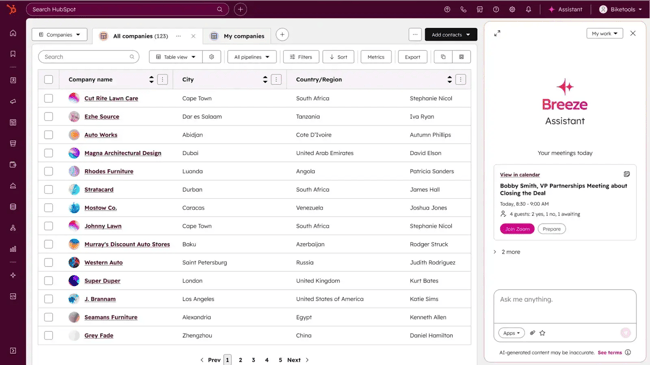
Here at HubSpot, we’ve in a variety of ways. First, the helps sales teams accurately predict future revenue and monitor their pipelines. Secondly, the feature helps sales reps identify the highest quality leads in their pipelines by taking thousands of data points and custom scoring criteria as input.
Our is a suite of AI-powered features that help people across departments ideate, create, and share top-notch content in a flash. For example, I use it to create collateral, craft messages, fix grammatical errors, and repurpose content.
Unlike standalone tools like ChatGPT, it integrates natively with HubSpot — eliminating manual copy/paste and making it easier to create collateral, craft messages, and repurpose content without leaving the platform.
Teams can also integrate , a conversational AI bot, with to unlock more use cases. Automatically add contacts to the CRM, conduct extensive company research, and transcribe calls, among other things.
Best for: Businesses looking for a comprehensive AI-powered sales and marketing platform with built-in features and integration.
What I Like
- Rich AI features like lead scoring and sales forecasting.
- ChatSpot’s integration with HubSpot streamlines sales processes.
- Native content assistant eases content creation.
- Ability to automate time-consuming tasks like adding contacts to CRM, transcribing sales calls, and more.
Pros
- Significant time savings on routine tasks.
- Improved accuracy in sales forecasting and lead prioritization.
- Enhanced content creation capabilities for non-writers.
- Integrates seamlessly with .
Cons
- Full potential unlocked with paid HubSpot plans.
- Some advanced features might require additional training.
Pricing: Tools are free with 贬耻产厂辫辞迟’蝉 CRM. Plans start at $45 monthly, when billed annually, depending on team size and subscription tier.
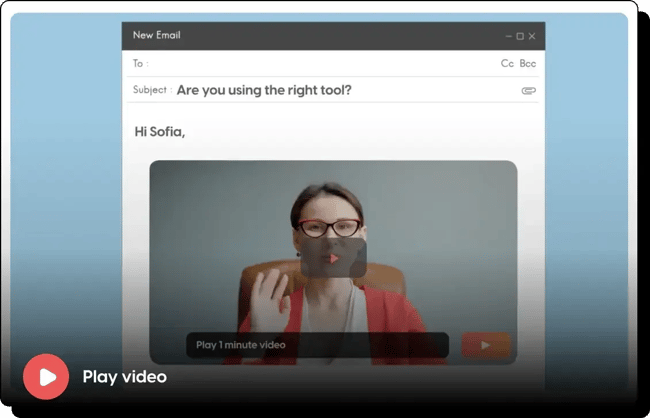
Hippo Video is an AI-powered platform that helps sales teams create videos at scale with added personalization. The platform offers a wide range of pre-built templates, allowing sales professionals to stitch personalized intros with pre-recorded videos.
Sales teams can build custom flows based on specific needs. To make outreach even more engaging, the platform includes customizable sales pages that combine video content with calls to action and meeting scheduling links.
The platform suggests personalization elements based on prospect data, making it easier to create relevant video content without starting from scratch. Detailed video analytics track engagement and performance, showing which prospects watched videos, how long they watched, and which sections they replayed.
Best for: Sales teams wanting to use personalized video messaging for outreach and engagement.
Key Features:
- User-friendly interface with intuitive video creation tools
- AI-powered personalized intros and smart editing suggestions
- Extensive template library for various sales scenarios
- Customizable sales pages for engaging video presentations
- Detailed video analytics to track engagement
Pricing: Free plans available. Pro plans cost $20 per user per month, billed annually. Teams pay $60 per user per month. Enterprise plans cost $80 per user per month, billed annually.
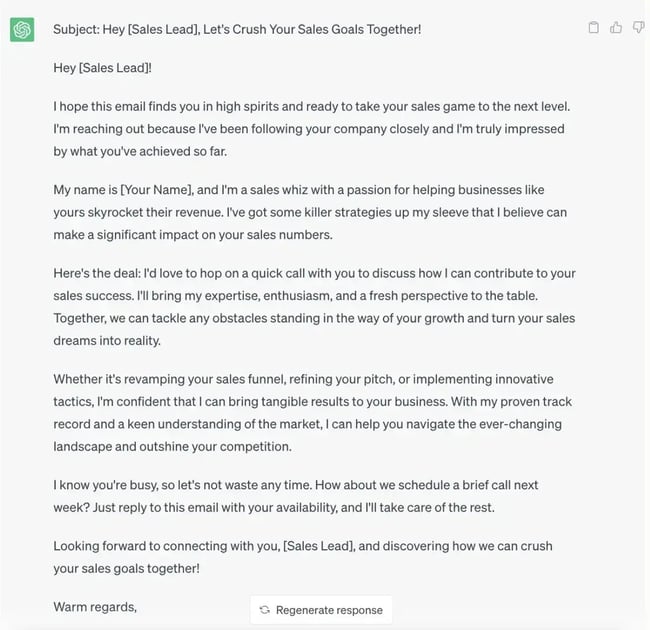
Since its launch in November 2022, ChatGPT has become a foundational tool for creating sales content. As an AI chatbot trained on diverse internet text, it generates human-like responses based on prompts, helping sales professionals with day-to-day content tasks.
Sales teams use ChatGPT to:
- Draft outreach emails
- Create sales proposals
- Generate call scripts
- Create SOPs and sales documentation
- Repurpose messages or emails for different audiences
Almost every other AI tool today is powered by OpenAI’s GPT model, which is the brain behind ChatGPT. However, one limitation is the need to manually input internal information, as it doesn’t have direct access to company data.
贬耻产厂辫辞迟’蝉 Content Assistant addresses this issue. This HubSpot-native tool can access data within the HubSpot system without manual copying and pasting, making it a more seamless option for teams already using HubSpot CRM.
Best for: Sales teams looking for a versatile AI tool for generating text-based content like emails, proposals, and scripts.
Key Features:
- Groundbreaking AI technology with human-like responses
- Wide range of applications for content creation and ideation
- Free to use for basic functionalities
- Can create sales proposals, video scripts, and more
Pricing: Free use of the basic tool. Plus is $20 per month. Team plans cost $25 per user per month. Contact sales for Enterprise pricing.
AI Sales Intelligence Tools
Sales intelligence platforms combine AI algorithms with massive databases to help sales teams identify, research, and prioritize prospects. These tools excel at data enrichment, account insights, and opportunity identification.
Here are some of the best.
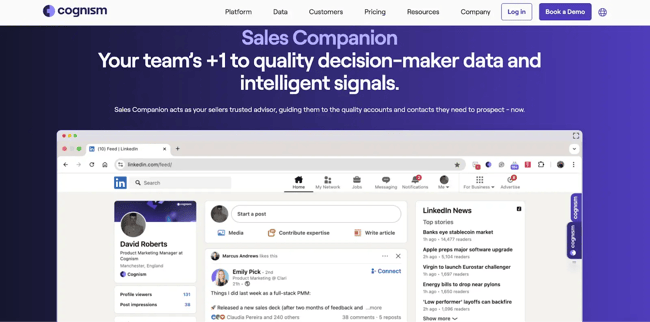
Cognism Sales Companion leverages AI to streamline lead generation and prospecting. The AI Search feature allows sales teams to input natural language or voice commands to quickly generate targeted lead lists.
For instance, typing “VPs of Sales at software companies” into the search bar yields a curated list of relevant contacts with verified phone numbers and emails.
The platform provides Diamond Data?, which offers phone-verified contact information to enhance connection rates and reduce time wasted on outdated data. Cognism also ensures compliance with GDPR and CCPA standards, making it suitable for teams operating in regulated markets.
Best for: B2B sales teams seeking AI-powered lead generation with high-quality, compliant data.
Key Features:
- AI-driven natural language search
- Phone-verified contact data through Diamond Data?
- Personalized insights via Sales Companion
- Seamless integrations with Salesforce, HubSpot, and Pipedrive
Pricing: Custom pricing available upon request. All packages include contact and company data, Diamond Data?, target market analytics, and CRM integrations.
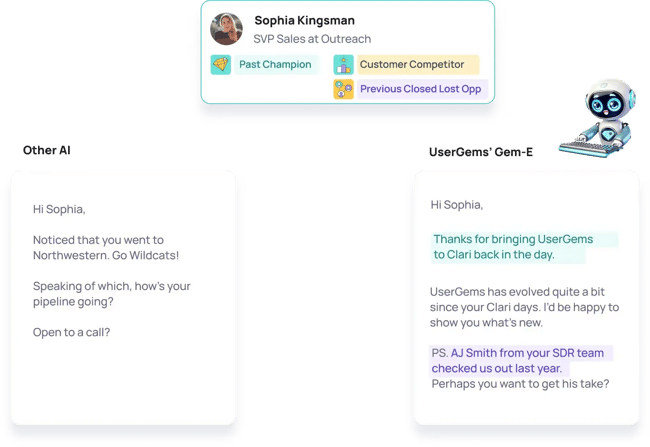
UserGems uses its outbound AI agent, Gem-E, to prioritize relevant outreach by capturing diverse buying signals, such as past champions, job changes, and intent data. The platform analyzes CRM data and past engagement history to identify who to target, when, and why.
Gem-E automatically drafts personalized email sequences, call scripts, and LinkedIn messages designed to match the effectiveness of top sales representatives. The platform integrates directly with standard sales tools, ensuring full visibility and control over outreach efforts.
Best for: Revenue teams seeking to boost pipeline impact by tracking job changes and past champions.
What I like: UserGems automates approximately 90% of manual sales development tasks, freeing sales teams to focus on high-value activities. The platform’s ability to track job changes means sales reps can reconnect with champions who’ve moved to new companies, creating warm opportunities.
Key Features:
- Creates and enriches accounts using relevant buying signals
- Drafts multi-channel outreach combining CRM data and engagement history
- Triggers automated workflows at optimal timing
- Expert training from Customer Success and RevOps specialists
Pricing: Custom pricing available upon request.
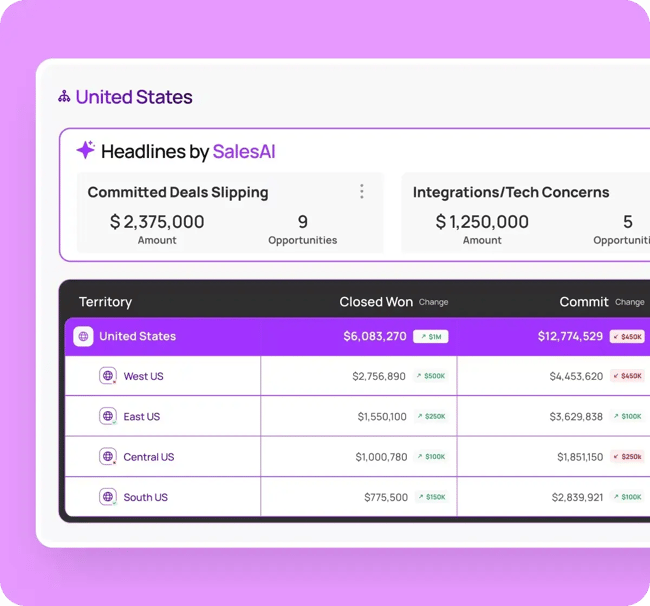
People.ai is an AI-powered revenue intelligence platform that automates data capture, provides insights, and streamlines CRM management. The platform analyzes data from prior sales interactions to identify patterns and automatically predict which deals are most likely to close.
The PeopleGlass feature simplifies CRM management by allowing sales representatives to update pipelines, take next steps, and add notes from a single view. This reduces time spent managing multiple screens and increases time spent closing deals.
Best for: Sales and marketing teams automating data capture and seeking predictive sales management insights.
Key Features:
- Complete account history and touchpoint visibility
- AI-driven automatic CRM data entry
- Sales forecasting and pipeline insights
- Logs all sales activities and attributes them to the correct accounts
Pricing: Custom pricing available upon request.
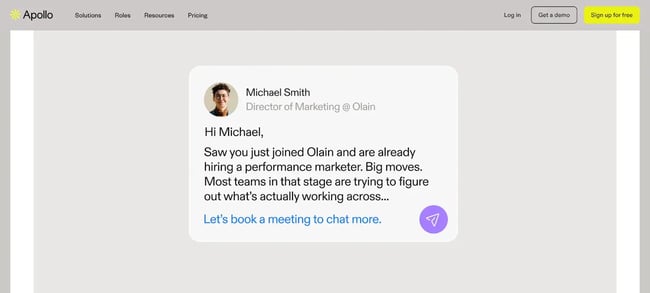
Apollo combines sales intelligence with prospecting and outreach capabilities. The platform offers a database of over 60 million companies and 260 million contacts, allowing sales teams to find and connect with potential customers in one place.
Apollo AI, powered by OpenAI’s GPT model and built on Apollo’s extensive database, helps craft hyper-personalized emails. The follow-up feature matches the sentiment of previous responses. I once had a prospect reply with a lighthearted joke, and Apollo AI crafted a witty follow-up that sealed the deal.
Best for: B2B sales teams looking for a massive database of potential clients and AI-powered email outreach.
Key Features:
- Extensive database of 60M+ companies and 260M+ contacts
- Advanced search and filtering options
- AI-powered email writing assistant for personalized outreach
- Sentiment-matching follow-up emails
Pricing: Free plans available. Basic plans cost $49 per user per month, billed annually. Professional plans cost $79 per user per month, billed annually. Organization plans cost $119 per user per month, billed annually.
Platforms like Seamless AI and LinkedIn Sales Navigator also fall into this category, providing contact databases and social selling capabilities that complement AI-powered research.
AI Sales Automation Tools
AI sales automation platforms streamline repetitive tasks, manage lead qualification workflows, and trigger actions based on prospect behavior. They reduce administrative burden while ensuring consistent, timely sales engagement throughout the customer journey.
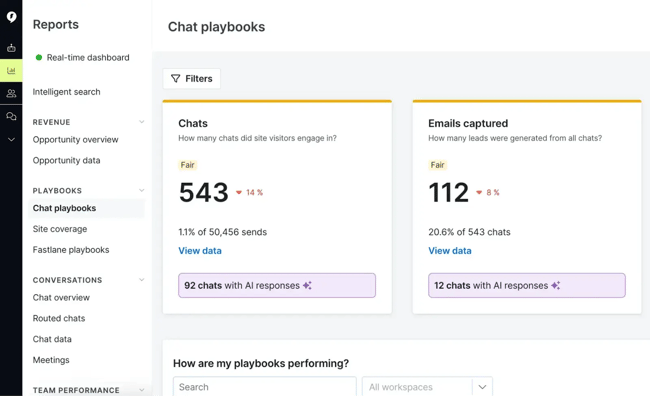
Drift, part of Salesloft’s AI toolkit, enables sales teams to jumpstart conversations and improve sales efficiency. The platform allows sales teams to see real-time site analytics to identify which visitors to target.
Drift calculates an AI-powered engagement score by collecting buying signals from contacts in the tech stack. This helps sales teams prioritize which accounts deserve immediate attention based on likelihood to convert.
The platform creates personalized experiences by providing information about what interests potential customers and what content they consume. Sales teams can initiate conversations with prospects via chatbots, and the platform notifies sales representatives the moment potential customers land on the website.
Best for: Sales teams focused on real-time engagement and personalized conversations with website visitors.
What I like: The real-time notifications empower sales reps to initiate timely and meaningful conversations with high-intent visitors. Integration with existing marketing automation tools means Drift fits into existing workflows without disruption.
Key Features:
- AI-powered engagement score for prioritizing leads
- Real-time notifications when prospects visit the website
- Chatbot conversations for instant engagement
- Real-time site analytics showing visitor behavior
- Integration with marketing automation platforms
Pricing: Drift does not publicly list pricing. Teams can book a demo to discuss plans.

ManyChat is an AI-powered chatbot platform that automates conversations across popular messaging channels where prospects spend their time. The platform allows sales teams to build automated conversation flows that qualify leads, answer common questions, and schedule appointments without manual intervention.
The AI capabilities help sales teams engage prospects at scale while maintaining personalized interactions. ManyChat’s automation builder uses natural language processing to understand prospect responses and route conversations accordingly. Sales teams can set up qualification criteria, and the bot automatically segments leads based on their answers.
What makes ManyChat particularly valuable for sales teams is its multi-channel approach. Instead of limiting automation to website chatbots, the platform meets prospects on Instagram DMs, WhatsApp conversations, and SMS, channels where response rates typically exceed email by 3-5x.
Best for: Sales teams automating conversations and lead qualification across Instagram, WhatsApp, Facebook Messenger, and SMS.
Key Features:
- AI chatbot automation across Instagram, WhatsApp, Facebook Messenger, and SMS
- Lead qualification flows with custom routing logic
- Automated appointment scheduling and calendar integration
- E-commerce integration for direct sales through messaging
- Analytics and conversion tracking across channels
Pricing: A free plan is available for up to 1,000 contacts. Pro plans start at $15 per month.
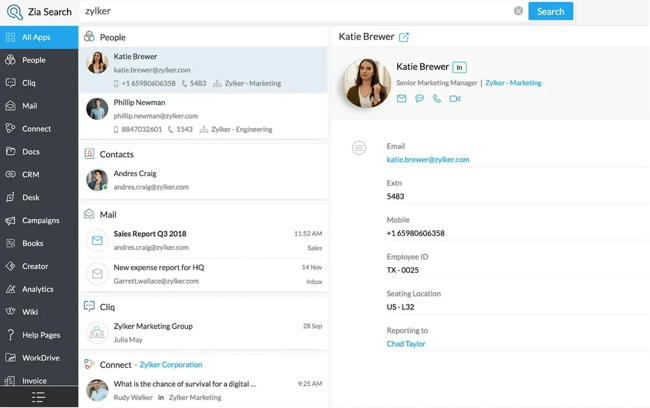
Zia is an AI assistant within Zoho CRM that helps sales representatives manage their CRM intelligently by predicting sales outcomes, automating time-consuming tasks, and taking notes.
By analyzing various data points, Zia predicts sales outcomes. The platform can detect anomalies in real time, alerting sales managers to unusual sales trends or activity patterns. Zia can also automate repetitive tasks and take notes as users dictate.
Zia adds to CRM data by collecting information on contacts, accounts, and leads. It analyzes data and suggests pre-built workflows based on patterns in the sales process, helping teams standardize and optimize their approach.
Best for: Sales teams using Zoho CRM who want AI-powered assistance for lead management, forecasting, and automation.
Key Features:
- Predictive analytics for forecasting sales outcomes
- Real-time detection of anomalies in sales trends
- Note-taking capabilities for capturing important details
- Automates repetitive tasks within Zoho CRM
- Suggests pre-built workflows based on sales patterns
Pricing: Free plans available. Standard plans cost $25 per month when billed annually. Professional plans cost $59 per month when billed annually. Enterprise plans require custom pricing.
AI Conversation Intelligence
AI conversation intelligence platforms analyze sales calls, meetings, and customer interactions to provide coaching insights, identify successful patterns, and surface deal risks.
Here are some of the best of these tools that turn unstructured conversation data into actionable sales intelligence.
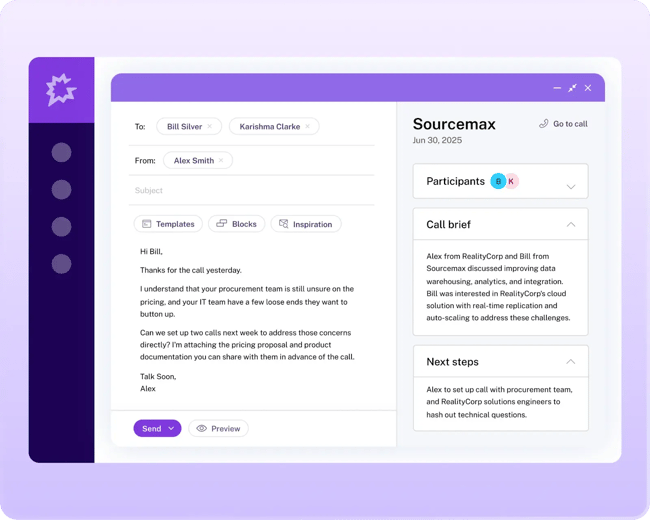
Gong is a revenue intelligence platform that turns customer interactions into strategic insights, helping teams gain visibility into market advancements. Through its AI-powered insights, Gong helps sales teams achieve revenue targets faster by analyzing every customer interaction across calls, emails, and meetings.
The Dialer feature allows sales reps to auto-dial contacts from Gong and receive AI-generated call highlights and outcomes without manual note-taking.
Emails leverage Gong’s AI and context from customer interactions to create and send deal-closing messages. The Account view displays all account information, including AI-recommended contacts, action items, and activity timelines in one place.
The CRM updater lets sales teams view and edit CRM fields for open deals instantly, without bouncing between tools. Recommended actions provide a list of AI-recommended tasks for moving deals toward closing, while deal forecasting uses historical data and current momentum to predict outcomes.
Best for: Sales teams looking to analyze customer interactions and improve sales performance through AI insights.
What I like: I use Gong to record and transcribe sales calls. It’s been a lifesaver for capturing context and following up without furiously scribbling notes during calls. The AI identifies successful patterns in top performers’ behaviors, making it easier to replicate what works.
Key Features:
- AI call analysis and highlights
- Automated outreach flows
- Auto-dialer with AI insights
- CRM field editing without switching tools
- AI-recommended actions for deal progression
- Deal forecasting based on interaction data
Pricing: Custom pricing available upon request. Based on , approximately $1,400 per user per year plus $5,000 platform fee.
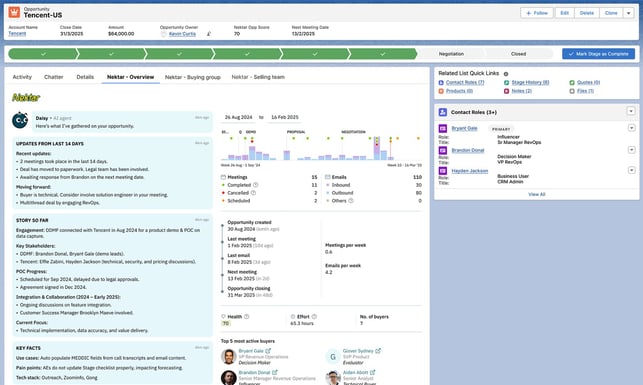
Nektar is a GTM telemetry platform that automatically captures every customer interaction like emails, meetings, calls, and Slack, and delivers structured, clean data to your CRM, data warehouse, and AI applications. This requires zero manual entry from sales reps.
Nektar ensures that what actually happens across your deals gets recorded. Most CRMs reflect only what reps remember to log. Nektar captures the rest, mapping interactions to the right accounts, contacts, and opportunities, then writing that data natively into Salesforce and Snowflake without any behavior change from the team.
For revenue organizations adopting AI, this matters more than ever. AI agents act on CRM data. When that data is incomplete or stale, agents make wrong decisions at machine speed with no human in the loop. Nektar acts as the data foundation that makes AI-driven forecasting, deal intelligence, and agent workflows trustworthy.
The platform also surfaces complete buying committees by identifying every stakeholder involved in a deal across email and calendar signals, not just the contacts a rep manually added. This gives RevOps and sales leaders a full picture of deal engagement, not fragments.
Best for: Enterprise and AI-focused revenue teams that need complete, reliable CRM data to power forecasting, AI agents, and deal intelligence, without relying on rep discipline to keep records current.
Key Features:
- Automatic capture of emails, meetings, calls, and Slack messages
- Native write-back to Salesforce, Snowflake, and AI applications
- Buying committee mapping across all deal stakeholders
- Institutional knowledge preservation when reps leave
- Zero adoption friction: no rep behavior change required
Pricing: Custom pricing available upon request.
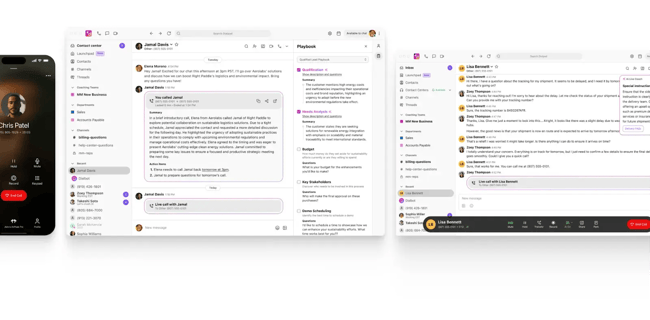
Dialpad is an AI-powered, cloud-based communication tool that provides real-time assistance by connecting sales representatives with live recommendations, scripts, and coaching during calls. The platform also provides advanced AI coaching with sentiment analysis.
One fantastic feature is the automatic generation of full conversation transcriptions. Dialpad tracks action items and identifies keywords, then sends this information directly to inboxes. I’ve used this for follow-ups and keeping track of important details without relying on memory.
Dialpad serves as an all-in-one workspace, offering an intuitive environment where sales teams can transition between team calls, prospect conversations, meetings, and messaging without switching platforms.
The advanced AI coaching includes sentiment analysis, QA scorecards, and in-call modes like barge-in, listen-in, and takeover. These features help sales managers provide real-time guidance when representatives need support during difficult conversations.
Best for: Sales teams needing an AI-powered communication platform with real-time assistance and coaching.
Key Features:
- Real-time AI assistance during calls
- Advanced AI coaching with sentiment analysis
- QA scorecards for performance evaluation
- In-call modes (barge-in, listen-in, takeover)
- Automatic conversation transcription
- Action item tracking and keyword identification
- All-in-one workspace for communication
Pricing: Standard plans cost $15 per user per month. Pro plans cost $25 per user per month. Enterprise plans are available upon request.
How to Implement AI Sales Tools Successfully
Successful AI implementation requires strategic planning, clear metrics, and ongoing optimization. Sales teams that follow structured implementation processes achieve faster adoption rates and higher ROI than those that rush deployment without proper preparation.
Start With Strategic Tool Selection
Before purchasing AI sales software, evaluate which tools address specific pain points and integrate with existing systems. Start by auditing current workflows to identify bottlenecks and time-consuming manual tasks.
Define success metrics upfront by establishing baseline measurements for time spent on administrative work, email response rates, and forecast accuracy.
Prospective tools should connect natively with existing CRM systems like , , or Microsoft Dynamics. Integration quality is best evaluated during trial periods rather than vendor demonstrations. Most platforms offer 14-30 day trials, making it possible to assess user-friendliness and fit before committing. offers AI-powered features without upfront costs. Plan for 2-4 weeks for evaluation and selection.
Use a Strategic Combination of Tools
Finding a single tool that perfectly meets every need is rare. If the budget allows, use complementary tools that address different functions.
, founder and CEO of , an onshore Quality Assurance service company, takes this approach with his sales process.
“I primarily use two AI tools, Perplexity.AI & OpenAI. The benefit of Perplexity is that it integrates internet access with AI. I ask it to research the company using the URL, I ask it to tell me whether the company is a startup or legacy company, etc.,” Fellows explains.
Then, Fellows uses OpenAI to clean up the data and present it when writing cold emails, enabling him to craft more tailored messages. “I know whether the development team is offshore/onshore, the company niche, and so forth!” Fellows says.
The key is to map tools to specific use cases rather than expecting a single platform to handle everything.
Assign different AI platforms to distinct functions within the sales process. For example, use or for email drafting, for call analysis and coaching, and or for lead scoring and prospecting automation.
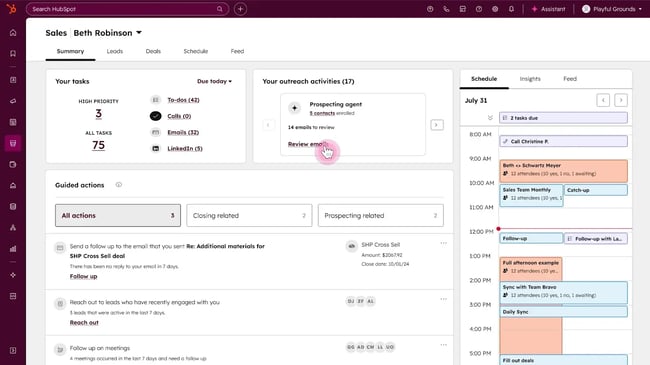
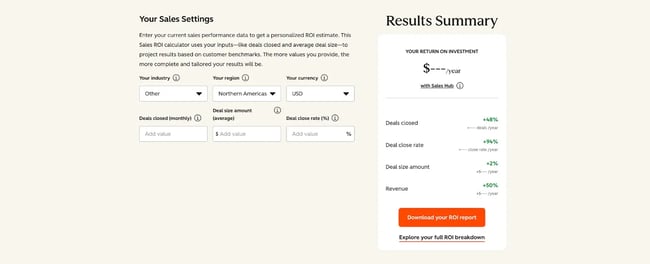
During this time, track total monthly spend on AI tools, time savings per tool (measured in hours per week), revenue influenced by each platform, and adoption rates among sales team members. 贬耻产厂辫辞迟’蝉 measures the return on investment in Sales Hub to demonstrate the platform’s business impact.
Warning signs to watch for include overlapping tool functionality, excessive time managing platforms instead of selling, and budget creep where costs outpace value.
Establish Human Oversight and Quality Control
AI sales tools like , Gong, and craft compelling content, but don’t use their output verbatim. AI lacks the empathy and emotional intelligence that make human communication resonate.
I always review and customize AI-generated content to align with my voice and each prospect’s specific needs. Of salespeople using generative AI for prospecting messages, 86% report it’s very effective when properly personalized.
Require sales reps to add three prospect-specific details to each AI-generated email or modify at least 30% of the text. Create simple checklists: “Have I verified the prospect’s current role?” “Does this message reference their specific pain point?”
Showcase side-by-side comparisons of raw AI output versus personalized versions in team meetings.
Build a People-First Implementation Culture
When introducing AI tools, resistance and fear about job security often emerge. Leadership should clearly communicate that AI empowers employees rather than replaces them.
Start conversations 2-4 weeks before deployment. Explain how tools remove tedious tasks so reps can spend more time building relationships and closing deals. Include sales representatives in the tool selection process by allowing them to test platforms during trial periods. This creates buy-in and reduces resistance.
Share success stories from reps who’ve used AI to close larger deals or achieve quota faster. Recognition demonstrates that AI proficiency leads to career advancement. Hold open forums where teams can ask questions about how AI affects their roles.
Provide honest answers and clarify that AI handles tasks, not jobs. Track employee satisfaction scores and adoption rates across team segments.
Invest in Comprehensive Training Programs
Some sales representatives are already familiar with AI tools, while others may be hesitant. Comprehensive training maximizes adoption across all skill levels.
Create role-specific training paths. SDRs need training on the , while account executives need training in conversation intelligence. Sales managers will need training in .
Identify early adopters and designate them as go-to resources for peers. Block calendar time for hands-on practice with sample scenarios in which mistakes don’t affect real deals. Create an internal wiki with step-by-step guides and video tutorials for each tool.
Plan two weeks of intensive initial training, followed by monthly skill-building sessions for the first quarter, then quarterly refreshers.
Monitor Performance and Optimize Continuously
AI adoption is an ongoing optimization process. Schedule brief team meetings during the first month to discuss what’s working and what’s confusing. Monitor both immediate metrics (daily active users, time spent in platforms) and outcome metrics (conversion rates, deal velocity, quota attainment).
Calculate monthly ROI by comparing time saved and revenue impact to total tool costs. Share results transparently with the team. Test different approaches by comparing response rates on fully AI-written emails versus those where AI provides outlines and humans write final versions.
Create anonymous feedback channels where reps can share honest opinions. Begin performance monitoring on day one. Schedule formal reviews weekly for the first month, then monthly for the first quarter, then quarterly thereafter. My best move was integrating with HubSpot CRM to automate email data capture seamlessly.
Frequently Asked Questions About AI Sales Tools
What is the best AI tool for sales?
The best AI tool depends on specific needs. excels at comprehensive CRM integration, with free AI features such as predictive lead scoring and forecasting. leads in conversation intelligence and call analysis. offers the largest contact database (260M+ contacts) with AI-powered outreach.
For versatile content creation, remains the top choice. Most successful sales teams use a combination of tools rather than relying on a single platform, pairing content-generation tools with sales-automation platforms for optimal results.
How is AI used in sales?
According to 贬耻产厂辫辞迟’蝉 State of AI Report, sales teams use AI in three primary ways: automating manual processes, personalizing marketing messages and customer experiences, and gaining data-driven insights such as sales forecasting, lead scoring, and pipeline analysis.
AI tools also provide real-time guidance during sales calls, transcribe conversations, analyze sentiment, and identify successful patterns in top performers’ behaviors.
Which AI sales tools are worth it?
Tools worth the investment demonstrate clear ROI through time savings and revenue impact. offers strong value, with free AI features and paid plans starting at $45 per month.
Companies like such as 18+ hours saved per week for sales teams and a 50% faster deal-closing rate.
Evaluate tools based on integration capabilities, time saved on specific tasks, and measurable improvements in conversion rates or deal velocity. Start with free trials before committing to annual contracts.
What tools offer sales intelligence with AI?
贬耻产厂辫辞迟’蝉 analyzes thousands of data points to identify high-value opportunities.
Cognism provides AI-powered lead generation, using Diamond Data? phone-verified contacts and natural-language search capabilities.
Apollo AI combines a database of 60M+ companies with AI-driven email writing and sentiment analysis.
UserGems tracks job changes and buying signals and automatically drafts personalized outreach through its Gem-E AI agent.
These platforms excel at data enrichment, account insights, and opportunity identification for B2B sales teams.
Getting Started With AI Sales Tools
AI sales tools have transformed how I approach prospecting, outreach, and pipeline management. The key lesson: no single AI tool is perfect for everything. I’ve had the best results by carefully selecting platforms that complement each other. HubSpot Sales Hub serves as my CRM hub, while ChatGPT handles content creation.
Start by identifying your most significant pain points. Test platforms during free trials and establish clear success metrics before committing. Embracing AI in sales requires continuous learning and adaptation, but the payoff is worth it.
Free Sales Software
Built for productivity, powered by relevance.
- Sales Automation
- Call Tracking
- Lead Prospecting
- And More!

![Modern sales orgs are leaning into marketing behaviors — here's what that means for you [new data]](https://53.fs1.hubspotusercontent-na1.net/hubfs/53/sales-team-marketing-behaviors-1-20251117-5976195.webp)


![Why your sales enablement content needs real-world credibility [new data]](https://53.fs1.hubspotusercontent-na1.net/hubfs/53/sales-enablement-content-credibility-1-20251028-1482008.webp)