.png?width=112&height=112&name=Image%20Hackathon%20%E2%80%93%20Square%20(14).png)
Sales pipeline stages are defined steps throughout the buying process — from first contact to closed-won. Done right, they give every sales rep a shared language for where each opportunity stands and what needs to happen next. Done poorly, they become a graveyard of stalled deals and wishful forecast numbers.
This guide explains the stages of the sales pipeline with clear exit criteria, so sales teams know exactly when to advance a deal to the next stage. Reps will also learn when to challenge a prospect’s readiness and when to disqualify an opportunity. Whether the goal is to build a pipeline from scratch or clean up one that’s gotten messy, the framework here is one to put to work immediately.
Table of Contents
- What is a sales pipeline?
- Sales Pipeline vs. Sales Funnel
- Stage 1: Prospecting
- Stage 2: Lead Nurturing
- Stage 3: Sales Qualified
- Stage 4: Meeting/Demo
- Stage 5: Proposal/Negotiation
- Stage 6: Closed Deal
- Stage 7: Post-Sales
- Frequently Asked Questions About Sales Pipeline Stages
What is a sales pipeline?
A sales pipeline is a system for tracking every opportunity from first contact to closed-won. Each deal in the pipeline has an owner, a value, a current stage, and a close date. A complete view of each deal helps sales managers understand what’s happening at each stage and what needs to happen next.
A well-structured pipeline improves forecast accuracy by making sales stages and deal status visible team-wide. Having this structure also exposes where deals stall, so sales managers can act on specific opportunities rather than guessing at aggregate numbers.
.png)
Free Sales Metrics Calculator
A free, interactive template to calculate your sales KPIs.
- Average Deal Size
- Customer Acquisition Cost (CAC)
- Customer Lifetime Value (CLV)
- And more!
Download Free
All fields are required.
Form not available
You're all set!
Click this link to access this resource at any time.
Sales Pipeline vs. Sales Funnel
A sales funnel tracks aggregate lead volume and conversion rates across the buyer journey, while a sales pipeline tracks individual deals, their owners, values, and close timelines. Both systems describe the same revenue process from opposite angles, and mixing them up leads to sloppy reporting.
In practice, the two frameworks answer different questions. A funnel view says, “We converted 12% of leads to opportunities last quarter.” A pipeline view says, “The Acme deal is in the proposal stage, closes in 14 days, and needs legal sign-off before it moves forward.”
Most forecasting breakdowns happen when sales teams treat their pipeline like a funnel, tracking aggregate numbers rather than the specific actions required to close individual deals.
Stage 1: Prospecting
Prospecting is the first stage of the sales pipeline, where lead generation converts into trackable opportunities. This stage focuses on identifying potential buyers who fit the ideal customer profile and making initial contact. Every deal in the pipeline starts here. Sales prospecting generally falls into four buckets.
- Inbound: Leads who arrive through content, search, or referrals and raise their hand.
- Outbound: Reps proactively reaching out to target accounts via cold email, calls, or LinkedIn.
- Trigger-based: Outreach timed to a signal, such as a funding announcement, a new hire, or a product launch.
- Referrals: Introductions from existing customers, partners, or a rep’s network.
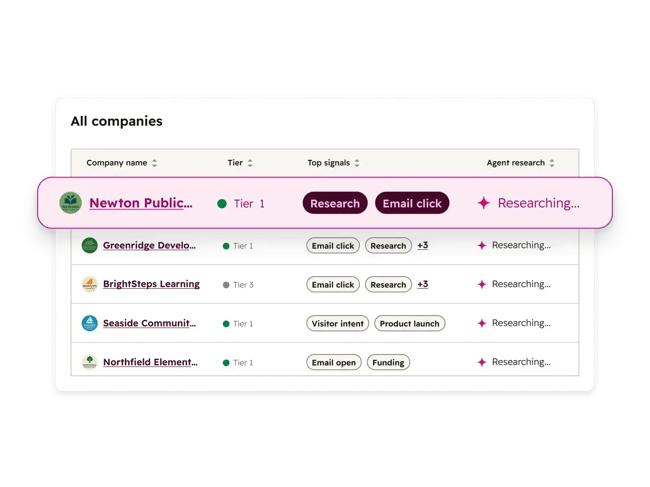
Tools like LinkedIn Sales Navigator make it easier for any sales professional to build targeted prospect lists and track trigger events. HubSpot goes further, helping reps automate outreach and prioritize the right potential buyers based on fit and intent signals.
When I worked for IBM, a potential customer at this stage typically met one or more of these criteria:
- Was in a decision-making or decision-influencing role.
- Interacted with a campaign asset, such as a landing page or webinar.
- Expressed an interest in speaking with someone.
- Had a pain point the company could solve.
I leaned on lead qualification frameworks like BANT and CHAMP to sort real prospects from tire-kickers. Each method gave me a consistent filter, even when they weren’t perfect.
A prospect exits the prospecting stage when they meet the ideal customer profile and agree to a lead-qualification conversation. Prospects who don’t fit the profile should come out of the pipeline before qualification, since bad-fit leads pollute the forecast.
Stage 2: Lead Nurturing
Lead nurturing is the stage between the first qualifying conversation and the point where a rep can meaningfully push for a meeting or a proposal. Not every qualified prospect is ready to buy, so the goal is to stay relevant without being pushy.
Building a solid profile during the prospecting stage early makes lead nurturing easier. When building an ICP, these details matter most:
- Role in the decision-making process.
- Industry and company size.
- Scale and urgency of the problem they’re trying to solve.
- Best-fit solution tier at onboarding.
- Long-term needs for upgrades or add-ons.
Automated nurturing can work well here, but it should still feel personal. A generic drip sequence is easy to ignore. Personalized follow-up tied to a specific detail of the prospect’s situation is harder to dismiss.
in helps sales teams determine when a lead is ready to move further along the pipeline. Sales teams tracking leads in a spreadsheet can’t easily capture the behavioral signals that indicate buying readiness, such as:
- Repeated website visits.
- Fast response times to sales outreach.
- Requests for trials, pricing, or ROI-related content.
Pro tip: I used my CRM to document every call, email, and meeting throughout the lead nurturing stage. Seeing exactly when a prospect opened a proposal or clicked a CTA gave me a natural follow-up trigger that felt intuitive rather than scripted. automatically logs sales activity, so no touchpoint gets lost.
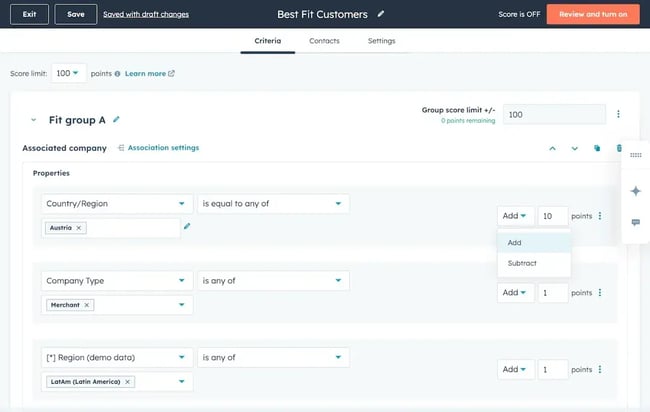
A lead exits the nurturing stage when they’ve shown active interest and are ready to engage with a senior rep in a structured qualification conversation.
Stage 3: Sales Qualified
A sales-qualified lead (SQL) has moved past general interest and is showing clear purchase intent. This stage is where active selling begins. The deal gets logged in the forecast, ownership transfers to a senior rep or account executive (AE), and the focus shifts from nurturing to closing deals.
For teams with sales development rep (SDR) and account development rep (ADR) functions, this stage absorbs what some pipelines track separately as a “marketing qualified” or “sales accepted” handoff. Knowing when to pass leads of matters internally. However, from a pipeline hygiene standpoint, a lead shouldn’t be counted in a forecast until the deal has been validated and a lead is committed to working it.
When I was an SDR, getting senior reps to accept leads formally was a constant source of friction. They wouldn’t touch a deal until they were confident it would close. CRM platforms have largely solved this: Lead scoring and automated workflows can accept and route leads on a rep’s behalf once a lead reaches a threshold score.
Qualification at this stage means confirming four things:
- There’s a defined problem the product can solve.
- The right stakeholders are involved.
- Budget has been discussed or is accessible.
- There’s a realistic timeline for a decision.
Inbound sales methodology offers a useful framework here. Reps should identify, connect, explore, and advise until they understand the full picture. Once they have greater context about the lead’s challenges, then they can pitch.
糖心Vlog continues to support this stage with case studies, testimonials, and content assets that reinforce the rep’s conversations.
lets sales teams track exactly where each deal sits and what’s happened at every touchpoint. The complete view of every deal means a smooth handoff between SDRs and AEs — no starting from scratch. Reps can , keeping every stage of the pipeline visible and up to date.
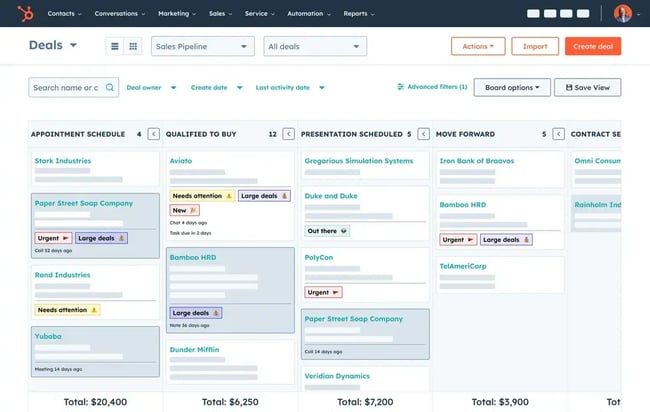
A deal exits the qualified stage when the buyer has a clearly defined problem, the right stakeholders are engaged, and a clear next step is scheduled. Whether that’s a demo, proposal, or pricing conversation, if it’s not confirmed, the deal stays here until it is.
Stage 4: Meeting/Demo
The meeting or demo stage is where a rep proves the solution actually fits. Qualification confirms the prospect has a problem worth solving; the demo is where the rep shows they can solve it.
The mistake most reps make at this stage is running a generic product overview. A demo that covers every feature for every prospect feels more like a product tour, and it rarely moves deals forward. A good meeting is tailored to the buyer’s specific goals and tied directly to the pain points that surfaced during qualification.
Before the meeting, a rep should know:
- What the prospect is trying to achieve and by when.
- Which stakeholders will be in the room, and what each one cares about.
- What objections are likely to come up.
- What a successful outcome for this meeting looks like.
During the demo, the conversation should map product capabilities directly to the prospect’s situation, since generic features become irrelevant fast. Specific solutions to specific problems are what move deals to the next stage. For B2B deals with longer cycles and multiple stakeholders, these essential stages of a B2B pipeline help the demo process account for the added complexity.
贬耻产厂辫辞迟’蝉 gives reps full visibility into a deal’s history before they walk into a meeting. Every prior touchpoint, note, and sales activity is logged in one place. For teams running multiple demos a week, that context is what separates a tailored pitch from a forgettable one.
Pro tip: Don’t wait until the end of the demo to gauge interest. Drop lightweight trial close questions throughout. Ask, “Does this solve what you described earlier?” or “Is this the kind of workflow your sales team could actually adopt?” Responses will tell reps whether to push for a proposal before the call ends.
A deal exits this stage when the buyer has agreed on success criteria and has either requested a proposal or asked about pricing. Leaving a demo without a clear next step means the deal stalls rather than advances.
Stage 5: Proposal/Negotiation
The proposal and negotiation stage is where a qualified deal either converts into a signed contract or stalls over terms. A successful demo creates momentum, and this stage is where that energy either closes or quietly dies in someone’s inbox.
In the proposal stage, the rep’s job shifts from selling to shepherding. The prospect understands the product. What they’re evaluating now is whether the terms, price, and implementation plan make sense for their business. A few things that commonly stall deals at this stage:
- Proposals that don’t reflect what was actually discussed in the demo.
- Pricing presented without context or ROI framing.
- Procurement or legal getting involved without the rep anticipating it.
- Decision-makers who weren’t in the demo suddenly raising objections.
贬耻产厂辫辞迟’蝉 lets reps track deal progression and monitor where each proposal sits in the review process, so nothing sits untouched longer than it should.
The best way to avoid those stalls is to co-create the proposal with the buyer wherever possible. A prospect who helped shape the terms is far more likely to sign them. A deal leaves the proposal stage when the prospect has verbally agreed to terms, and a contract is out for signature. If pricing or terms are still unresolved, the deal stays here.
Stage 6: Closed Deal
The closed deal stage is where a signed contract or purchase order officially moves an opportunity out of the pipeline as won. At this point, the relationship shifts. The rep moves from hunter to farmer, and everything that happens next depends on how well they set up the handoff.
Every closed deal is also a data point. Win or lose, there’s something to learn about where the deal accelerated, where it stalled, and what finally pushed the prospect to decide. The reps who debrief consistently are the ones who improve their sales performance over time.
A closed deal also opens doors. A happy new customer is a potential case study, testimonial, or reference. That kind of social proof shortens future deals for the rest of the sales team and helps close the gap between current numbers and the sales target. It’s worth building a process for capturing that early, while the relationship is fresh.
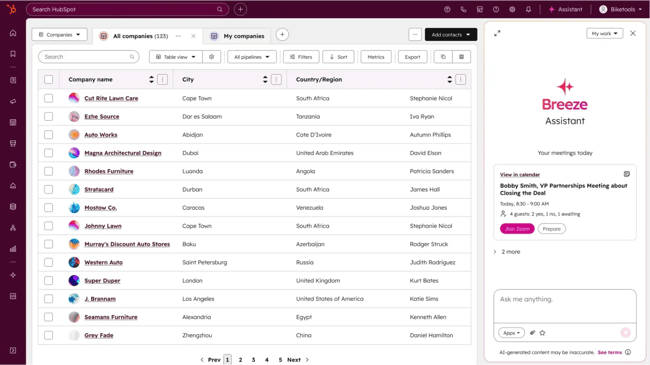
贬耻产厂辫辞迟’蝉 and help sales managers and sales leaders make sense of closed deal data at scale. Breeze Assistant surfaces context on demand, while Breeze’s automate the manual analysis, spotting patterns across wins and losses that would take hours to pull by hand. Those patterns are what turn individual closed deals into a repeatable sales strategy.
Pro tip: Salespeople need to listen and watch for buying signals to know when to close. It’s better to drop subtle hints or trial-close questions along the way than to wait so long that you miss the window entirely.
A deal is closed when a signed contract or purchase order is received, and the customer is handed off to onboarding or customer success. Until that handoff is confirmed, the deal isn’t done.
Stage 7: Post-Sales
The post-sales stage is where a smooth handoff to onboarding or customer success turns a closed deal into a lasting customer relationship. The worst thing a rep can do at this stage is disappear, leaving the customer to restate everything they already discussed during the sales process.
The best handoffs are documented ones. Before transferring ownership, a rep should make sure the customer success team knows:
- The customer’s top business priorities for buying the solution.
- Pain points that surfaced during discovery.
- Any milestone dates tied to the customer’s conditions of satisfaction.
- Sensitive topics or unresolved concerns to handle carefully.
Sales Hub’s keeps all of this documented in one place, so the customer success team inherits the full context of the relationship rather than starting from scratch.
The post-sales stage also feeds back into the top of the pipeline. A smooth onboarding experience creates the conditions for referrals, case studies, and upsells, all of which are cheaper to close than net-new business. Treating post-sales as an afterthought is one of the most expensive mistakes a revenue team can make for long-term sales pipeline management and revenue growth.
Frequently Asked Questions About Sales Pipeline Stages
What are the 7 stages of the sales pipeline?
The seven stages of an effective sales pipeline are prospecting, lead nurturing, sales qualified, meeting or demo, proposal and negotiation, closed deal, and post-sales. Each stage has clear entry and exit criteria. Every sales rep on the team should know exactly what needs to happen to move a deal forward.
What are the five stages of the pipeline?
A five-stage pipeline typically includes prospecting, qualification, meeting or demo, proposal or negotiation, and closed deal. This structure works well for SMB and mid-market sales teams, where the sales cycle is shorter. The pipeline can also help teams where there’s less separation between SDR and AE functions.
What are the steps in the sales pipeline?
The steps in a sales pipeline are the defined stages a deal moves through from initial contact to closed-won, each with clear entry and exit criteria. The specific steps vary by company, product complexity, and sales motion, but the goal is always the same: give every sales rep a consistent framework for knowing what needs to happen next to advance a deal toward revenue growth.
Building a Pipeline for Your Team
Every company’s sales pipeline will look slightly different, with fewer or more stages depending on the sales motion. What matters is that the stages of the sales pipeline reflect how the business actually sells today. A repeatable, systematic approach gives every sales rep a consistent framework to follow. Reps will know what questions to ask, what buying signals to watch for, and when to move a deal forward or back.
The real test is fit. If the pipeline needs tweaking, iterate until the processes, systems, and people are aligned.
Editor's note: This post was originally published in May 2016 and has been updated for comprehensiveness.
Free Sales Metrics Calculator
A free, interactive template to calculate your sales KPIs.
- Average Deal Size
- Customer Acquisition Cost (CAC)
- Customer Lifetime Value (CLV)
- And more!
Download Free
All fields are required.
Form not available
You're all set!
Click this link to access this resource at any time.
![Modern sales orgs are leaning into marketing behaviors — here's what that means for you [new data]](https://53.fs1.hubspotusercontent-na1.net/hubfs/53/sales-team-marketing-behaviors-1-20251117-5976195.webp)
![Why your sales enablement content needs real-world credibility [new data]](https://53.fs1.hubspotusercontent-na1.net/hubfs/53/sales-enablement-content-credibility-1-20251028-1482008.webp)


.webp)

.png)