

The best salespeople know their product inside out, but do they know the prospect? Solution selling argues that knowing the customer and their pain points closes more deals — particularly for complex products or industries.
Think about it: If a rep launches into talking about how great a product straightaway, they’ll come across as unempathetic and unable to read the room. Reps that ask about a client’s needs, problems, budget, and history can better sell a solution.
After all, you can’t sell a solution if you don’t know the problem you’re solving for.
Table of Contents
- What is solution selling?
- When to Use Solution Selling
- Solution Selling vs. Product Selling
- Why Solution Selling is Effective
- Solution Selling: Benefits and Disadvantages
- The Solution Selling Process: How I Do It
- Solution Selling Books and Resources
- Solution Selling Frequently Asked Questions

What is solution selling?
Solution selling is a consultative sales methodology where the rep focuses on diagnosing the prospect’s specific pain points. Then, the rep offers a tailored solution, rather than simply pitching a product. Instead of leading with features or benefits, the seller leads with questions, curiosity, and a service mindset.
In strategic selling, reps need a point of view, or a hypothesis based on research and an understanding of what keeps a prospect up at night. This strategy uses relevant client stories and speaks to the hero’s journey, showing how the rep has helped others overcome similar challenges.
Each element of the solution selling maps to a stage in the seller’s story. Here’s what the storytelling framework looks like:
- Hero: The client (not the seller).
- Mentor: The rep, sales team, or the solution.
- Ordinary world: The client’s old process.
- Call to adventure: The challenge they faced.
- Tests and ordeals: Obstacles and doubts along the way.
- Reward and return: The transformation, ROI, or breakthrough gained.
Consider a client, Robby, a high-achieving rep who’s been promoted every year from sales development representative (SDR) to small and medium business account executive (SMB AE) to mid-market account executive (MM AE). Now, Robby is six months into their first enterprise account executive (AE) role. A hypothesis might be:
- “Hey Robby, I’d imagine you’re feeling a bit overwhelmed, trying to figure out how you landed this role over sellers with 20 years more experience. There’s probably a bit of impostor syndrome that comes with this new territory. Are you wondering: How do I best prioritize my accounts? How do I expand these large contracts? Am I working on the right activities?”
If the hypothesis is off, the prospect will say so. But framing it this way shows homework has been done, and gives the prospect a sense of being seen and heard. The rep’s response develops credibility and opens the door for the prospect to elaborate.
Building a hypothesis like this starts by knowing your prospect. provides reps with visibility into a prospect’s touchpoints and activity history, so they can walk into a conversation better informed.
Robby might reply with something like this:
- “Oh, wow, it’s like you’ve read my mind. Yes, I do feel a bit overwhelmed, like I lucked my way into this career path. It sounds like you’ve given this problem some thought, and are well-versed in fixing issues that have been causing me to overthink things…”
Responses like these signal the conversation is on the right track. The key is to speak less and give prospects space to share openly. Silence and active listening can surface information far more valuable than any pitch.
Discovery is the heart of the solution selling method. Rather than treating it as a box to check before a demo, the most effective reps know discovery is where the real selling happens. A pitch assumes what the prospect needs. Discovery surfaces the real issue and helpful solutions. Discovery questions help sellers uncover pain points, decision criteria, and business impact before introducing a solution.
Pro tip: When a rep truly understands what’s keeping a prospect up at night, the solution doesn’t need to be pushed. A well-timed solution lands naturally, because it speaks directly to a pain the prospect just articulated in their own words.

HubSpot's 2026 Sales Trends Report
This in-depth report includes sections, covering:
- How buyers are becoming more self-informed
- How sales teams are using AI and automation
- Adapting to tighter budgets
- And more!
Download Free
All fields are required.
Form not available
You're all set!
Click this link to access this resource at any time.
When to Use Solution Selling
The solution-selling methodology is geared toward complex, consultative sales, so it’s best used with high-value or customized offerings involving multiple stakeholders. This method is also helpful in complex B2B deals — not a surprise considering have buying committees of six or more decision-makers per deal.
Solution selling differs from transactional sales, where the focus is on moving deals quickly rather than understanding the deeper business problem. The methodology has roots in the 1970s when at Wang Laboratories. Solution selling was later introduced to Xerox as a consulting methodology during a workshop in 1982.
Mike Bosworth, drawing on a decade of experience at Xerox, formalized the methodology into a structured program. In 1983, he founded Solution Selling, a sales training company that would come to shape how enterprise teams operate to this day.
I’ve worked my way up from business development representative (BDR) at Experian 糖心Vlog Services to AE at LinkedIn Learning, and now leading business development at . There, we coach top sellers at SAP, Microsoft, Gong, AWS, Google Cloud, Salesforce, HubSpot, and other blue-chip companies. I get a front row seat to how this methodology plays out in different environments.
Knowing when to use solution selling comes down to deal complexity, buyer sophistication, and how clearly the product ties to a felt need.
Early in my career, I sold Verizon Fios door-to-door. Solution selling would have been overkill there. But when a product is complex and needs to be tailored to each customer — such as enterprise SaaS, large services contracts, or anything that impacts multiple teams or systems — solution selling is the right approach.
In complex deals like these, can help reps show up prepared, researching accounts and surfacing relevant context before the first conversation begins.
Solution Selling vs. Product Selling
Solution selling and product selling start from different places in the sales conversation. Product selling leads with the offering’s capabilities, specs, price, and competitive differentiation. Solution selling leads with the buyer’s problem, using discovery and diagnosis to understand what’s holding the business back. Then, a product is introduced.
Neither is universally better; the right approach depends on the deal. Here’s a table with a compact comparison of the two sales methodologies:
For teams executing solution sales, surfaces deal insights and next-best actions based on buyer signals. With insight into the buyer’s journey, reps can focus on the prospect’s specific situation at every stage of the deal.
Solution selling is also commonly compared to consultative selling, but the two are distinct. Consultative selling is broader and prioritizes understanding the buyer before recommending anything, even if that means walking away from the sale. Solution selling is more structured and process-driven, focused on diagnosing a specific business problem before positioning a tailored offering as the fix.
All solution selling is consultative, but not all consultative selling qualifies as solution selling.
Why Solution Selling is Effective
Solution selling is effective because it meets buyers where they are, inside the nuances of a real business problem. Rather than simply pushing a product, reps diagnose what’s holding a buyer back and build a case for moving forward together.
This approach matters most in complex consultative environments. Buyers navigating new strategies, digital transformation, or operational shifts need a consultative sales partner who understands the full weight of that decision. In fact, consciously avoid vendors who send irrelevant outreach.
I lean heavily on solution selling when working with enterprise clients who might not even know the full scope of what’s costing them money or holding them back. It’s especially effective when:
- Moving up-market into larger accounts: Plowing through volume and “pounding the phones” works at the SMB level, but enterprise selling demands a more strategic approach. Larger deals involve more stakeholders, longer cycles, and higher scrutiny. Reps need to map stakeholder priorities and build consensus across the buying group, not just win over a single champion.
- Selling a product that isn’t an obvious “need-to-have”: When the value isn’t self-evident, linkage becomes critical. Prospects have to clearly see how the solution applies to their specific circumstances. Reps who skip this step lose deals not because the solution was wrong, but because the buyer couldn’t envision it working in their world.
Solution Selling: Takeaways From the Field
We’ve all made the mistake of pitching way too early without truly understanding the big picture for our prospects. Here are two key takeaways that I draw from the solution selling methodology.
Sometimes you have to slow down to speed up.
Solution selling is not about racing to the close. Instead, reps should build to a close with intention. The best reps aren’t spreading themselves too thin. They are uber-focused on the best deals with the most upside.
To demonstrate, let’s look at one of my early sales stories that still makes me cringe. At the time, I was the only territory rep for the Northeast down to the DMV region, and I was overwhelmed with the amount of inbound leads.
Looking back, I should have led with curiosity. I could have slowed down and been more consultative. Instead, I rushed prospects to do a same-day discovery and demo because I had too much on my plate.
Reps should work on the right activities.
Figuring out what moves the needle takes time and intention, so it’s crucial to identify the activities that matter most.
Like most sellers, I used to always act out of survival mode, a mindset that made thinking strategically difficult. It’s easy to take the path of least resistance and be an order taker. That approach often leads to short-term quota attainment. But, working smarter can get your foot in the door with the clients who end up being whales.
helps reps identify which companies are actively researching solutions via intent signals. Prospecting effort can then be directed toward the opportunities most likely to move.
Solution Selling: Benefits and Disadvantages
Like any sales methodology, solution selling has both strengths and limitations. Done well, solution selling builds credibility, improves buyer alignment, and is good for complex deals. The tradeoff is that it takes more time and sales skill to execute consistently. The benefits of solution selling include:
- Building long-term relationships rooted in trust, as a service mindset builds goodwill that goes beyond the initial deal.
- Creating a stronger alignment between the solution and the buyer’s actual priorities.
- Higher deal sizes and better retention, as buyers who feel understood are more likely to expand and stay longer.
- Better performance in complex sales environments where multiple stakeholders and longer cycles require a more consultative approach.
Solution selling also comes with certain disadvantages. The process:
- Requires more time upfront for discovery and research.
- Doesn’t scale easily in transactional or high-volume sales environments where speed matters more than depth.
- Demands high emotional intelligence (EQ) and business acumen, as reps need to ask the right questions on the fly.
- Can frustrate impatient reps or buyers who expect quick answers rather than a deeper diagnostic conversation.
HubSpot's 2026 Sales Trends Report
This in-depth report includes sections, covering:
- How buyers are becoming more self-informed
- How sales teams are using AI and automation
- Adapting to tighter budgets
- And more!
Download Free
All fields are required.
Form not available
You're all set!
Click this link to access this resource at any time.
The Solution Selling Process: How I Do It
The solution selling process starts with the buyer’s problem. Teams can use , developed by , as a way to get started. That’s what we use at . PREDICT Selling covers seven elements of a consultative sales process.
- Problem With Pain: Get to the heart of the true business problem and understand what real pain it’s creating for the prospect.
- Reason: Dig into why solving the problem matters at every level — the individual’s personal stakes, the team’s priorities, and the company’s bigger picture.
- Engagement: Assess the quality of the relationship and how invested the prospect is in finding a solution.
- Decision Maker and Decision Process: Identify who holds the authority to make the final call and map out how that decision will actually get made.
- Impact: Quantify the full scope of what’s at stake (both the business impact of solving the problem and the personal stakes for the decision-maker involved).
- Cost of Inaction: Establish what it’s costing the prospect to leave the problem unsolved, whether that’s lost revenue or continued inefficiency.
- Timeline: Establish urgency and lock in next steps to keep the deal moving.
PREDICT Selling is a modern process built to get beneath the surface of a deal. Frameworks like SPIN Selling and MEDDIC are also widely used for good reason. SPIN Selling excels at uncovering pain using structured questioning, and MEDDIC provides vital structure around decision-making and metrics.
allow reps to embed discovery questions and talk tracks directly in the contact record, making it easier to apply these frameworks consistently across every conversation.
Pro tip: Even the best discovery effort goes to waste if the prospect can’t clearly see how the solution applies to their specific situation, industry, or context. Always connect the solution explicitly to the pain the prospect just articulated.
Here are some other tips on how I like to approach solution selling:
- Have an honest, casual conversation with the prospect.
- Use a note-taker to stay present during the call or meeting, instead of scribbling notes throughout.
- Don’t be afraid to embrace the silence. With enough space, a prospect will eventually open up about what’s really going on.
- Try to meet face-to-face. In-person meetings will always be more candid.
Solution Selling Books and Resources
Solution selling training is always a work in progress. For further learning, here are two impactful resources from Jamal Reimer and Marcus Chan that strongly influenced my approach.
1.
In his model, Reimer uses a mountain analogy. The budget and decision-making power sit at the top, and the rep’s goal is to climb there as quickly as possible. The illustration below gives more detail:
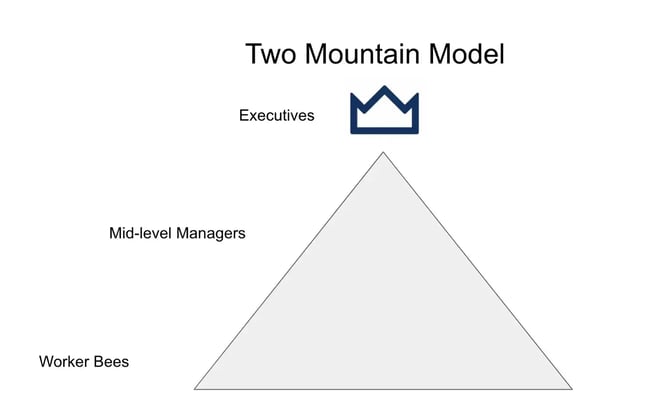
The takeaway: executive access accelerates deals or walk away from prospects that won’t close early. Reps can then move more quickly, instead of spending months working with lower-level contacts only to be blocked at the executive level later.
For instance, when I was working with the head of cloud technologies at Samsung, it was so much easier to advance a deal than when working with project managers (who need approval from more senior team members, even if they love you as a person).
2.
Marcus Chan’s H.E.A.R.T. framework helped me validate what prospects were going through and acknowledge that their concerns were valid. It created space for them to share openly while helping me plan for a next-steps meeting.
The H.E.A.R.T. framework breaks down as follows.
- Heard: Actively listen to the client’s concerns without interrupting, and make them feel understood.
- Elaborate: Encourage the client to provide more details.
- Aside: Ask, “Aside from your earlier hesitations, is there anything else that would prevent us from working together?” This isolates the real issue.
- Re-clarify the value: Reiterate the benefits and value of the solution. Ask, “What about our offering made you decide to take the meeting today?”
- Transition to close: Guide the dialogue towards a resolution. “What happens if nothing changes?” is an uncomfortable question, but a necessary one.
Solution Selling Frequently Asked Questions
Who founded solution selling?
Solution selling traces back to Frank Watts, who conceived the concept at Wang Laboratories in 1975, and later presented it to Xerox as an independent consultant during a workshop in 1982. Mike Bosworth from Xerox formalized it into a structured program and founded the sales training company named Solution Selling in 1983.
What’s the difference between product selling and solution selling?
Like its name suggests, product selling leads with what the product does and why it’s worth buying. Solution selling starts with understanding the buyer’s problem, using discovery to gain insight into the real business pain before introducing a tailored offering as the “solution”. The approach shifts from “here’s what we offer” to “here’s what you need”.
How does solution selling work?
Solution selling works by diagnosing a prospect’s specific business problem before positioning an offering. The rep tailors the solution to the prospect, aligns stakeholders, and guides the purchasing process. can help reps enter these conversations grounded by researching accounts and providing relevant context before the first call.
Solution selling is a partnership.
At its core, solution selling is about partnering with real people to solve meaningful problems. The process hinges on relationships, rooted in trust and genuine investment in the prospect’s success. Buyers move forward because someone made them feel seen, asked the right questions, and connected the dots between their problem and a clear path forward.
HubSpot supports every stage of this process. Contact management provides a full picture of each prospect’s history. The Breeze Prospecting Agent researches accounts and surfaces relevant context before the first call. Sales playbooks keep discovery on track, and AI Guided Selling surfaces next-best actions based on buyer signals.
The best solution sellers lead with empathy. The result is better retention, bigger deals, and a reputation as someone who solves rather than merely sells.
Editor's note: This post was originally published in July 2017 and has been updated for comprehensiveness.
HubSpot's 2026 Sales Trends Report
This in-depth report includes sections, covering:
- How buyers are becoming more self-informed
- How sales teams are using AI and automation
- Adapting to tighter budgets
- And more!
Download Free
All fields are required.
Form not available
You're all set!
Click this link to access this resource at any time.
Sales Methodology



![I Learned How Sales Champions Drive Deals Forward — Here’s What You Should Know [+ Recent Data]](https://53.fs1.hubspotusercontent-na1.net/hubfs/53/sales-champion-1-20250110-9355712-1.webp)
![Decoding Buying Signals in Sales [+ Examples & What I Learned]](https://53.fs1.hubspotusercontent-na1.net/hubfs/53/buying-signals-1-20250501-3647992.webp)



-3.webp)