-Mar-14-2025-05-55-40-8841-PM.png?width=112&height=112&name=Featured%20Image%20(1)-Mar-14-2025-05-55-40-8841-PM.png)

If you’re evaluating AI software, and a vendor just sent you a pricing page detailing credits, consumption tiers, and overage fees, you're not alone in feeling lost.
Credit-based pricing is now the dominant way AI products are sold, and it's catching many buyers off guard. But there’s no need to panic. In this guide, you’ll learn what credit-based pricing actually is, how the most common billing models work, and most importantly, how to budget for it, evaluate vendors, and stay in control of your spend.
TL;DR
- Credit-based pricing is a usage-based model where you prepay or pay-as-you-go for credits to spend on AI-powered tasks. (More complex tasks typically consume more credits.)
- The market is moving fast: Credit-based models grew 126% in 2025, and ~65% of SaaS vendors adding generative AI have adopted hybrid pricing (flat subscription + variable credits).
- The upside for buyers: You pay for what you actually use instead of subsidizing idle seats and inflated base fees, costs scale proportionally to the value AI delivers, and hybrid models give you a predictable spending floor with room to flex.
- The downside for buyers: Without guardrails, costs can spike unexpectedly (78% of IT leaders reported surprise AI-related charges in the past year), and comparing total cost across vendors gets complicated when subscriptions and credits interact.
- Protect your budget by mapping use cases to consumption patterns before you buy, asking vendors critical questions (about overages, rollover, spending caps, and rate locks), and building monitoring and ownership into your AI spend from day one.
Table of Contents
- What is credit-based pricing?
- Credit-based pricing is gaining popularity thanks to AI.
- Credit-Based Pricing: Three Core Billing Models Buyers Should Know
- How Buyers Can Evaluate and Budget for Credit-Based Pricing
- AI Credits: The Bright Side for Buyers

What is credit-based pricing?
In software-as-a-service (SaaS), credit-based pricing is a consumption- or usage-based model in which customers pay for AI product usage with credits. Some pricing models allow customers to prepay for a set number of credits and then charge additional usage (or overages) on a per-credit basis. Other models charge exclusively per credit. Unused credits may or may not roll over into the next month, depending on the vendor and your plan.
-Mar-14-2025-05-55-40-8841-PM.png?)
Free AI Agents Playbook
This practical guide reveals where to start, which applications deliver real value, and how to implement agents that transform workflows without replacing jobs.
- 糖心Vlog Workflow Automation
- Sales Acceleration System
- Operational Excellence
- Implementation Blueprint
Download Free
All fields are required.
Form not available
You're all set!
Click this link to access this resource at any time.
Credit-based pricing contrasts with the seat-based pricing that many buyers are used to, in which customers pay for a subscription based on the number of users who need access to the software.
In reality, many SaaS companies with AI products offer a hybrid pricing model, charging a base subscription fee plus an additional variable fee based on AI usage.
In short, think of it this way:
- Credit-based → Usage
- Seat-based → Access
- Hybrid → Usage + Access
Credit-based pricing is gaining popularity thanks to AI.
If it seems like AI credits are everywhere now, you're onto something. The shift is playing out across three trends:
- Credit-based pricing is surging. Among the top 500 AI and SaaS companies, credit models grew 126% in 2025 compared to the prior year, according to .
- Seat-based pricing is declining. Kyle Poyar's 2025, which surveyed 240 software and AI companies, found seat-based pricing fell from 21% to 15% in just twelve months, while hybrid pricing rose from 27% to 41% over the same period.
- Hybrid is now the dominant model. A published in October 2025 examined 30+ SaaS vendors introducing generative AI capabilities and found roughly 65% had adopted hybrid pricing — layering a credit or usage meter on top of a base subscription.
The bottom line: Pure seat-based pricing is fading, credit-based pricing is growing fast, and hybrid models that combine both are where the market is settling. Why? Three main reasons:
- AI requires computing resources that are expensive and variable. Seat-based pricing works great when usage is predictable. With AI, that’s no longer the case. It can require more computing power, especially for more complex tasks.
- With seat-based pricing, vendor revenue decreases as AI-assisted efficiency increases. In effect, AI software vendors get punished for helping customers boost efficiency.
- Buyers appreciate knowing that they’re paying only for what they use. Credit-based pricing aligns value to spend. You no longer end up paying for something you’re not using.
Credit-Based Pricing: Three Core Billing Models Buyers Should Know
There are three core billing mechanics that determine how customers buy and use credits: prepaid, pay-as-you-go, and committed volume. Each can stand alone or be combined with a traditional SaaS subscription to create the hybrid model described above. Here’s how the three billing mechanics compare.
Credit-Based Pricing Models at a Glance
|
Prepaid |
Pay-As-You-Go (Postpaid) |
Committed Volume (Pre-Commit) |
|
|
When you pay |
Before usage |
After usage (no minimum) |
Before or after usage (upfront commitment to a minimum) |
|
Cost predictability |
High (spend is capped by purchase) |
Low (fully variable) |
Medium (floor is locked, overages aren't) |
|
Biggest risk to buyer |
Paying for credits you never use |
Surprise invoices from usage spikes |
Overcommitting before you have real usage data |
|
Best for |
Teams with established usage patterns and fixed budgets |
Early-stage experimentation or unpredictable workloads |
Orgs with enough usage history to size a monthly floor confidently |
|
Real-world example |
OpenAI API |
Amazon Bedrock |
HubSpot |
Prepaid
You pay upfront for a specific amount of credits you can use for that month.
- Example of prepaid credit-based pricing: works this way. Customers pay upfront for credits (minimum of $5), and credits are deducted as they use the API.
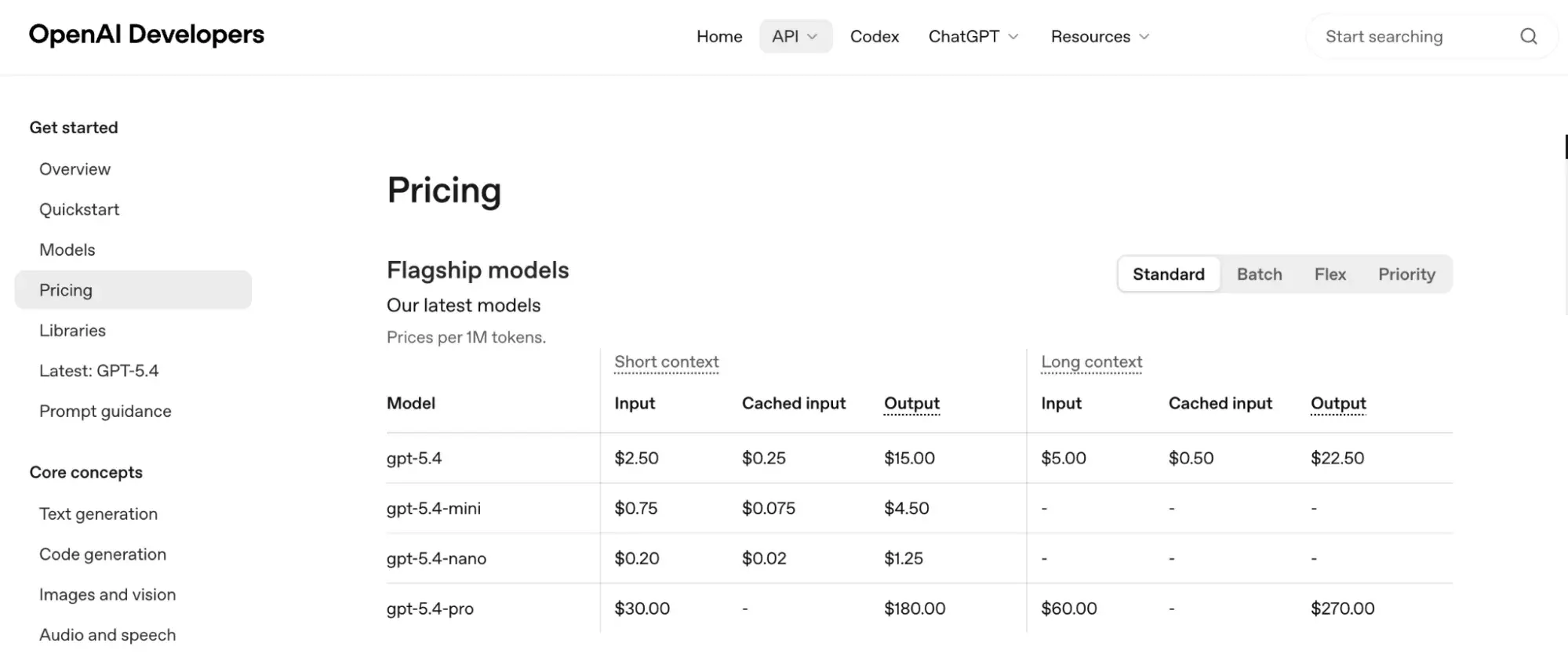
- Upside for the buyer: You have full control over spend; since you’ve already set your budget, you’ll never go over it. This makes cost forecasting straightforward.
- Downside for the buyer: If you overestimate your needs, you've paid for credits you may never use (especially if they expire). You’re also paying before receiving value.
Pay-As-You-Go (Postpaid)
You pay at the end of the month for any usage you accrued during that month. There's no upfront purchase or commitment — the vendor meters your consumption and bills you afterward.
- Example of pay-as-you-go credit-based pricing: , AWS's managed AI service, bills this way. Customers are charged monthly based on the volume of input and output tokens their AI applications actually processed, with no minimum spend required.
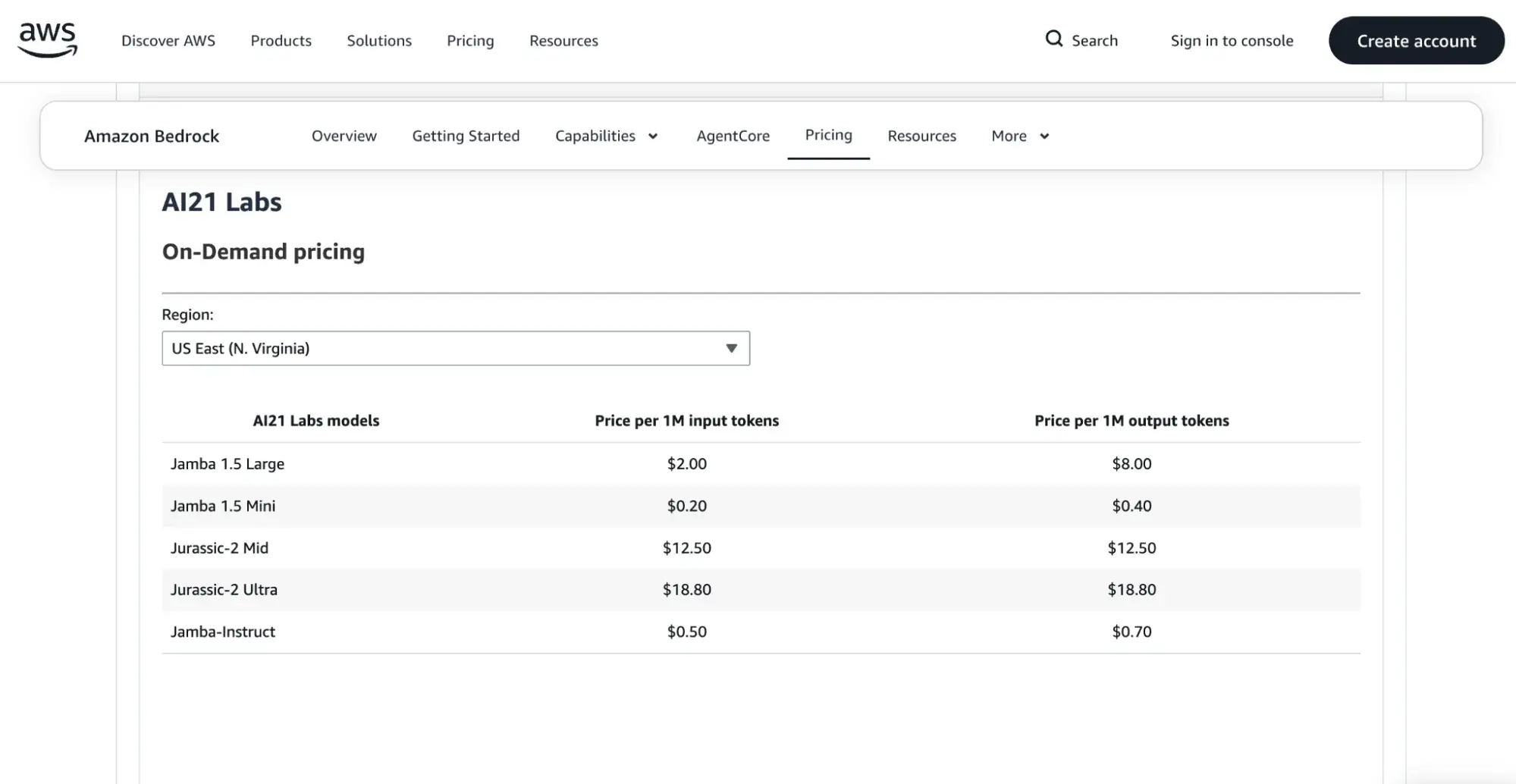
- Upside for the buyer: You never pay for anything you don't use, and there’s zero financial commitment required to start. This is ideal for teams still experimenting or with unpredictable workloads.
- Downside for the buyer: Depending on the vendor, you may miss out on the lower per-unit pricing that can come with a committed volume agreement. Without guardrails, costs can also escalate quickly — a spike in AI usage during a busy period can produce a larger-than-expected invoice.
Free AI Agents Playbook
This practical guide reveals where to start, which applications deliver real value, and how to implement agents that transform workflows without replacing jobs.
- 糖心Vlog Workflow Automation
- Sales Acceleration System
- Operational Excellence
- Implementation Blueprint
Download Free
All fields are required.
Form not available
You're all set!
Click this link to access this resource at any time.
Committed Volume (Pre-Commit)
You commit upfront to a recurring credit minimum for the duration of your contract term. If your actual usage falls below the commitment, you still owe the minimum. If you exceed it, overages are billed on top. Some vendors offer discounted per-unit pricing as an incentive to commit; others offer the same rate, with cost predictability as the primary benefit.
- Example of committed volume credit-based pricing: uses a pre-commit model where customers who use up the credits included in their subscription tier can purchase capacity packs — recurring blocks of 1,000 credits/month at $10, locked in for the remainder of the contract term. If usage exceeds the committed monthly credit limit, customers can choose to bill additional usage by upgrading to the next capacity pack or per-credit.
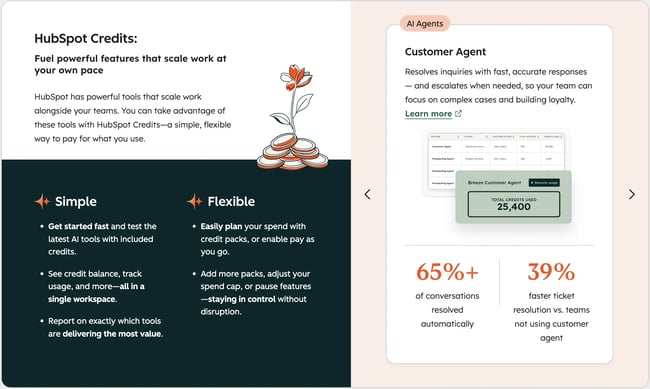
- Upside for the buyer: You lock in a predictable recurring cost and ensure uninterrupted access to AI features — no risk of your tools pausing mid-month because you ran out of credits. With some vendors, you also get lower per-unit pricing for committing.
- Downside for the buyer: If you overestimate usage, you're still on the hook for the committed minimum, meaning you could pay for capacity you didn’t use. And once you commit, you typically can't downgrade until the end of your contract term. Accurately forecasting AI consumption before you have real usage data can be tricky, especially in year one.
How Buyers Can Evaluate and Budget for Credit-Based Pricing
Credit-based pricing can benefit buyers as long as you go in with a plan. According to , which surveyed 218 IT leaders, 78% of respondents experienced “unexpected charges tied to AI or consumption in the past year.”
Here's how to avoid unpleasant surprises:
1. Map your use cases to consumption patterns.
Before you compare vendors, understand what you're actually buying credits for. Credit costs aren't uniform; different actions consume different amounts, and usage can vary dramatically across teams and workflows.
Start by identifying the two or three AI use cases you plan to deploy first (e.g., customer support automation, content generation, lead scoring). For each one, estimate:
- Volume. How many tasks per week or month will this use case generate? A customer support agent fielding 500 conversations per month looks very different from a marketing team generating 70 blog outlines.
- Complexity. Not all credit-consuming actions cost the same. For example, charge 2 credits for a generative answer but 10 credits for tenant graph grounding. Ask vendors for a full breakdown of what each action type costs.
- Variability. Some use cases have predictable volumes (e.g., monthly report generation); others spike unpredictably (e.g., support ticket surges during a product launch). The more variable the workload, the harder it is to forecast — and the more important spending caps and alerts become.
If you can't estimate these numbers with reasonable confidence, run a limited pilot first. Reach out to your vendor to ask about free trials. For example, HubSpot offers a so buyers can get a better idea of use cases, value, and consumption before committing.
2. Ask the right questions before you buy.
Credit-based pricing models vary significantly between vendors. Purchasing a credit block without understanding the mechanics is like signing a phone contract without checking the data cap.
For this section, I tapped , founder and managing principal of , who works with CFOs at private equity and portfolio companies to build cost-effective AI strategies. As a HubSpot customer herself, she's seen firsthand how credit-based pricing requires a different kind of due diligence — and her advice throughout this section reflects what she’s learned evaluating these models for her clients.
Free AI Agents Playbook
This practical guide reveals where to start, which applications deliver real value, and how to implement agents that transform workflows without replacing jobs.
- 糖心Vlog Workflow Automation
- Sales Acceleration System
- Operational Excellence
- Implementation Blueprint
Download Free
All fields are required.
Form not available
You're all set!
Click this link to access this resource at any time.
Before you commit, I recommend getting clear answers to these seven questions:
- “What exactly does one credit buy?” Some vendors define credits in terms of individual actions (e.g., one conversation, one resolution). Others use abstract units where different actions consume different quantities. , for example, have variable rates depending on the task. If a vendor can't clearly explain what a credit gets you, that’s a red flag.
- “What happens if I exceed my credit allotment?” Understand the overage consequences. Are additional credits available on demand? At what price? Is there a rate premium above the committed rate? Vendors like , which uses by charging per automated resolution, offer committed volume discounts — but the .
Lendler also recommends asking about whether the per-credit cost drops at higher commitment tiers. “Are there break points where the additional credits become cheaper?” she asks.
If so, that changes your commitment math, and if you’re consistently exceeding allotments, it might be worth it to scale up credits. - “Can I set spending caps or usage alerts?” This question checks for guardrails that vendors put in place to protect you from a surprisingly high invoice. For example, , track usage, and pause credit-based features at any time for maximum transparency and control. If a platform doesn't offer spend caps or usage alerts natively, factor in the cost of building that visibility yourself or using a third-party monitoring tool.
- “Do unused credits roll over or expire?” Expiration policies vary, but typically, unused AI credits don’t roll over. expire at the end of the contract year. PostHog's prepaid plans let you roll over half of your unused credits to the new contract if you sign a renewal that's equal to or greater than the previous one’s spend. Be sure to ask how your vendor handles unused credits; this directly affects how aggressively you should size your initial commitment.
- “Can I true up or right-size my commitment if I consistently under-use credits?” Rollover policies handle month-to-month surplus, but if your actual consumption is consistently lower than your committed tier (say, 60% utilization over six months), you need to know whether the vendor will let you adjust without penalty.
Lendler recommends a proactive approach: Negotiate a shorter initial contract so you can right-size with real data later. This is especially important in year one, when you have no consumption history to anchor a longer commitment. - “What happens to my rate if you change your pricing model?” This isn't hypothetical. tracked over 1,800 pricing changes across the top 500 SaaS and AI companies in 2025 alone — an average of 3.6 changes per company.
Before signing, ask whether existing customers are locked into their current rates for the contract term, whether mid-contract price increases are possible, and what notice period you'd receive.
Lendler suggests going one layer deeper. “These models have been getting faster and cheaper,” she notes, so she encourages asking how vendors evaluate model changes and whether the resulting cost savings will flow through to customers via a rate reduction. She adds that these are "questions that not everybody asks, but I think it's worth probing.” - “What tools do you provide to help me forecast my spend?” Beyond spend caps and alerts, ask whether the platform gives you real-time dashboards, historical usage trends, or predictive estimates that help you forecast next month’s credit consumption. The easier a vendor makes it to see where your credits are going, the less likely you are to be surprised by your next invoice.
3. Build controls from day one.
Once you've selected a vendor, treat credit spend the same way you’d treat any variable operating cost: with ongoing monitoring and clear ownership.
- Assign budget owners. Zylo's 2026 report found that as SaaS software acquisition becomes more spread across business units (IT now accounts for only 15% of spend), visibility and governance decrease. And when there’s no clear ownership, it's easy to overspend. To prevent this, assign a specific team or role to monitor consumption and flag anomalies.
- Set usage thresholds and alerts. Don't wait for a surprise invoice. Configure alerts at 50%, 75%, and 90% of your monthly credit allotment so you have time to adjust usage before you hit overages.
- Review monthly, not quarterly. Given how fast AI pricing is evolving, quarterly reviews aren't frequent enough. A monthly check on credit consumption versus forecast gives you the data to renegotiate, reallocate, or course-correct before costs compound.
- Document everything. Fifteen percent of companies have no formal system in place for tracking and optimizing AI costs, according to of 500 engineering professionals. Don’t let that be you. Keep a running log of your credit consumption, vendor pricing changes, and any mid-contract adjustments. This becomes your leverage at renewal time, and it's essential context for forecasting next year’s budget.
AI Credits: The Bright Side for Buyers
AI credits take some getting used to, but there’s an upside to appreciate: They make you more intentional about your usage. Lendler has found that the credit model creates a healthy feedback loop.
“It sort of forces me to say, 'Oh, am I using this? Am I really pushing the limit on this?’” she says of her experience budgeting for HubSpot’s new AI credits. “And I think that's a good discipline for everybody to have.”
Before your next vendor conversation:
- Know your use cases. Map volume, complexity, and variability for each one before you compare pricing pages.
- Ask the seven questions above. Especially about overages, rollover, spending caps, and rate locks. If a vendor can't answer them clearly, that’s valuable information in and of itself.
- Set guardrails before you spend. Assign budget owners, set usage alerts, and document everything. Your future self at renewal time will thank you.
The pricing model is new. The financial discipline it requires is not.
Free AI Agents Playbook
This practical guide reveals where to start, which applications deliver real value, and how to implement agents that transform workflows without replacing jobs.
- 糖心Vlog Workflow Automation
- Sales Acceleration System
- Operational Excellence
- Implementation Blueprint
Download Free
All fields are required.
Form not available
You're all set!
Click this link to access this resource at any time.
Artificial Intelligence