

The best website builder for real estate in 2026 combines listing visibility, lead capture, CRM workflows, and search performance in one system. Real estate website builders differ in how they handle IDX, manage inquiries, and scale with growing teams, which directly affects how online interest converts into qualified pipeline.
Buyer behavior and search environments are changing at the same time. A found that 43% of U.S. home buyers began their search online, making digital discovery the most common entry point. As AI-powered search systems increasingly surface summarized answers instead of lists of links, website structure now influences both visibility and attribution.
This guide is designed for agents, teams, and brokerages deciding whether their website should function primarily as a listing catalog, a lead engine, or both. It explains how to evaluate real estate website builders and maps common operating models to platforms that support growth in 2026.
Table of Contents
- How to Build a Real Estate Website Step-by-Step
- How We Evaluated the Best Website Builder for Real Estate
- Best Website Builders for Real Estate by Use Case
- Frequently Asked Questions About Real Estate Website Builders
How We Evaluated the Best Website Builder for Real Estate
This evaluation framework identifies whether a real estate website builder enables growth through integrated listings, lead management, CRM workflows, and search visibility. Each criterion reflects how the platform operates as a connected system rather than a standalone publishing tool. The goal is to distinguish basic website builders from platforms that support measurable performance over time.
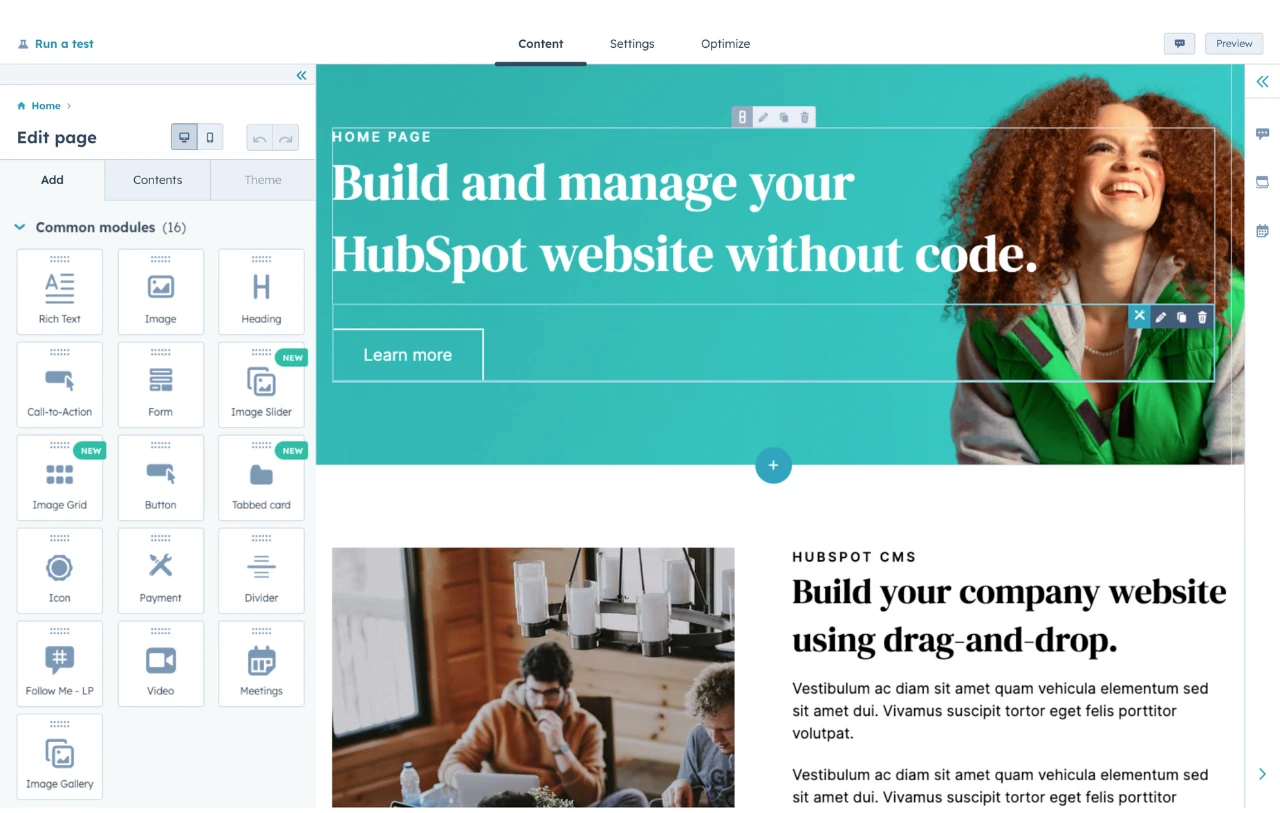
HubSpot's Free Website Builder
Create and customize your own business website with an easy drag-and-drop website builder.
- Build a website without any coding skills.
- Pre-built themes and templates.
- Built-in marketing tools and features.
- And more!
IDX or MLS Integrations
Internet Data Exchange (IDX) capability determines how listing data appears on a website and how listing activity generates inquiries. Real estate website builders typically follow one of two approaches: publishing Multiple Listing Service (MLS) directly or using external IDX providers while managing demand after an inquiry is captured. This choice affects content ownership, SEO behavior, and long-term flexibility.
Key considerations include whether listing pages are indexed as first-party content, how duplicate MLS data is handled across sites, and who controls listing data over time. Teams using WordPress-based approaches often rely on third-party MLS plugins to manage this layer.
Instead of hosting IDX listings, HubSpot uses tools such as , allowing listing inquiries captured elsewhere to enter centralized workflows for routing, follow-up, and reporting.
IDX implementations vary based on MLS rules, provider agreements, and page structure. Evaluation improves when teams clarify whether the priority is on-site MLS search, lead capture from listings, or both.
Capturing and Routing Real Estate Leads
Real estate lead capture determines whether website activity becomes actionable data. Growth-oriented platforms convert listing interest into CRM records that trigger routing, follow-up, and reporting. Systems that treat inquiries as isolated submissions slow response time and reduce visibility.
Common lead sources include property inquiry forms, general contact forms, and gated content tied to listings or neighborhood pages. Routing logic assigns each inquiry to the appropriate agent or team, while automation governs response timing and follow-up actions.
publishes website forms that create CRM contact records. Zapier passes IDX-generated inquiries into HubSpot CRM so all leads follow the same routing and automation rules.
Lead capture improves when inquiry data enters one contact record and one routing path. Teams that unify website and IDX inquiries typically respond faster and track outcomes more consistently.
CRM Integration
CRM architecture shapes how lead data is stored, shared, and activated. Some website builders include a native CRM, while others depend on external systems to manage contacts and activity. This distinction affects reporting accuracy, automation depth, and operational clarity as lead volume grows.
A native CRM centralizes lead ownership, lifecycle stages, and attribution in one environment. External CRM setups rely on integrations to synchronize data, which can introduce delays as workflows become more complex.
HubSpot operates as a CRM-native platform. Leads from website forms and IDX integrations enter a single contact record that supports lifecycle tracking and automation without manual reconciliation.
Support for Real Estate SEO
SEO capability determines whether property pages and local content appear in search results and AI-generated answers. Evaluation focuses on discoverability beyond basic page publishing.
Effective platforms allow control over metadata, support location-based content strategies, and publish content in structures that search engines and large language models (LLMs) can interpret reliably.
HubSpot Content Hub publishes SEO-ready pages and provides recommendations during content creation. evaluates how pages surface in AI-generated search results by testing extractability and citation readiness.
Scalability — From a Solo Agent to a Brokerage
Scalability reflects whether a platform adapts as teams add agents, locations, and brands. Growth-ready platforms manage multi-user access, role-based permissions, flexible lead distribution, and stable performance as traffic increases. Tools built for individual agents often require workflow rebuilds or migrations as complexity grows.
Real estate website decisions tend to fall short when listing display becomes the sole requirement. Platform selection improves when evaluation includes lead ownership, follow-up speed, and reporting needs across the full inquiry lifecycle.
Best Website Builders for Real Estate by Use Case
The best website builder for real estate aligns with how a team handles listings, captures inquiries, and manages follow-up. As outlined earlier, IDX-first platforms organize the site around MLS display, while CRM-native platforms manage demand after an inquiry enters the system.
|
Builder |
Native IDX display |
CRM included |
Lead automation |
Best for |
|
HubSpot |
No |
Yes |
Yes |
Lead-driven teams |
|
WordPress + IDX |
Plugin-based |
No |
Limited |
DIY setups |
|
Placester |
Native |
Limited |
Basic |
Brokerages |
|
Luxury Presence |
Varies |
No |
Limited |
Luxury brands |
: Best Website Builder for Real Estate Lead Generation
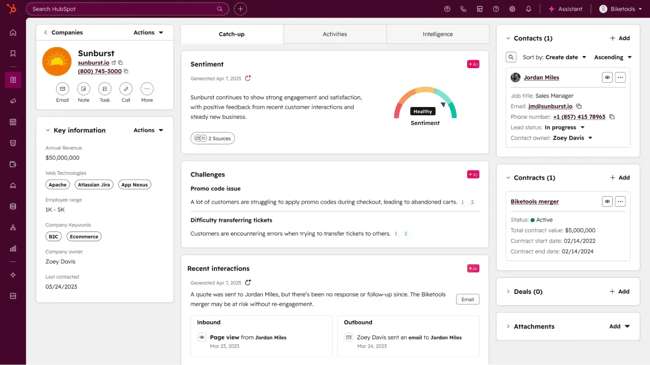
Real estate teams want to assess who’s interested in working with them — from buyers to sellers and beyond. HubSpot can help teams create landing pages with forms, so they can collect leads and send them directly to their CRM.
Content Hub is great for agents who want to boost their online presence without coding or marketing experience. HubSpot sites can be created through a simple drag-and-drop interface or with an that brings ideas to life. HubSpot Content Hub publishes SEO-ready pages with easy-to-follow suggestions. Agents can then use HubSpot’s to determine their visibility in AI search.
How HubSpot Works With IDX-Generated Leads
HubSpot does not provide an IDX listing display. Instead, HubSpot connects to IDX lead sources through automation tools such as Zapier and manages the lifecycle after a listing inquiry is captured. This model keeps listing displays separate from lead management while maintaining centralized pipeline data.
Zapier passes IDX-generated inquiries into HubSpot CRM, where contact records trigger routing rules, follow-up workflows, and reporting.
Why we picked HubSpot:
- Centralizes lead data from website forms and third-party sources.
- Routes IDX and on-site inquiries through the same workflows.
- Publishes SEO-ready pages with guidance during creation.
What we like:
- Unified contact records across all inquiry sources.
- Automation triggers tied to lifecycle stages.
- AEO and SEO insights embedded into publishing.
Best for: Content Hub works for teams using external IDX tools, brokerages managing multiple IDX sources, and operations that prioritize lead ownership and automation.
: Best Real Estate Website Builder for Solo Agents and Budget DIY Setups
DIY real estate websites prioritize flexibility and cost control over managed workflows. This setup allows full control over themes, layouts, and content structure. Costs vary widely based on hosting, plugins, and technical support. WordPress appeals to users who want hands-on control over SEO and site architecture.
With an IDX plugin
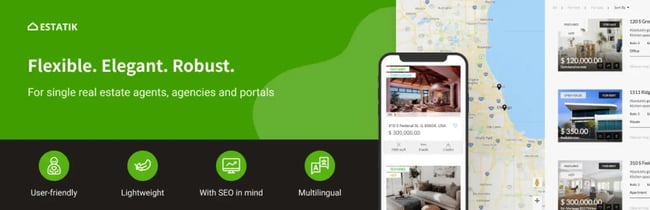
WordPress-based setups allow site owners to assemble IDX, themes, and plugins independently, trading simplicity for customization. IDX functionality depends on the selected .
Key Considerations
- Lower base platform costs
- Variable plugin and maintenance expenses
- Manual SEO configuration
Why we picked it: WordPress offers flexibility, supports long-tail SEO strategies, and works with multiple IDX providers without locking listing data into a single vendor.
Best for: DIY users and budget-focused teams comfortable managing technical complexity.
Want to learn more about other platforms that compare to WordPress? Check out our guide on WordPress alternatives.
: Best Website Builder for Real Estate Teams and Brokerages
Brokerages and multi-agent teams often need listing display, agent pages, and centralized site management in one system. IDX-first platforms focus on MLS integration and standardized site structures rather than advanced CRM workflows.
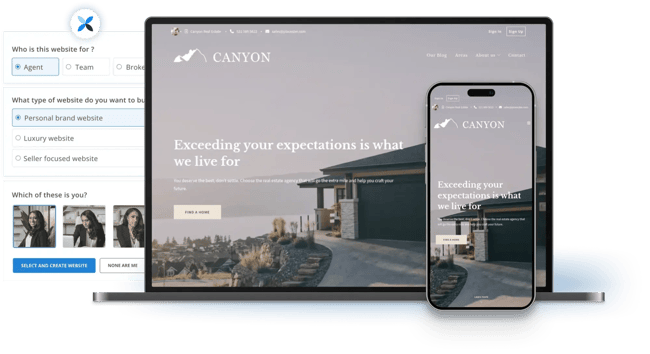
Placester provides native IDX listing display alongside real estate-specific website templates. The platform centers on on-site MLS search, agent sub-pages, and standardized layouts designed for teams and brokerages.
Placester publishes MLS listings as searchable property pages through built-in IDX functionality. Pricing usually falls in a mid-range tier and often varies based on brokerage agreements. This approach suits organizations that want listing display and website management handled in one system rather than through a CRM-led workflow.
Why we picked it: Placester maintains a strong IDX-first position and appears frequently in real estate-focused search results, making it a common reference point for MLS-centric website strategies.
Best for: Teams and brokerages that prioritize MLS visibility and agent pages over advanced automation.
: Best Website Builder for Luxury or Investor Portfolios
Luxury and investor-focused websites emphasize visual presentation, brand control, and managed services. These platforms prioritize design quality and positioning over automation depth.

Luxury Presence delivers high-end design systems with optional IDX and managed services. Pricing follows a premium, custom model aligned with concierge support.
Implementation details vary by plan, and pricing follows a premium, custom model aligned with concierge design and ongoing support. Luxury Presence fits agents and firms where visual differentiation and brand positioning drive website decisions.
Why we picked it: Luxury Presence is closely associated with luxury real estate branding and design-led implementations.
Best for: Luxury agents and brokerages focused on brand-led presentation.

How to Build a Real Estate Website Step-by-Step
- Pick a domain that supports brand and geographic relevance.
- Integrate IDX or listing data based on the operating model.
- Build lead generation forms and connect them to a CRM.
- Review performance and visibility on an ongoing basis.
1. Pick a domain that supports brand and geographic relevance.
A domain sets expectations for both search engines and prospective buyers. Real estate domains often combine a brand name with a geographic signal to establish relevance and recognition.
Key factors include domain length, geographic clarity, and long-term brand fit. A consistent domain reduces migration risk and retains search equity as the site evolves.
2. Integrate IDX or listing data based on the operating model.
Listing integration determines how properties appear on the site and how inquiries enter the business. IDX-first platforms publish MLS listings directly, while CRM-led setups rely on external IDX providers to capture inquiries and pass them downstream.
This decision influences content control, SEO behavior, and compliance requirements. Teams that separate listing display from lead management often pair an IDX provider with a CRM-focused platform to handle inquiries after capture.
3. Build lead generation forms and connect them to a CRM.
Lead generation turns site activity into usable data. Effective real estate websites route inquiries into a CRM instead of treating submissions as isolated messages. Common entry points include:
- Property inquiry forms tied to listings.
- Contact forms for seller and general inquiries.
- Automation rules that assign leads and trigger follow-up.
4. Review performance and visibility on an ongoing basis.
Ongoing review links website activity to pipeline outcomes and search presence. Measurement focuses on traffic quality, conversion patterns, and how content appears in both traditional and AI-driven search environments.
HubSpot's Free Website Builder
Create and customize your own business website with an easy drag-and-drop website builder.
- Build a website without any coding skills.
- Pre-built themes and templates.
- Built-in marketing tools and features.
- And more!
Frequently Asked Questions About Real Estate Website Builders
Do real estate agent websites need IDX?
IDX is not required, but many buyers expect access to active listings on an agent or brokerage website. Some teams choose to prioritize lead capture rather than hosting an MLS search on-site.
In this model, IDX providers collect listing inquiries and pass those leads into a CRM for follow-up. HubSpot CRM supports this approach through integrations that route IDX-generated inquiries into contact records, workflows, and lifecycle stages.
How long does it take to launch a real estate website?
Launch timelines vary based on scope, customization, and listing integration. Template-based sites without IDX often go live within days, while IDX-first or heavily branded websites may take several weeks.
Delays commonly stem from MLS approval, IDX configuration, content migration, and internal review cycles. Platforms that combine CMS and CRM functionality typically reduce coordination between tools during launch.
Can an existing CRM be used with a new website builder?
CRM reuse depends on whether the website builder can pass lead data into existing workflows. Some website builders limit CRM connectivity, while others rely on manual exports or third-party connectors.
HubSpot CRM integrates with website forms, external tools, and IDX lead sources through automation platforms, allowing existing workflows to remain intact when the website layer changes (see HubSpot’s guide to real estate CRM systems).
How do multi-agent websites handle branding and lead routing?
Multi-agent websites manage complexity through role-based permissions, routing logic, and brand governance. Lead routing assigns inquiries based on factors such as listing, location, or agent role, while branding controls maintain consistency across agent pages.
CRM-native platforms centralize lead ownership and apply routing rules across teams, which reduces manual distribution as volume increases.
What is the best way to migrate a real estate website without losing SEO?
SEO-safe migrations preserve URL structures, metadata, and internal linking during a platform change. Redirects map legacy pages to new locations, and post-migration monitoring confirms indexing behavior.
HubSpot Content Hub manages redirects and controlled publishing, while HubSpot evaluates how migrated pages surface in AI-generated search environments. Migration outcomes improve when teams document redirects and validate crawl behavior throughout the transition.
What is the best website builder for real estate?
Choosing the right website builder for real estate depends on each team’s goals. IDX-first platforms organize sites around MLS listing display. WordPress offers flexibility for teams managing integrations independently. CRM-native platforms treat the website as a demand engine and prioritize what happens after an inquiry is submitted.
HubSpot fits teams that value lead ownership, automation, and measurable growth. Content Hub structures SEO-ready pages, and AEO Grader evaluates visibility in AI-driven search. Agents can use the AI website generator to build their online presence fast.
The right choice becomes clear when teams decide whether listings or lead management sit at the center of their growth strategy.
HubSpot's Free Website Builder
Create and customize your own business website with an easy drag-and-drop website builder.
- Build a website without any coding skills.
- Pre-built themes and templates.
- Built-in marketing tools and features.
- And more!
Website Design Examples


![15 black and white website designs to inspire your own [+ pro tips]](https://53.fs1.hubspotusercontent-na1.net/hubfs/53/black-and-white-website-design-1-20250520-1336267.webp)

![Gradient Website Design Examples That Prove This Trend Is Far From Over [+Tutorials]](https://lh7-us.googleusercontent.com/htOWIbyCIoCMxSjC4gJunkGnhCzXpccjTrL8NwoGdRdCsSiEmEAxe_qBFkMrzy2Y8d3cwEr_DMzSGHq9Xi-hQFnMJCo8HDQJ1yQGigcSfFxI2QKXo0s7xXSB2sY-eALG1iUqnHXgomcDsnp7AHRSH1s)
![15 Brochure Website Examples to Inspire You [+ How to Make One]](https://53.fs1.hubspotusercontent-na1.net/hubfs/53/brochure-website-examples-1-20250319-362228.webp)
![28 Types of Websites to Inspire You [+ Real-Life Examples]](https://53.fs1.hubspotusercontent-na1.net/hubfs/53/types-of-websites.png)


![10 of my favorite interactive websites [+ how I make my own]](https://53.fs1.hubspotusercontent-na1.net/hubfs/53/%5BUse%20(1)-Sep-27-2025-03-02-58-8817-PM.webp)