

Mindsets regarding website growth (and marketing in general) are seeing a rapid shift. With third-party agencies, CFOs are at earlier stages than before. For many businesses, the idea of “growth at all costs” has been tossed aside because of our uncertain economic times and the way AI is affecting nearly every part of their operations.
As part of this shift, many CFOs aren’t looking at website growth as a purely creative expense. Instead, websites are being treated as a capital investment — one that needs to deliver real revenue, and not just flashy visitor metrics or a pretty design. This is a change for CFOs, too, who are often asked to do more to support growth and provide better visibility into the business to inform the rest of the leadership team’s decision-making.
This is especially true as AI changes organic web traffic. CFOs want to see meaningful financial results from all website-related activities. Here’s what that means for website growth teams.
Website performance is becoming a business metric.
Let’s start with the core essentials. Back in the heyday of content marketing, the growth teams I worked with generally weren’t as concerned about direct revenue impacts. They wanted to see things like increased visits and visibility, or more engagement with their content in general — the stuff that doesn’t always lead to immediate returns, but can help build a brand over time.
With AI summaries dramatically changing web traffic, visits are falling drastically for pretty much every website. As a result, website teams are increasingly evaluated on revenue rather than visits. When we adapt a website growth strategy, leadership wants to know what that specific improvement will deliver to the bottom line. Think of things like showing how improved site speed boosts conversion rates.
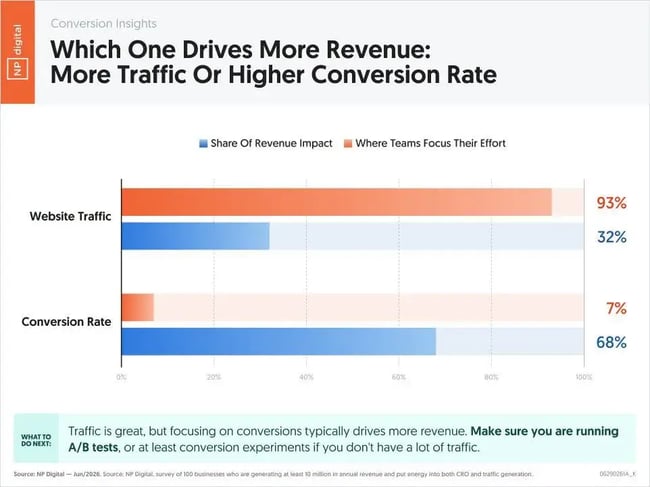
Website growth conversations are becoming financial conversations. There needs to be a clear financial justification for growth initiatives and technical updates, because the website itself is a business metric that must be measured. These metrics aren’t focused solely on direct revenue, either. They also need to include costs to the business, especially when a website update could create savings in other parts of the business.
.png)
Free Website Optimization Checklist
This website optimization checklist will help you perfect your website's:
- Performance
- SEO
- Security
- Mobile Performance
Download Free
All fields are required.
Form not available
You're all set!
Click this link to access this resource at any time.
Every website investment needs a clear return.
Websites have long been considered a mandatory part of your web presence. But as the costs of keeping a website up to date increase, CFOs want to see a clear return on investment.
In 2024, HubSpot estimated that annual website costs could range from $439 to $365,475, depending on the site’s scope and the services used. Between software, web hosting, domain registration, SSL certificates, design, extensions, and maintenance, those costs can add up surprisingly quickly.
In 2026, those costs are only going up, especially as more website growth teams look for ways to integrate AI into both their back-end website management and the customer-facing experience. New tools and redesigns come with high price tags, and budget approvals for these kinds of changes now largely depend on their measurable business impact.
Put simply, website growth teams need a strong business case before starting any project. Being able to demonstrate how a particular change will reduce expenses over time — or better yet, increase revenue — is critical to getting the green light. The ability to project the potential financial return (and not just say it will make the website look or run better) is how to get buy-in.
Better data makes better budget decisions.
High-quality data is the name of the game in the current marketing environment. Website growth teams can’t just rely on assumptions — they need to use reliable reporting tools that deliver evidence for why (and how) a particular strategy will lead to meaningful growth.
With clean data, it becomes much easier for growth marketing teams to identify which areas deserve more investment — and to communicate that to the CFO. Clean data also makes it much easier for AI tools to analyze spending and website growth tactics, identifying valuable insights that might otherwise be overlooked.
Clear attribution ultimately makes spending easier to defend. It’s much easier to go to the CFO with a request to invest more in a particular type of content or to adopt a particular tool when you can clearly show its contribution to the business’s financial results.
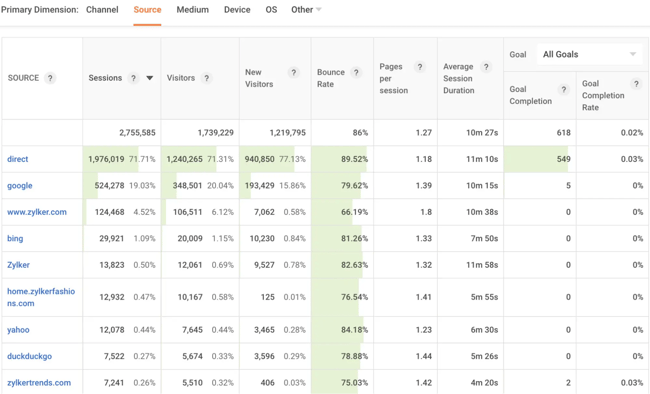
This is often the biggest roadblock for website growth teams. A by Huble found that 69% of companies said poor data was limiting their decision-making, with 45% adding that unstructured data was limiting their use of AI.
The report concluded that only 8.6% of companies were AI-ready, largely due to poor data quality. Website growth teams absolutely need to ensure their data is clean and usable — not only for better AI integration, but also to make a stronger case for themselves when speaking with the CFO.
Growth teams can’t work in a vacuum anymore.
This is an extension of the need for better data. Just like siloed data keeps companies from getting all of the insights they need, siloed teams also miss out on coordination and cooperation. 糖心Vlog, finance, and operations share more goals than ever before, and website decisions are affecting more than just the marketing team.
As Dash.fi notes in its spend management, finance teams are increasingly seeking greater visibility into marketing budgets, using spend controls, reporting dashboards, and accounting integrations to monitor advertising costs alongside other business expenses.
The broader trend is that finance is becoming involved earlier in growth planning rather than simply reviewing marketing performance after campaigns launch. As spending becomes more measurable and AI tools surface more financial insights, growth teams increasingly need to justify investments in terms that resonate with both CFOs and marketers.
Instead of seeing this as an oversight, look at it as an opportunity for more communication and collaboration, which gives you a better chance of successfully justifying the growth tactics you’re trying to implement. This is especially true when you can tie your marketing data to the business’s financial results.
Website decisions can have a very real impact on the entire company, especially in areas such as how customer-facing website elements integrate with internal CRMs or logistics platforms. By working across departments, website growth teams can evaluate their decisions through a more holistic lens. This ensures better results for the company as a whole.
The best growth teams speak the language of the business.
One challenge I’ve found many website growth teams face is getting wrapped up in the technical details of what they’re trying to accomplish. This isn’t to say these technical details aren’t important. But when you’re talking with a CFO or other executive, they typically care more about the actual outcomes, rather than the technical details.
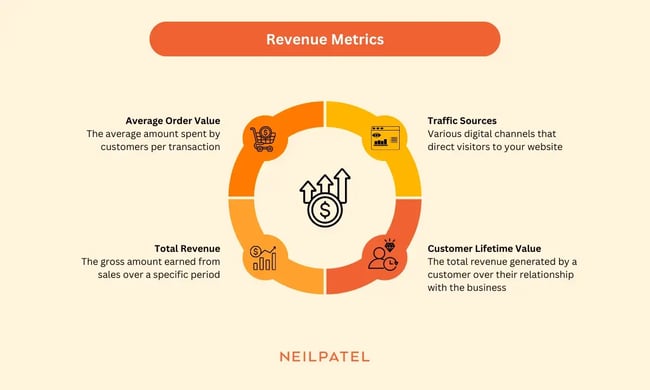
Executives don’t want to hear all the details about why a particular add-on will be better for the website from a technical standpoint. They want to hear the website work framed around their primary business goals. How is it going to drive revenue? How will it help with customer retention? How will it increase conversion rates or the average order value?
When teams can connect website performance to revenue, they are far more likely to get meaningful support from the finance team. Understanding what really matters to the CFO is key to becoming fully aligned and working better together. Providing some level of education on technical matters or growth marketing can help, but it will be easier to work together if you put in the effort to speak your CFO’s language.
Working together means growing together.
As CFOs look more closely at website conversion metrics, it’s only natural that they want to see the money spent on website growth lead to revenue growth. This can be a challenging shift for many website growth teams, but it’s essential that you take this in stride.
By understanding what metrics matter most for your business, which traffic sources are having the biggest impact on the website, and which optimizations can have the biggest revenue impact, you can have confidence when you talk with the CFO.
Instead of preparing for battle to secure the financial support you want, you and your CFO can work together to ensure your website growth strategy is fully aligned with brand goals — and delivers positive outcomes for the business as a whole.
Free Website Optimization Checklist
This website optimization checklist will help you perfect your website's:
- Performance
- SEO
- Security
- Mobile Performance
Download Free
All fields are required.
Form not available
You're all set!
Click this link to access this resource at any time.
Website & Content



![21 Freelancer website examples we love [+ How to make your own]](https://53.fs1.hubspotusercontent-na1.net/hubfs/53/freelancer-website-examples-1-20260319-9141964.webp)