
The way consumers search for answers online has changed over the years. While people still search on Google, more and more are also typing their questions directly into answer engines like ChatGPT to get direct, no-frills answers.
So, in addition to optimizing for SEO, marketers now need to know how to structure a page for AEO — because answer engines require a different kind of signal than traditional search
Like many marketers, I found learning to optimize content for AEO challenging. Fortunately, you don‘t have to struggle like I did, because I’ve crafted this guide on structuring your content for AEO.
Keep reading for a walkthrough of page structure, key elements of AEO, and answers to frequently asked questions.
Table of Contents
- Why is page structure so important for AEO?
- How to structure a page for AEO
- Best tools to structure a page for AEO
- 2. Schema Markup Tool: Google's Rich Results Test
- 3. Content Analysis Platform: Clearscope or MarketMuse
- 4. AI Writing Assistant: Claude or ChatGPT (Plus or Enterprise)
- Tips for structuring a page for answer engines
- Frequently asked questions about structuring pages for AEO
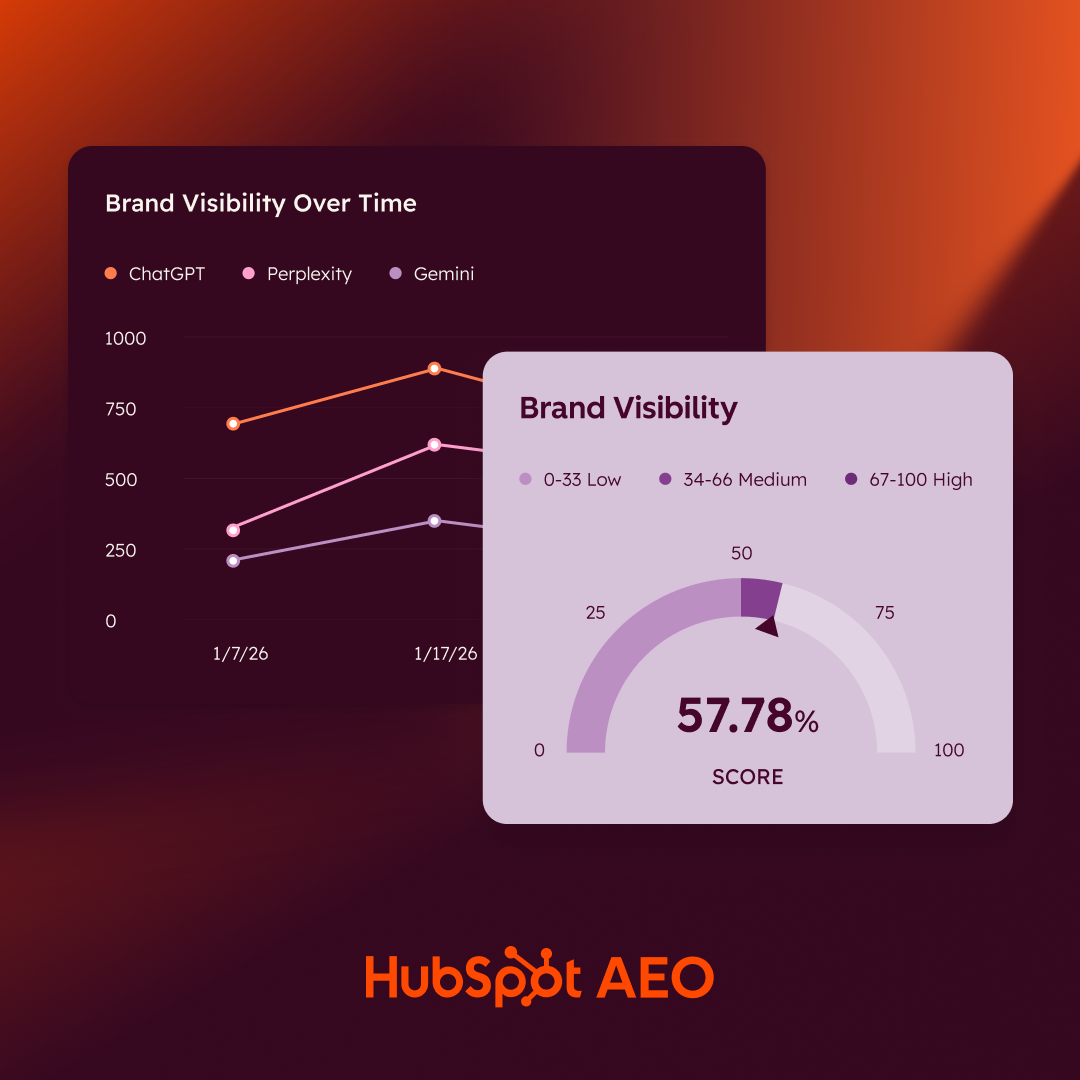
HubSpot AEO Tool
See exactly where your brand shows up in answer engines and take action to close AI visibility gaps.
- Track AI mentions.
- Analyze citations
- Monitor prompts
- Benchmark competitors
Why is page structure so important for AEO?
Page structure is critical for AEO because of how answer engines synthesize content.
In the past, we marketers would format our blog and website content so that search engines could “crawl” our pages, looking for keywords and backlinks to determine how the content would rank in SERPs.
The right combination of keywords and links would help determine whether the content ranked first in search results or ended up on the dreaded second page.
Now, LLMs like ChatGPT, Gemini, and Perplexity do more than just crawl for keywords; they analyze, extract, and synthesize content in real time. Unlike traditional search engines, which primarily match keywords and evaluate backlinks, LLMs analyze your content as contextual information within their token limits.
If your page is poorly structured, answer engines like ChatGPT could miss your best insights entirely, pull information out of context, or simply skip over your content in favor of a competitor‘s page that’s easier to process.
Structure acts as a roadmap that helps LLMs quickly identify what‘s important, what’s authoritative, and what directly answers a user's query.
So, when structuring your content, you'll want to ensure your website contains pages with clear headings, concise answers near the top, and logical information flow. When your content lacks structure, you‘re essentially forcing the LLM to work harder to extract meaning, which often means it won’t extract your content at all.
How to structure a page for AEO
I‘ve never been one for gatekeeping, so here’s the typical outline I follow when structuring my blog posts with AEO in mind:
H1 (Title)
I used to be called the headline queen when I was a journalist because I knew how to get creative with clever wordplay, funny puns, and attention grabbers, all while still incorporating keywords. My headlines drove clicks and often led to my content ranking high in SERPs.
Imagine my surprise when the same tactics didn't work in an AEO world, and I wasn’t seeing the engagement I was used to in the world of SEO.
Don't make the same mistake I did. Instead, keep these key principles in mind when structuring your headline:
Be explicit and descriptive. Your H1 should tell both humans and LLMs exactly what they‘ll learn. Not to toot my own horn, but "How to Structure Pages for AEO and Answer Engines: A Quick-Start Guide" works because it’s specific about the topic, the approach, and the outcome.
Use natural language patterns. If people ask, “How do I optimize for answer engines?” your H1 should reflect that phrasing. Question-based H1s (“How Do I...?” “What Is...?” “Why Does...?”) or clear declarative statements (“Complete Guide to...”) perform well because they match query intent directly.
Front-load your primary keyword. Put your main topic in the first few words. “AEO Page Structure: How to Optimize Content for Answer Engines” is stronger than “The Ultimate 2024 Comprehensive Guide to Structuring Your Pages for Modern Answer Engine Optimization Success.” LLMs processing your page will weigh those opening words more heavily.
Keep it under 60-70 characters when possible. While LLMs aren't bound by title tag limits, concise H1s are easier to extract and cite. They also tend to be clearer and more focused, which helps with comprehension.
Skip the fluff. Avoid filler words like “ultimate,” “complete,” or “definitive” unless they add genuine meaning. Answer engines care about clarity and relevance, no superlatives.
Tools like HubSpot's can help you optimize your H1s and page structure with built-in SEO recommendations, making it easier to implement these principles at scale.
TL;DR
A TL;DR section in an AEO post should deliver maximum value in minimum space—it‘s your content’s elevator pitch to both human readers and answer engines. Structure it so that even if someone reads nothing else, they walk away with actionable insights.
Key principles:
Place it immediately after your introduction. Right after your H1 and opening paragraph(s), before your first H2. This positioning ensures LLMs encounter your key takeaways early in the processing of your page, and it mirrors the placement of the featured snippet users expect from traditional search.
Use 2-4 bullet points or a tight paragraph. Bullets work best when you have distinct, parallel takeaways (“Here are the three things you need to know”). A paragraph works when you‘re synthesizing a single cohesive insight. Keep the total TL;DR under 100 words—any longer and it’s not really “too long; didn't read” anymore.
Make each point self-contained and actionable. Don't tease—deliver. “Use question-based H2s and H3s to match natural query patterns” is better than “Heading structure matters for AEO.” Every bullet should provide real value that someone could act on immediately.
Front-load your main keyword naturally. If your post is about AEO page structure, make sure “AEO page structure” or a close variant appears in your TL;DR. This reinforces topical relevance for LLMs scanning the top of your content.
Write in active voice with a clear subject-verb-object structure. “Answer engines prioritize clear structure over keyword density” is easier to extract than “Clear structure is what gets prioritized by answer engines versus keyword density.” LLMs process straightforward syntax more reliably.
Label it clearly. Use “TL;DR” or “Key Takeaways” as a mini-heading (bold text or H2, depending on your preference). This explicit labeling helps both humans and LLMs recognize “this is the summary section.”
Avoid duplication with your conclusion. Your TL;DR should preview what‘s coming, while your conclusion should synthesize what you’ve covered. They serve different purposes—don't just copy-paste between them.
Question-based H2/H3s
Question-based H2s and H3s are AEO gold because they directly match how users query answer engines. When someone asks ChatGPT or Perplexity a question, the system looks for content that explicitly addresses that question, and nothing signals relevance better than a heading that mirrors the query itself.
These are the best practices I keep in mind when mapping out my H2s and H3s:
Use actual questions people ask. Pull from “People Also Ask” boxes, Answer the Public, or your own customer support tickets. Questions like “Why is page structure important for AEO?” or “What schema types should I start with?” are far more retrievable than generic headings like “The Importance of Structure” or “Schema Basics.”
Start with question words. “How,” “What,” “Why,” “When,” “Where,” and “Should” are your friends. These trigger patterns help LLMs identify your content as question-answering material. “How often should I update my FAQs?” is immediately recognizable as addressing a specific user need.
Be specific, not broad. “What is AEO?” is fine for a definitional section, but “How do I audit my existing content for AEO?” is better because it targets a specific intent. The more precise your question, the more likely it is to match what someone actually asked.
Answer immediately below the heading. Get to the point! Never bury the answer three paragraphs down. Your first sentence under that H2 or H3 should directly answer the question. Think of it like featured snippet optimization, but for LLMs.
“You should update quick answers and FAQs quarterly, or whenever there are significant changes to your product, industry regulations, or user behavior patterns.”
Maintain natural phrasing. Don't keyword-stuff or make questions awkward. “How can marketers structure pages for answer engine optimization?” reads better than “How structure pages AEO answer engines?” LLMs are trained on natural language, so write like a human helping another human.
Create a logical hierarchy. Use H2s for major questions and H3s for related sub-questions. For example, an H2 might ask “How do I structure a page for AEO?” with H3s underneath like “Where should the TL;DR go?” and “What about FAQ sections?” This helps LLMs understand the relationship between topics.
Lists
I love a good listicle because they provide information in a straightforward, digestible way that leaves little room for misinterpretation. And, it turns out LLMs love them too for similar reasons.
Lists are incredibly easy for LLMs to parse, extract, and cite. When an answer engine scans your content, lists provide clean, structured information that can be quickly chunked and understood without requiring heavy interpretation. They're essentially pre-formatted answers ready for extraction.
Remember these key principles when structuring your list for your next post:
Make each list item self-contained. Every bullet or numbered point should make sense even if read in isolation. Don't write “Use clear headings” and assume the LLM remembered your intro paragraph about why.
Instead, write “Use clear, question-based headings that mirror how users search,” so the item carries its own context.
Start with the action or key concept. Front-load what matters. “Frontload your primary keyword in the H1” is stronger than “When writing your H1, you should consider frontloading your primary keyword for better visibility.” LLMs scan the beginning of each list item more heavily.
Keep items parallel in structure. If your first three bullets start with action verbs (“Optimize,” “Include,” “Structure”), keep that pattern throughout. Parallel structure helps LLMs recognize the list as a cohesive set of related points rather than random fragments.
Add brief explanations when helpful. A list item can be more than one sentence. “Use schema markup. It helps LLMs understand your content structure” works, but “Use schema markup like FAQPage and HowTo schema to provide explicit structural signals that answer engines can parse and prioritize” is more useful and still scannable.
Use sub-bullets sparingly but strategically. If a main point has 2-3 supporting details, sub-bullets work great. Just don‘t nest more than two levels deep or you’ll lose both human readers and LLM comprehension.
Number lists when order matters. If you‘re outlining steps in a process or ranking items by priority, use numbered lists. This tells the LLM there’s a sequence or hierarchy. For collections of equal-weight tips or features, bullets are fine.
Introduce your list with context. Don't just drop a list in cold. A brief sentence before like “Here are five ways to structure your H1 for maximum AEO impact:” helps LLMs understand what the list represents and how to frame it when citing your content.
Conclusion
A conclusion for an AEO post should reinforce your main points, provide a clear takeaway, and ideally push the reader toward action — but it also serves a specific purpose for answer engines: it's often where LLMs look for summary statements and final recommendations.
Key principles:
Summarize without repeating verbatim. Your conclusion should distill the core message in fresh language. If your post covered seven tips for structuring pages, don't just list them again — synthesize them into a broader insight.
“Structuring pages for AEO comes down to clarity, hierarchy, and making your content easy for LLMs to extract and cite” captures the essence without rehashing every point.
Include a clear, actionable next step. Answer engines often pull conclusions when users ask “what should I do about X?” Give them something concrete: “Start by auditing your top 10 pages for question-based headings and TL;DR sections, then layer in schema markup as you go.” This makes your conclusion more retrievable for action-oriented queries.
Reinforce your main keyword and topic. Mention your primary concept one last time naturally. “By prioritizing AEO-friendly page structure, you're not just optimizing for today's answer engines — you're future-proofing your content for however search evolves” keeps the semantic focus clear for LLMs processing the page.
Keep it concise but substantive. Two to four paragraphs is usually the sweet spot. Long enough to provide real value, short enough that an LLM can process it within context limits. Avoid fluff like “In conclusion, we've covered...” and just deliver the insight.
End with perspective or context. Give readers (and LLMs) a sense of why this matters beyond tactics. “As answer engines become the primary way people discover information, the marketers who master structured, extractable content will own visibility in ways traditional SEO never allowed,” adds weight and authority to your conclusion.
Consider a forward-looking statement. Briefly mention what‘s next or what to watch for. "As LLM technology evolves, expect answer engines to get even better at understanding context— but clear structure will always be your competitive advantage." This signals you’re thinking beyond today's tactics.
FAQ Module
I've found that an FAQ section in an AEO post is one of the highest-value structural elements because it directly mirrors how people query answer engines. When someone asks ChatGPT or Perplexity a question, the system actively looks for Q&A-formatted content.
A well-structured FAQ makes that extraction effortless.
Key principles:
Use actual H3 headings for each question. Don't just bold the questions or put them in a different font. Make each FAQ question its own H3 heading. This gives LLMs clear semantic signals that this is a distinct question-answer pair.
“Where should the TL;DR go on the page?” as an H3 is infinitely more retrievable than the same text in bold.
Write questions exactly as users ask them. Pull from real search queries, customer questions, or PAA boxes. “Do I need both an FAQ section and PAA-style H3 questions?” is better than “FAQ vs. PAA Questions” because it matches natural language patterns. LLMs are trained to recognize question syntax.
Answer immediately and directly. Your first sentence under each H3 should be a complete, standalone answer. Don't make the LLM hunt through three paragraphs to find the answer. “The TL;DR should go immediately after your H1 and introduction, before your first H2 section.” gives the answer upfront, then you can elaborate if needed.
Keep answers concise but complete. Aim for 2-4 sentences per FAQ answer. Short enough to be quickly extractable, long enough to be genuinely useful. If you need more depth, that's a sign the topic deserves its own full section in the post, not just an FAQ treatment.
Use FAQPage schema markup. This is non-negotiable for AEO. FAQPage schema explicitly tells answer engines “this is a question and this is the accepted answer.” It's one of the clearest structural signals you can send. Make sure each question-answer pair is properly marked up.
Prioritize high-value questions. Don‘t pad your FAQ with obvious or low-intent questions just to hit a number. Focus on questions that address real confusion, common objections, or next-level concerns that your main content didn’t fully cover. Quality over quantity.
Place the FAQ strategically. Most AEO posts benefit from FAQs near the end, after you've covered the main content but before the conclusion. This positions them as “additional helpful information” while keeping your primary content hierarchy clean.
However, if FAQs address critical blocking issues, consider moving them to a higher level.
Make questions distinct from your H2/H3 structure. Your FAQ should complement, not duplicate, your main content headings. If you already have an H2 titled “Why is page structure important for AEO?” don't repeat it in your FAQ. Use the FAQ for related but distinct questions like “How is AEO different from traditional SEO?”
HubSpot AI Search Grader
Learn how leading answer engines like ChatGPT, Perplexity, and Gemini interpret your brand.
- Understand your competitive landscape
- Discover your brand perception in AI results
- Maximize performance with data-driven insights
- And more!
Best tools to structure a page for AEO
Here are four essential tools for structuring pages for AEO, organized by category:
1. Content Management System: HubSpot Content Hub
Sure, I might be biased, but it's true that is purpose-built for modern content optimization, with native features that make AEO implementation straightforward. The platform offers content optimization suggestions based on heading structure, semantic coverage, and AEO best practices.
What sets Content Hub apart is its integrated approach — you can manage schema markup, track content performance, and optimize structure all in one place without juggling multiple tools. The CMS also supports content clustering and pillar page architecture, which helps establish topical authority that answer engines prioritize.
2. Schema Markup Tool: Google's Rich Results Test
Google‘s Rich Results Test (formerly the Structured Data Testing Tool) is essential for validating your schema markup before publishing. While it’s Google-focused, the markup validation applies broadly to how answer engines parse your content.
Use it to test FAQPage schema, HowTo schema, Article schema, and other structured data types. The tool shows you exactly how search engines and answer engines will interpret your markup, flagging errors or warnings that could prevent proper extraction.
3. Content Analysis Platform: Clearscope or MarketMuse
These platforms help you understand topic coverage and content structure from a semantic perspective.
While traditionally used for SEO, tools like Clearscope and MarketMuse are increasingly valuable for AEO because they identify content gaps, suggest related questions to address, and help you build comprehensive content that LLMs recognize as authoritative.
They analyze top-performing content and suggest structural improvements, heading optimizations, and topic clusters that improve your chances of being cited by answer engines.
4. AI Writing Assistant: Claude or ChatGPT (Plus or Enterprise)
Yes, answer engines themselves can be your best tool for optimizing content for answer engines. I've found that using Claude or ChatGPT to test how well your content answers specific questions, identify gaps in your structure, or even generate FAQ questions based on your main content.
You can paste draft sections and ask “What questions does this content answer clearly?” or “How would you restructure this for better extraction?” This real-time feedback from an LLM helps you understand exactly how answer engines will interpret and use your content.
3. Bonus All-in-One AEO Platform: HubSpot AEO
You can spend hours restructuring your content for AEO — but without visibility into how answer engines are actually interpreting it, you're optimizing blind. closes that gap. It shows you exactly how your brand appears across every major answer engine, surfaces the prompts where competitors are getting cited and you're not, and gives you specific recommendations for what to create or fix next.
The prioritized action plan is what makes it practical. Instead of reverse-engineering which structural changes matter, you get a ranked list of highest-impact improvements — so you're always working on the right pages first.
What sets it apart from standalone trackers is the CRM integration. Because HubSpot AEO connects directly to HubSpot's CRM, the prompt suggestions and content recommendations are grounded in your actual business context from day one — not generic industry defaults. That means the structural guidance you get is relevant to your specific audience, not a one-size-fits-all template.
Tips for structuring a page for answer engines
Here are five qualitative tips for structuring pages that answer engines love:
1. Write in digestible chunks, not walls of text
Break your content into 2-4 sentence paragraphs rather than dense blocks of 8-10 sentences. Answer engines process content in chunks, and shorter paragraphs are easier to extract and cite accurately.
Each paragraph should contain one clear idea or point. When your content is chunked well, answer engines can pull exactly what they need without having to parse through complex, multi-idea paragraphs that risk being quoted out of context.
2. Front-load answers, then explain
Lead with the answer or main point in your first sentence, then provide context, examples, or elaboration afterward. This “inverted pyramid” approach ensures that even if an LLM only processes the first part of your section (due to token limits or relevance scoring), it still captures your key insight.
Think of it as writing for someone who might only read your topic sentence, because that‘s essentially how answer engines scan content initially before deciding what’s worth extracting in full.
3. Use transition phrases that signal structure
Help LLMs understand how your ideas connect by using explicit transitions: “Here's why that matters,” “The key takeaway is,” “This means that,” or “In practice, this looks like.”
These phrases act as semantic signposts that help answer engines understand relationships between concepts. When an LLM sees “Here are three reasons why,” it knows a list is coming. When it sees “The main benefit is,” it knows you're about to state something important worth extracting.
4. Create content with attribution in mind
Write as if every sentence might be cited independently. Avoid vague pronouns or references that only make sense if someone read the previous paragraph. Instead of writing “This approach works because it's faster,” write “Question-based headings work because they match natural query patterns.”
This self-contained style makes your content more extractable and ensures that when answer engines cite you, the citation makes sense standalone, which increases the likelihood they'll cite you in the first place.
5. Balance depth with scannability
Don't sacrifice substance for structure, but make your depth easy to navigate. Use descriptive subheadings frequently (every 200-300 words), incorporate callout formatting for key insights, and ensure that someone skimming your H2s and H3s alone could understand your main argument.
Answer engines don't just extract random sentences — they look for content that demonstrates expertise while remaining accessible. The sweet spot is comprehensive coverage broken into scannable, well-labeled sections that signal “this person knows what they're talking about AND makes it easy to understand.”
Frequently asked questions about structuring pages for AEO
Where should the TL;DR go on the page?
The TL;DR should go immediately after your H1 and introduction, before your first H2 section. This placement gives answer engines instant access to your main takeaways in the prime real estate at the top of your content, where LLMs process information most heavily.
Keep it to 2-4 concise bullet points or a single tight paragraph (3-5 sentences maximum), with each point being self-contained and actionable. Think of it as your elevator pitch — if someone only read this section, they'd still walk away with genuine value.
Do I need both an FAQ section and PAA-style H3 questions?
You don't strictly need both, but using them together serves different purposes and maximizes your AEO coverage.
PAA-style H3 questions within your main content address core topics and guide readers through your primary narrative, while FAQ sections handle secondary questions, edge cases, and common objections that don't fit cleanly into your main structure.
Think of H3 questions as your main course and FAQs as the side dishes — they complement each other without redundancy. Just make sure you‘re not duplicating the exact same questions in both places, or you’re wasting valuable content real estate.
What schema types should I start with for AEO?
Start with FAQPage schema and Article schema — these are the most universally applicable and easiest to implement for content marketers.
FAQPage schema explicitly marks your question-answer pairs, making them immediately recognizable to answer engines, while Article schema provides crucial metadata about your content type, publish date, and author that builds credibility signals.
If your content includes step-by-step instructions, add HowTo schema to capture procedural queries. These three schema types cover the vast majority of AEO use cases and can be implemented without heavy technical lift, especially if you're using a CMS like HubSpot that supports structured data natively.
How often should I update my quick answers and FAQs?
Update your quick answers and FAQs quarterly as a baseline, or immediately whenever there are significant changes to your product, industry regulations, or user behavior patterns. Answer engines prioritize freshness and accuracy, so outdated information can hurt your retrievability even if the rest of your content is solid.
Set calendar reminders to review your top-performing AEO content every three months, and monitor customer support tickets or new PAA questions that signal emerging concerns worth addressing.
If your industry moves faster (like tech or finance), consider monthly reviews for your highest-traffic pages.
HubSpot AI Search Grader
Learn how leading answer engines like ChatGPT, Perplexity, and Gemini interpret your brand.
- Understand your competitive landscape
- Discover your brand perception in AI results
- Maximize performance with data-driven insights
- And more!