

A few months after starting a former job, I attended a workshop in which we discussed our brand promise. It was a clarifying moment for me — despite having a solid mission and vision statement, it was the brand promise that defined the company and my role.
A brand promise shows customers what your brand can offer that no one else can. Brand promises can get complicated. They set high expectations, offer ambitious commitments, and impact relationships.
Let’s talk about what a brand promise is, how to create a brand promise, and see examples from popular B2B and B2C brands. We’ll also share a brand promise template to help you draft your own.

What is a brand promise?
A brand promise is the contract between your company and your customers. It's a commitment that defines what they can expect from every interaction with your brand. As legendary brand consultant Walter Landor put it: "A brand is a promise. By identifying and authenticating a product or service, it delivers a pledge of satisfaction and quality." This promise serves as your company's foundational value and informs every aspect of the business, from messaging to customer service to product development. It's what consumers can rely on across all touchpoints, whether they're browsing your website, speaking with support, or using your product.
Your brand promise should be central to your company, something that remains constant even as the company grows and evolves.
Not every brand promise is explicit — it could also be more of an internal mantra that's shared with employees, investors, and partners.
But if you’ve built a strong brand identity and clear messaging, your brand promise will be evident to your target audience. (And if you're still working on your brand identity and messaging, we've got a to help.)

Free Brand Building Guide
A comprehensive guide to effectively define, launch, scale, and monitor your brand.
- Understanding brands today.
- Incorporating brand in marketing.
- Creating brand strategy.
- Measuring brand impact.
Download Free
All fields are required.
Form not available
You're all set!
Click this link to access this resource at any time.
Brand Promise vs. Tagline
There‘s often some confusion between a brand promise and a tagline, so let’s break it down.
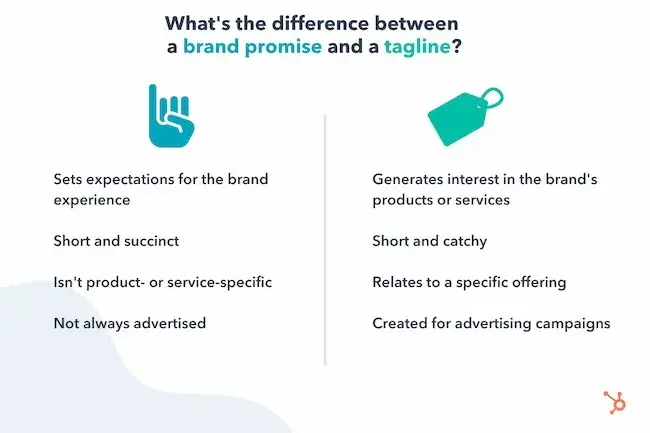
While it can be just as short as a tagline, a brand promise establishes and nurtures a relationship with consumers by telling them, "Hey, this is what you can expect every single time you interact with our brand."
A brand promise isn’t lofty — it’s grounded in the realities of your business. It can:
- Help internal and external stakeholders know what to expect from you.
- Gain consumer trust.
- Be the foundation for your company’s consumer interactions.
A Quick Brand Promise Definition
Brand promises are short statements. They make a commitment to your customer about what your brand will deliver.
It is a promise, after all. So if you break it, it can affect your reputation and your revenue.
For instance, let‘s say your brand promise is "Innovation at every turn," but your company hasn’t released a new product in five years. That can deter potential consumers who have been promised progress but instead get stagnation.
Here are the most common types of brand promises:
- Emotional: A promise appealing to emotion.
- Action-based: A promise tied to a specific action.
- Social: A promise based on ethical or social responsibility.
Why Your Brand Promise Is Important
This message can have a big impact on , brand reputation, and more. A brand promise is a social contract between your company and the customer or consumer.
You may not have a legally binding document swearing that your company will innovate at every turn, but it’s understood that consumers are giving you something (like their hard-earned money) in exchange for a product or service.
It’s the scaled, commercial version of a pinky promise, with your brand holding up one finger and your target audience holding up the other.
And if you’re not taking your brand promise as seriously as a legally binding document, you’re at risk of losing not just your customers, but your market valuation, employees, and other stakeholders.
Delivering on your brand promise can help your business grow by building trust with your target audiences and boosting sales.
But how can you pack all that power into a single message? Let's talk about how to create your brand promise.
Brand Promise vs. Tagline vs. Mission vs. Vision
| Element | Brand Promise | Tagline | Mission Statement | Vision Statement |
|---|---|---|---|---|
| Definition | A commitment to customers about what they can expect from your brand at every touchpoint | A memorable phrase used in marketing and advertising | A statement of your company's purpose and how you serve customers today | An aspirational statement of what you want to achieve in the future |
| Primary Audience | All stakeholders (customers, employees, partners, investors) | External audience (customers, prospects) | Internal and external stakeholders | Internal stakeholders and leadership |
| Focus | The customer experience and relationship | Brand recognition and recall | Current purpose and actions | Future goals and aspirations |
| Timeframe | Present and ongoing | Present | Present | Future |
| Length | Typically one sentence or short statement | Short phrase (3-8 words typically) | 1-3 sentences | 1-2 sentences |
| Purpose | Build trust and set expectations for consistent brand delivery | Create memorable brand association | Define what the company does and why | Inspire and provide direction |
| Changeability | Should remain constant even as company evolves | Can be updated periodically | Relatively stable, evolves slowly | May evolve as goals are achieved |
| Visibility | May be internal or implied through actions | Highly visible, used in advertising | Often published on website/materials | Often shared internally, sometimes publicly |
| Type of Promise | Emotional, action-based, or social commitment | Catchy marketing message | Operational and purpose-driven | Aspirational and inspirational |
How to Write a Brand Promise
Creating a brand promise can feel daunting — after all, you're distilling your entire company's value into a single, powerful statement that will guide every business decision and customer interaction.
Many companies struggle with making their promise too generic ("We deliver quality") or too ambitious ("We'll change the world"). The key is finding that sweet spot where aspiration meets authenticity.
The good news? You don't have to start from scratch. By following a structured approach and asking the right questions, you can craft a brand promise that resonates with your audience and sets you apart from competitors. Here's how to get started:
1. Focus on your audience.
Your brand promise outlines your commitment to your audience. So, to figure out what your promise should be, your first step is determining what your audience wants from you.
Go beyond the product. It's not just about what you sell — it's about the experience you're providing and the problem you're solving. For instance, is based on people's reluctance to join the gym for fear of judgment and embarrassment.
The brand promises to create an environment that encourages people at all fitness levels to go to the gym and feel comfortable working out.
Identify your differentiator. Another goal of your brand promise is to set you apart from your competitors. What makes you unique — your customer service, your product, your mission, your values? Build on that to create a distinctive promise.
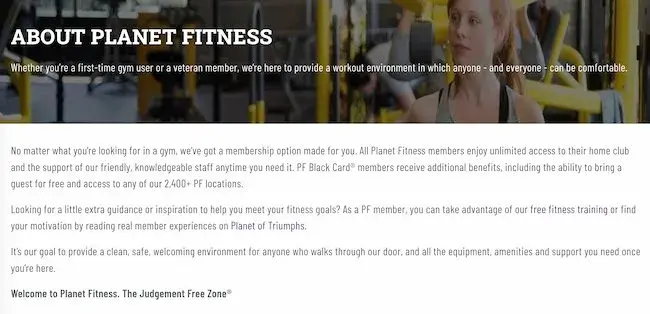
In Planet Fitness' case, the brand did something no one else had done: Address the problem with the gym environment, not its users.
Dig deeper with research. As you learn about what your audience wants, keep asking questions: How much do they know about your industry? What information do they need before making a purchase? What frustrations do they have with current solutions? What would make their lives easier?
It's important to remember that your brand promise isn't simply a slogan or commitment. It's the first step in building a community with shared values. The better you understand your audience, the more likely you are to engage them.
Action steps:
- Develop detailed buyer personas if you haven't already
- Conduct customer interviews or surveys to understand their pain points and desires
- Analyze customer reviews and feedback to identify common themes
- Workshop messages that could resonate with each persona
- Map out the emotional journey your customers experience when solving their problem
Featured Resource:
Free Brand Building Guide
A comprehensive guide to effectively define, launch, scale, and monitor your brand.
- Understanding brands today.
- Incorporating brand in marketing.
- Creating brand strategy.
- Measuring brand impact.
Download Free
All fields are required.
Form not available
You're all set!
Click this link to access this resource at any time.
2. Think about your customer touch points.
Your brand promise is your guarantee to customers. To ensure it holds true across every interaction, you need to map out the complete customer journey and envision how your promise comes to life at each stage.
Put yourself in their shoes. Whether your customer is in-store, on social media, or buying online, place yourself in their shoes and envision how you want those interactions to go. Is there a specific feeling involved? What do they have to gain? What might cause frustration?
For example, say a customer spends a lot of time on your website but hasn't made a purchase. Do you know why they're hesitating? If you were speaking to this customer in person, what would you say to help them move to the next step?
Create secondary promises for each touchpoint. As an exercise, you may find it useful to draft three or more secondary promises for each touch point. They can help you home in on your main brand promise and narrow your focus to how different touch points impact customer experience.
For instance, if your main brand promise is about "effortless experiences," your secondary promises might be:
- Website: "Find what you need in three clicks or less."
- Customer service: "Get answers without repeating yourself."
- Checkout: "Complete your purchase in under two minutes."
Ensure consistency. Your ultimate brand promise should be consistent across every touch point. So, the more time you spend looking at it from every angle, the more likely you are to create a powerful brand promise.
Action steps:
- Create a comprehensive customer journey map, identifying all touchpoints
- For each touchpoint, write down the current customer experience and the ideal experience
- Identify gaps between current and ideal experiences
- Test your brand promise against each touchpoint — does it hold true everywhere?
- Gather feedback from frontline employees who interact with customers daily
- Audit your current touchpoints to see where your promise might be breaking down
Featured Resource:
3. Keep it simple, unique, and inspiring.
Your brand promise should be clear and to the point — something you can say in one sentence. It won't necessarily be as fun as a tagline, but it should definitely inspire trust and confidence.
Choose your words carefully. Be thoughtful about which words you choose and who your audience is. Does your brand promise need industry-specific terms? Is your brand promise about selling an offer or explaining your product? Answering these questions can help you find the right vocabulary for your promise.
Brainstorm freely, then edit ruthlessly. Next, introduce some play into your writing. Think about your company culture, awakening the senses, and the details that can paint a picture for your audience.
This process will probably give you more copy than you need, but it can help you find an authentic and empathetic voice. Then you can edit your brand promise into a single succinct statement that is useful, positive, and hopeful.
Test for clarity and resonance. If you can't articulate your promise in a clear, compelling way, perhaps you haven't fully fleshed out your brand's purpose.
If that's the case, start by asking yourself these questions:
- What should my customers expect from me?
- What does my company stand for?
- What makes us different from our competitors?
- If our company disappeared tomorrow, what would our customers miss most?
- What emotional response do we want to evoke in our customers?
Action steps:
- Schedule a brainstorming session with diverse team members (marketing, sales, customer service, product)
- Write down 20-30 potential brand promise statements without self-editing
- Narrow down to your top 5 candidates
- Test each promise using the MUSIC framework (Memorable, Unique, Simple, Inspiring, Credible)
- Share finalists with loyal customers or a focus group for feedback
- Let your top choice sit for a week, then revisit with fresh eyes
- Once selected, document how your promise will be delivered at each customer touchpoint
- Create an internal rollout plan to ensure all employees understand and can articulate the promise
What makes a brand promise successful?
“A brand promise,” brand consultant tells me, “is basically your identity. If your brand didn’t exist, what would the world miss?”
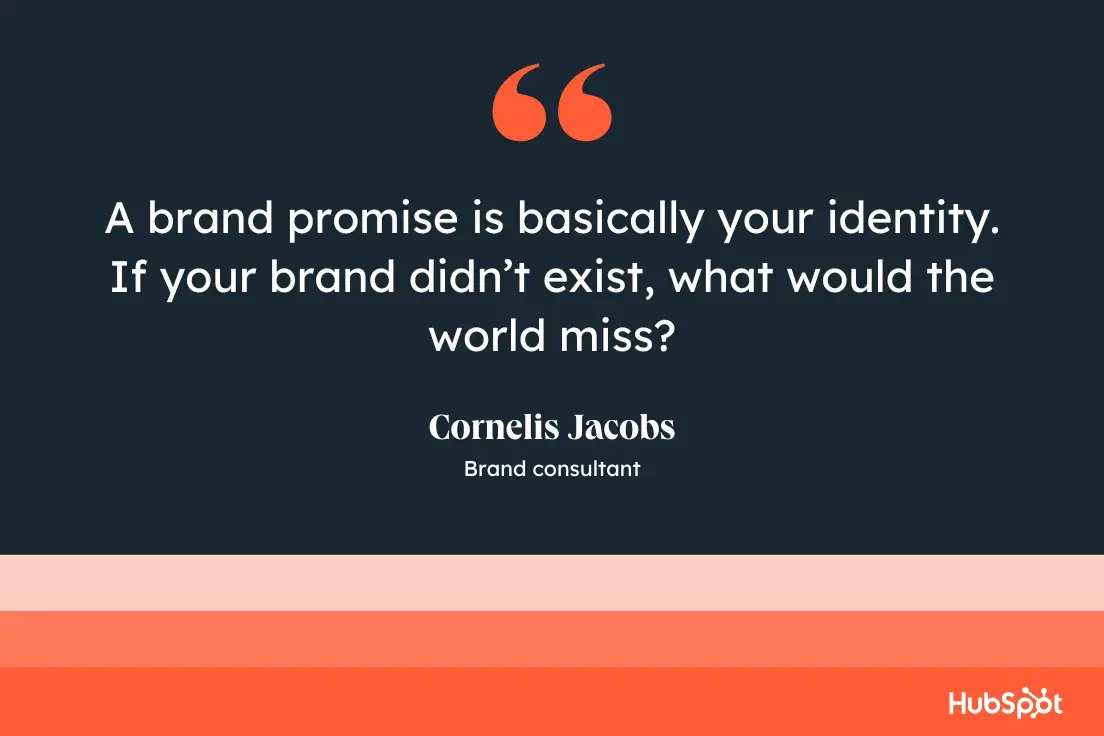
That world doesn’t have to be at a global scale — the target market for a corner bakery might be a single neighborhood. Whether you’re selling cupcakes or iPads, your brand promise has to create and nurture a relationship.
“It’s creating trust,” says Jacobs. “I give money in exchange for a product or service. There’s trust that the brand will deliver on that promise.” Jacobs sees two components to that trust: reliability and delight.
An inability to deliver on your brand promise — “that’s game over,” says Jacobs.
The long-term effects on brand perception and brand essence can be devastating if you lose credibility by breaking a promise.
To build a brand promise that resonates and drives results, follow the MUSIC framework:
Memorable
A powerful brand promise must in your customers' minds. It should be catchy and easy to recall so that when customers need what you offer, you're the first brand they think of.
A forgettable brand promise is essentially worthless. Brainstorm with your team to develop something creative that resonates long after customers first encounter it. Think of Nike's "Just Do It" or Apple's focus on innovation — these promises are impossible to forget.
Unique
Your brand promise should set you apart from competitors and give customers a compelling reason to choose you. If your pledge sounds like everyone else's, customers have no reason to remember or care about your brand.
Ask yourself: What makes your brand special? What can you offer that nobody else can?
For instance, Planet Fitness didn't just promise great gym equipment — it promised a "Judgement Free Zone," addressing a pain point competitors ignored. That uniqueness became their competitive advantage.
Simple
Keep your brand promise clear, concise, and free of ambiguity. A complicated or convoluted promise will only confuse customers and make it difficult for them to remember what you're all about.
The best brand promises can be understood immediately. Volvo's focus on safety, Starbucks' commitment to human connection — these promises don't require explanation or interpretation. Keep it short, sweet, and to the point.
Inspiring
A powerful brand promise should motivate customers to take action and make them want to be part of your story. An uninspiring promise leaves customers feeling indifferent, which is fatal for business growth.
Ask yourself: What does your brand stand for? What higher purpose does it serve?
Medtronic promises to "alleviate pain, restore health, and extend life" — a mission that goes far beyond selling medical devices. That kind of inspiring promise creates emotional connections with customers.
Credible
Your brand promise must be credible — based on reality and something you can actually deliver. Customers will not hesitate to choose another business if they don't trust that you can fulfill your promise.
Make sure your promise is backed by your capabilities, resources, and track record. Overpromising and underdelivering will destroy trust faster than having no promise at all. As Jacobs emphasizes, you either deliver on the promise or you don't — there's no middle ground.
Free Brand Building Guide
A comprehensive guide to effectively define, launch, scale, and monitor your brand.
- Understanding brands today.
- Incorporating brand in marketing.
- Creating brand strategy.
- Measuring brand impact.
Download Free
All fields are required.
Form not available
You're all set!
Click this link to access this resource at any time.
Brand Promise Template
Here's the uncomfortable truth about brand promise templates: Most of them produce generic, forgettable statements that sound like every other company in your industry.
Why? Because templates encourage formulaic thinking. When you simply fill in the blanks without deep reflection, you end up with something like "We provide quality products and excellent service to our customers" — a promise so vague it could apply to literally any business.
The real value of a template isn't in the formula itself, but in the strategic thinking it forces you to do. A good template should challenge you to articulate your unique value, not just check boxes.
The Brand Promise Framework
Instead of a simple fill-in-the-blank approach, use this framework to guide your thinking:
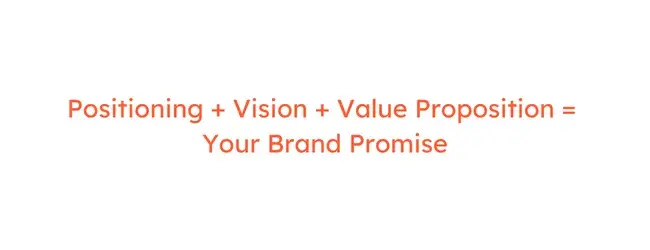
Positioning + Vision + = Your Brand Promise
Let's break down what each component means:
Positioning: Where you sit in the market relative to competitors. What space do you own in your customers' minds?
Vision: The change you want to create in the world or your customers' lives. What's your higher purpose?
Value Proposition: The specific, tangible benefit customers receive from choosing you. What problem do you solve better than anyone else?
Real Examples Deconstructed
Let's see how successful brands combine these elements:
Apple: "Build the best products in the world and enrich people's lives."
- Positioning: Premium technology innovator
- Vision: Enrich people's lives through technology
- Value Proposition: "Best products in the world" (quality and design excellence)
Volvo: "Safety for all."
- Positioning: The safety-first automotive brand
- Vision: Make roads safer for everyone
- Value Proposition: Industry-leading safety features and engineering
HubSpot: "Help millions of companies grow better."
- Positioning: Customer-centric business software platform
- Vision: Transform how businesses grow
- Value Proposition: Tools and resources that drive growth
Notice how each promise is specific enough to be distinctive yet broad enough to guide multiple product lines and business decisions.
Worksheet: Build Your Brand Promise
Work through these questions systematically. Don't rush — your answers will form the foundation of your brand promise.
Step 1: Define Your Positioning
Who are we?
What market/category do we compete in?
What makes us different from competitors?
What do we do better than anyone else?
Step 2: Clarify Your Vision
What change do we want to create in the world?
What would our customers miss most if we disappeared?
What bigger purpose drives our business beyond profit?
Step 3: Articulate Your Value Proposition
What specific problem do we solve for customers?
What tangible benefit do customers receive?
What emotional outcome do customers experience?
What can customers always count on us to deliver?
Step 4: Synthesize Your Promise
Now, look at your answers above and complete these prompts:
We exist to:
We promise our customers:
Every interaction with our brand will:
Step 5: Refine and Test
Draft 3-5 brand promise statements based on your answers:
- _____________________________________________________________________
Now test each one using the MUSIC framework:
-
- Memorable: Can people recall it easily?
- Unique: Does it differentiate us from competitors?
- Simple: Can anyone understand it immediately?
- Inspiring: Does it motivate action and emotional connection?
- Credible: Can we actually deliver on this promise?
Common Mistakes to Avoid
As you craft your brand promise, watch out for these pitfalls:
1. Being too vague or generic ? Bad: "We deliver quality and excellence" ? Good: "Engineering the safest vehicles on the road" (Volvo)
Vague promises fail the uniqueness test. If your competitor could use the same promise without changing a word, it's too generic.
2. Overpromising beyond your capabilities ? Bad: "We'll revolutionize your entire business overnight" ? Good: "Help millions of companies grow better" (HubSpot)
Your promise must be credible. If you can't consistently deliver on it, you'll damage trust and your reputation.
3. Focusing on features instead of benefits ? Bad: "We use advanced AI technology and cloud infrastructure" ? Good: "See inside any stack, any app, at any scale, anywhere" (Datadog)
Customers don't care about your technology — they care about what it does for them.
4. Making it about you instead of your customer ? Bad: "We're the industry leader with 50 years of experience" ? Good: "Bring stories to life — safely" (Inkheart example)
Your promise should center on the customer's experience and outcomes, not your achievements.
5. Creating something too long or complex ? Bad: "We leverage our extensive expertise and cutting-edge methodologies to provide comprehensive solutions that optimize operational efficiency while delivering measurable ROI through innovative approaches..." ? Good: "Easy scheduling ahead" (Calendly)
If you can't say it in one breath, it's too long. Simplicity is power.
6. Ignoring your company culture and reality ? Bad: Promising "personalized white-glove service" when you're built for scale and automation ? Good: Align your promise with your actual business model and strengths
Your brand promise should reflect who you genuinely are, not who you wish you were.
7. Failing to get buy-in from leadership and teams Even the most brilliant brand promise will fail if your team doesn't understand it, believe in it, and live it. Before finalizing your promise, ensure:
- Leadership is committed to delivering on it
- All departments understand how they contribute to fulfilling it
- You have processes in place to maintain consistency
- Employees can articulate the promise in their own words
Next Steps After Creating Your Promise
Once you've crafted your brand promise, the real work begins:
- Document it: Create a brand promise document that explains what it means and how it should guide decisions.
- Socialize it internally: Share it with every department and ensure everyone understands their role in delivering on it.
- Audit your touchpoints: Review every customer interaction to ensure your promise is being fulfilled consistently.
- Create accountability: Establish metrics and feedback loops to measure whether you're delivering on your promise.
- Evolve thoughtfully: Your promise should be enduring, but if your business fundamentally changes, revisit and refine it carefully.
Remember: A brand promise isn't something you create once and forget. It's a living commitment that should guide every decision, from product development to customer service to marketing campaigns.
Brand Promise Examples
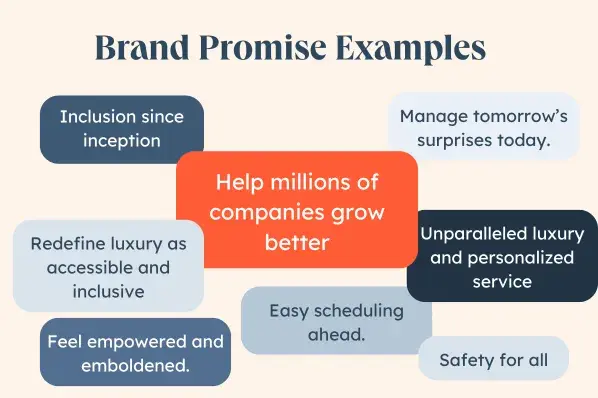
Keep in mind that some of these examples of brand promises are assumed and some have been shared by the companies (and a couple are completely fictional). Use them as inspiration when crafting your own.
To help you think about your own brand promise from multiple angles, I’ve also included hypothetical situations of what it might look like if some of these brands failed to deliver on their brand promises.
Build the best products in the world and enrich people’s lives. ()
In an , Apple CEO Tim Cook said that he tries to “carry on the mission that [Steve Jobs] set in place, to build the best products in the world that enrich people‘s lives. And that hasn’t changed. Lots of things change with time. But the reason for our being is the same.”
Well established as a design and product innovator, Apple’s brand promise is centered around innovation, quality, reliability, and user-friendly design.
If it couldn’t deliver on its brand promise, we might see Apple shipping shoddily designed products that don’t solve any problems for its consumers, something that would do swift and irreparable damage to its brand.
To inspire and nurture the human spirit — one person, one cup, one neighborhood at a time. ()
Starbucks might even add “one street at time,” so ubiquitous are its stores across America and most corners of the globe.
Starbucks’ core brand promise is customer-focused, establishing its reputation as a customer service company that happens to sell coffee.
Feel empowered and emboldened. ()
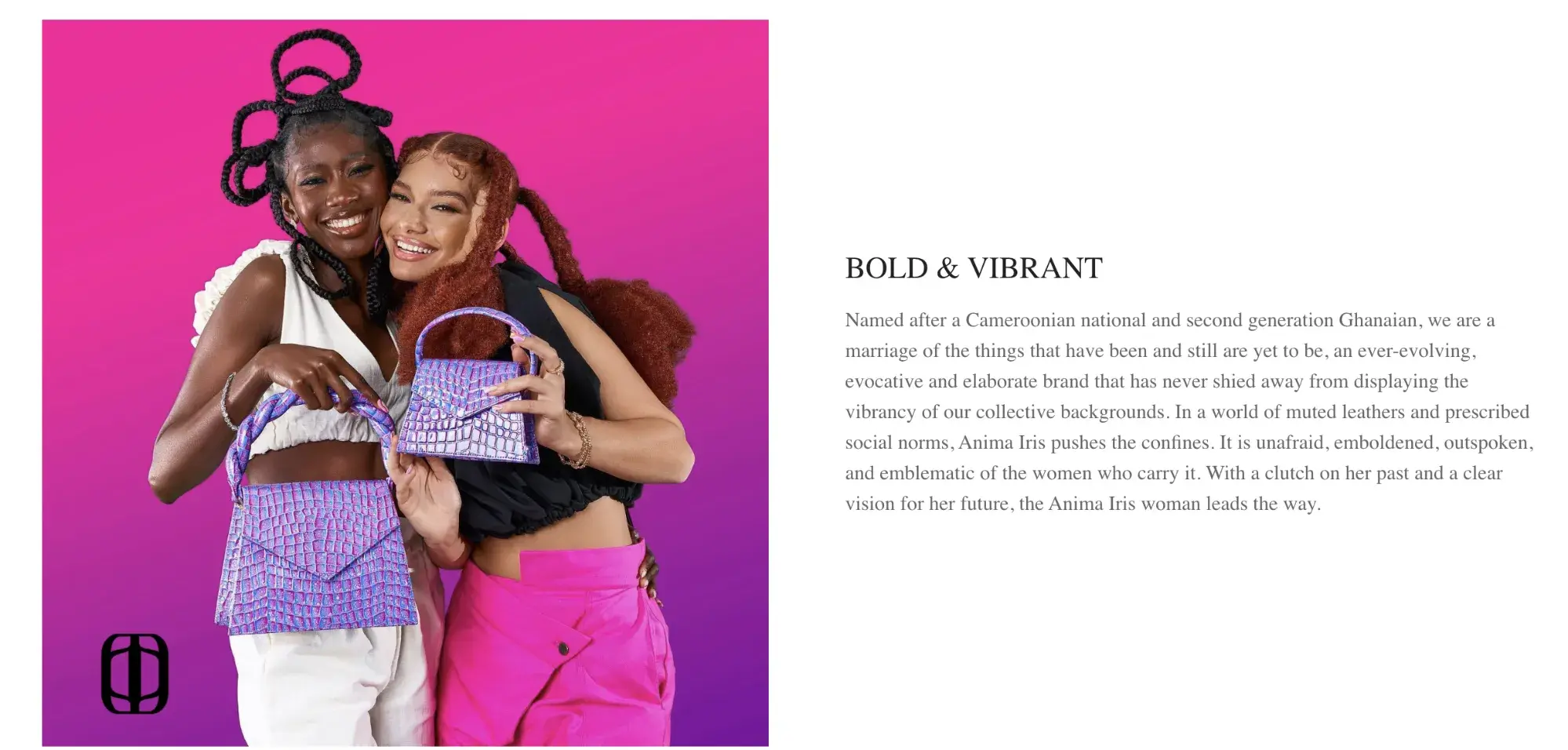
Tennis accessories brand Anima Iris seeks an emotional connection with its target audience by promising that they will feel empowered and emboldened.
What We Like: Its brand promise sets it apart from competitors and establish some of the expectations its customers should have.
Redefine luxury as accessible and inclusive. ()
Telfar’s vegan leather shopping bags became a must-have accessory over the last decade or so, thanks to its positioning as an affordable luxury. That’s a tricky sweet spot to maintain, but it’s central to the brand promise.
If it failed to deliver on its brand promise, it could be reflected in prices shooting up beyond what its target consumers could afford, and/or a steep decline in quality.
Inclusion since inception. ()
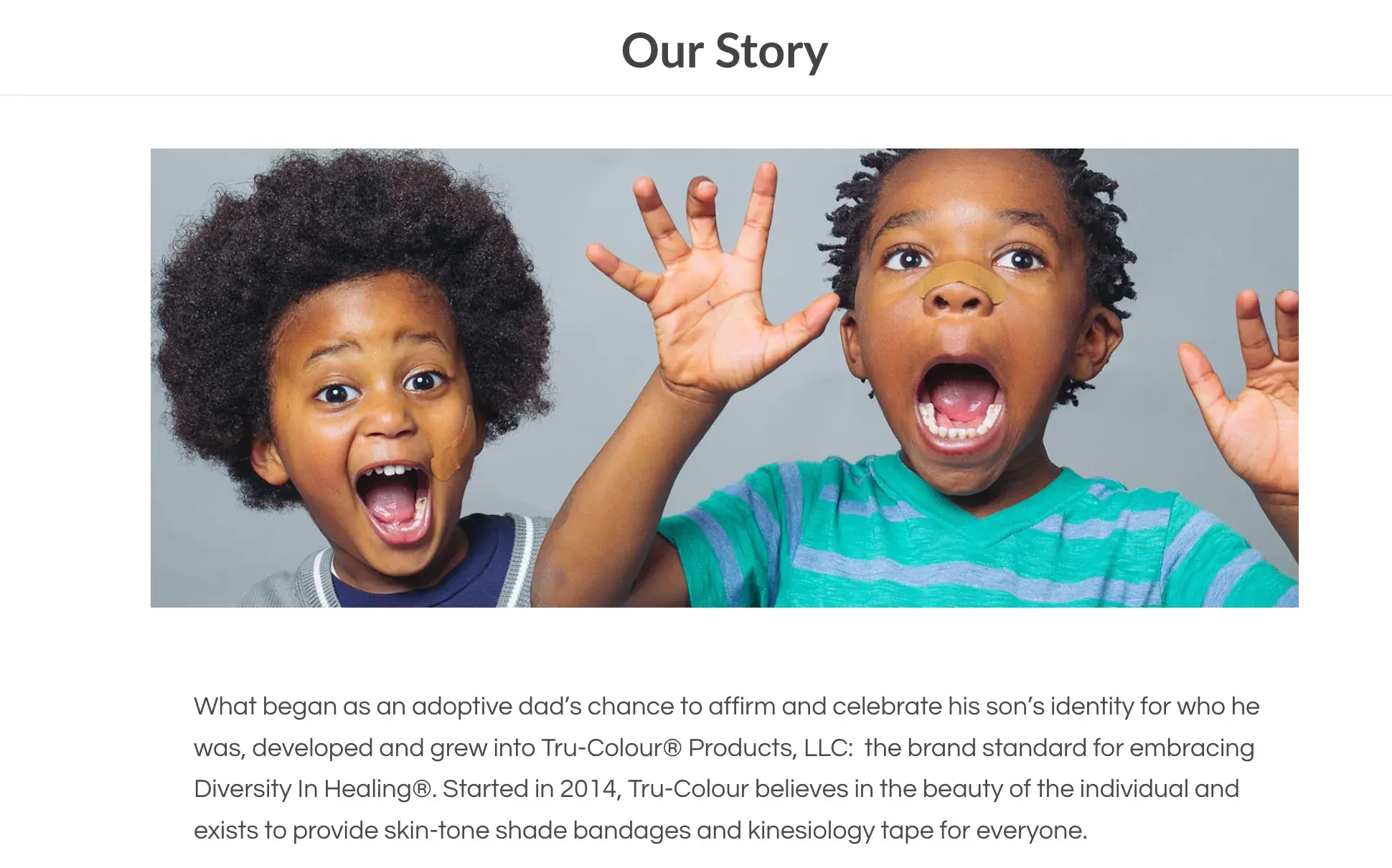
Rooted firmly in diversity and inclusion, Tru Colour “believes in the beauty of the individual and exists to provide skin-tone shade bandages and kinesiology tape for everyone.”
Its brand promise indicates that inclusion is a foundational principle, one that will continue to drive the brand as it grows.
What We Like: Its brand promise tells a story that builds emotional investment.
Create a safe space for POC to travel and discover new adventures. ()
The stakes are high for Noirbnb, which promises “a safe space for people of color to travel and discover new adventures.”
As such, it’s also a memorable brand promise, particularly for its target audience of people of color who may have felt unsafe on previous travel adventures.
What We Like: It's a highly actionable brand promise.
Safety for all. ()
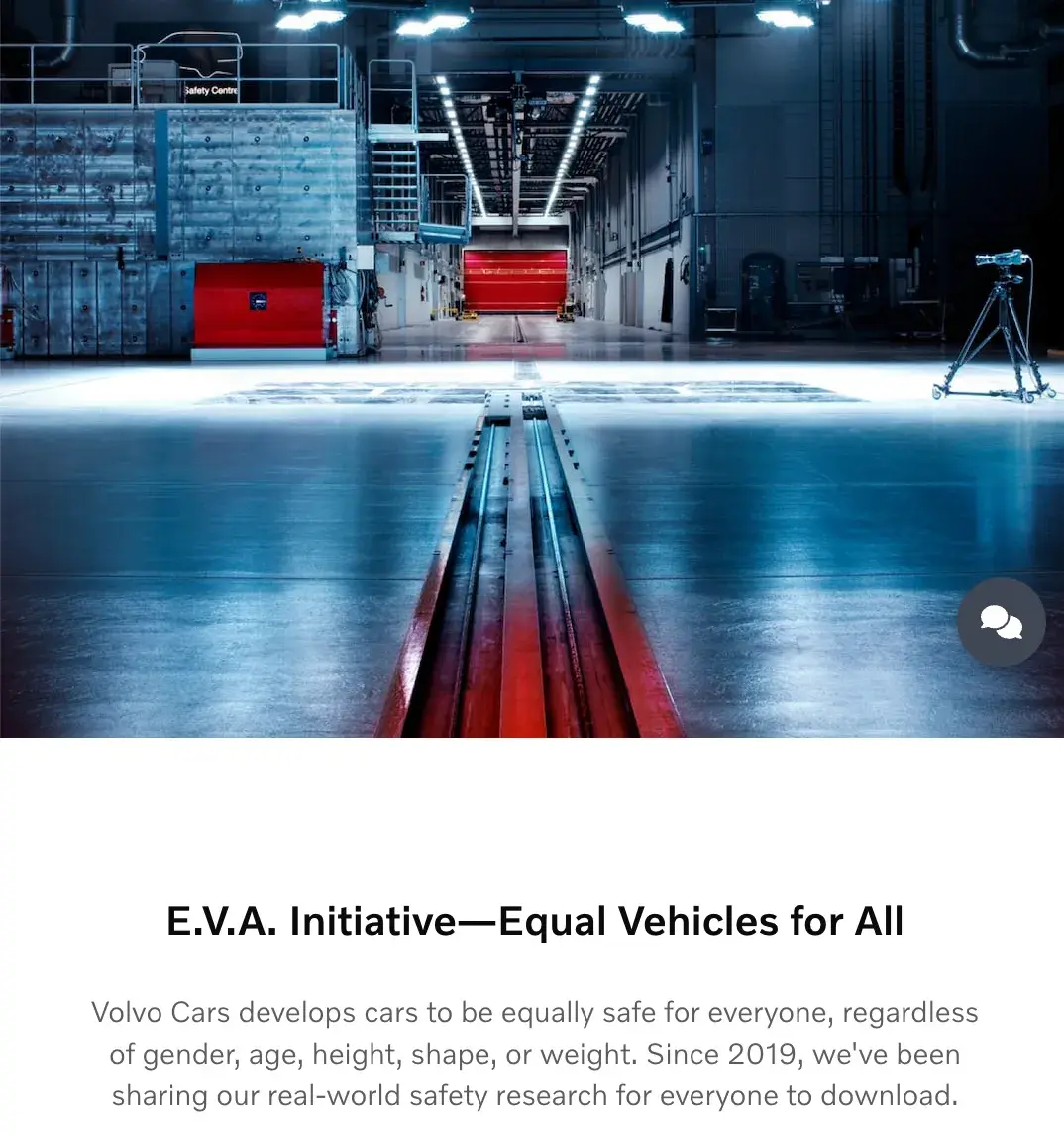
Volvo’s EVA initiative prioritizes Equal Vehicles for All, “regardless of gender, age, height, weight, or shape.”
If you’ve ever buckled up in a car to find the seat belt at throat height, Volvo’s promise will pique your interest.
What We Like: This is another highly actionable brand promise, since the burden of proof — and literal life-or-death stakes — rests on Volvo.
Free Brand Building Guide
A comprehensive guide to effectively define, launch, scale, and monitor your brand.
- Understanding brands today.
- Incorporating brand in marketing.
- Creating brand strategy.
- Measuring brand impact.
Download Free
All fields are required.
Form not available
You're all set!
Click this link to access this resource at any time.
Unparalleled luxury and personalized service. ()
When your name is synonymous with luxury, you’d best be able to deliver on your brand promise.
Customers of Four Seasons properties expect a level of personalized service that sets the brand apart not only from other hotels and resorts, but from other luxury hotel brands.
What We Like: This brand promise is memorable and emotional, appealing to consumers’ desire to be treated like royalty.
Bring stories to life — safely. (Inkheart)
Pretend I’ve been handed the money and the magic needed to build an adventure tour company for fictional places.
My imaginary company is inspired by Cornelia Funke’s 2003 YA book Inkheart, in which a girl learns that her father can bring characters to life simply by reading from them.
What We Like: Inkheart’s brand promise, “Bring stories to life — safely,” assures its imaginary audience that they can enjoy immersive experiences in their favorite fictional worlds without fear of ogres, vampires, or evil masterminds.
We scare because we care. (Monsters Inc.)
A real brand promise from a fictional brand, Disney Pixar animated classic Monsters Inc. features a company by the same name. Monsters Inc. employs monsters to scare children, whose screams produce clean energy.
What We Like: Doing double duty as a tagline, “We scare because we care” evokes emotion and establishes the brand’s distinctiveness — while promising legitimate frights.
What‘s common across all these promises is that they never refer to a particular offering or numerical goal. Instead, they are statements that encompass the brand’s broader purpose.
Examples of Brand Promises for B2B
Business-to-business brand promises can be difficult to craft. This is because these relationships are often more about efficiency and ROI than meeting emotional needs.
Check out these B2B brand promise examples to spark your imagination.
Help millions of companies grow better. ()
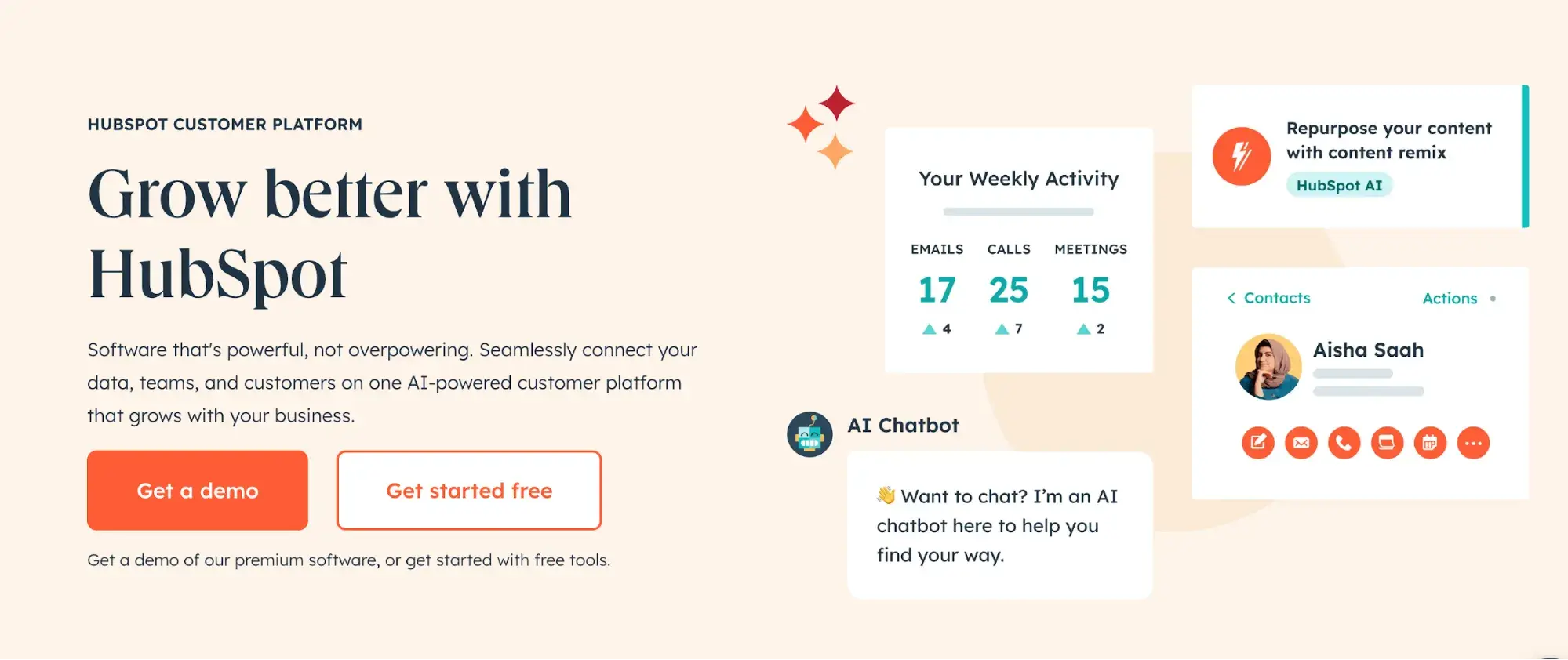
Here at HubSpot, we offer a complete customer platform that helps businesses connect and grow better. (Psst, that customer platform includes .)
Our brand promise has broad appeal — “millions of companies” — and demonstrates our commitment to and focus on growth.
See inside any stack, any app, at any scale, anywhere. ()
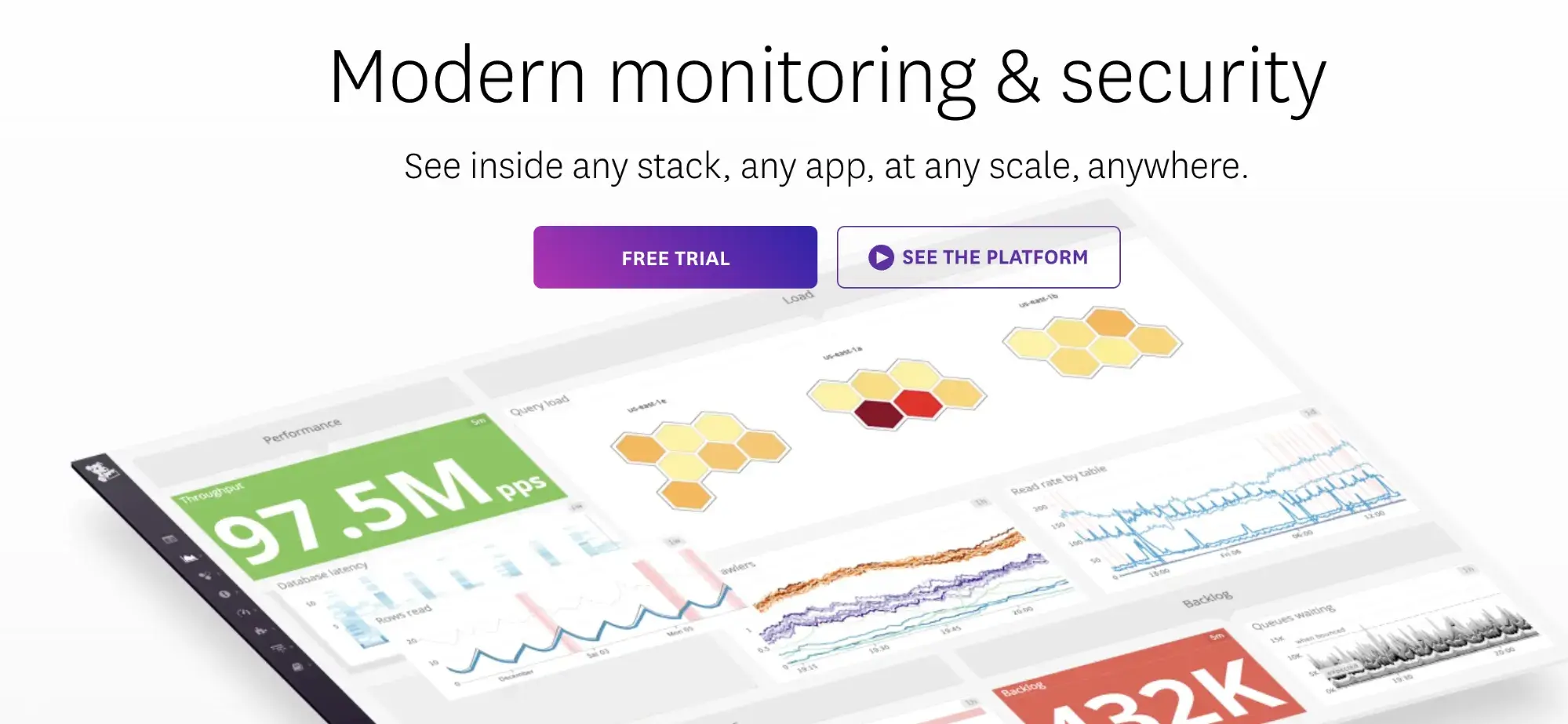
The repeated “any” in Datadog’s brand promise indicates the product’s flexibility, an actionable claim that also differentiates it from its competitors.
Keep a good thing growing. ()
Recurly, a subscription management service, makes an emotional appeal in its brand promise with the word “growing.” That sense of nurturing is backed up by the actionable claim that it has “a good thing.”
Easy scheduling ahead. ()
I use Calendly regularly, and I appreciate that it’s simple to use. Calendly’s brand promise focuses on a positive user experience, which directly impact’s the brand’s bottom line.
Unlock the power of gifting at scale. ()
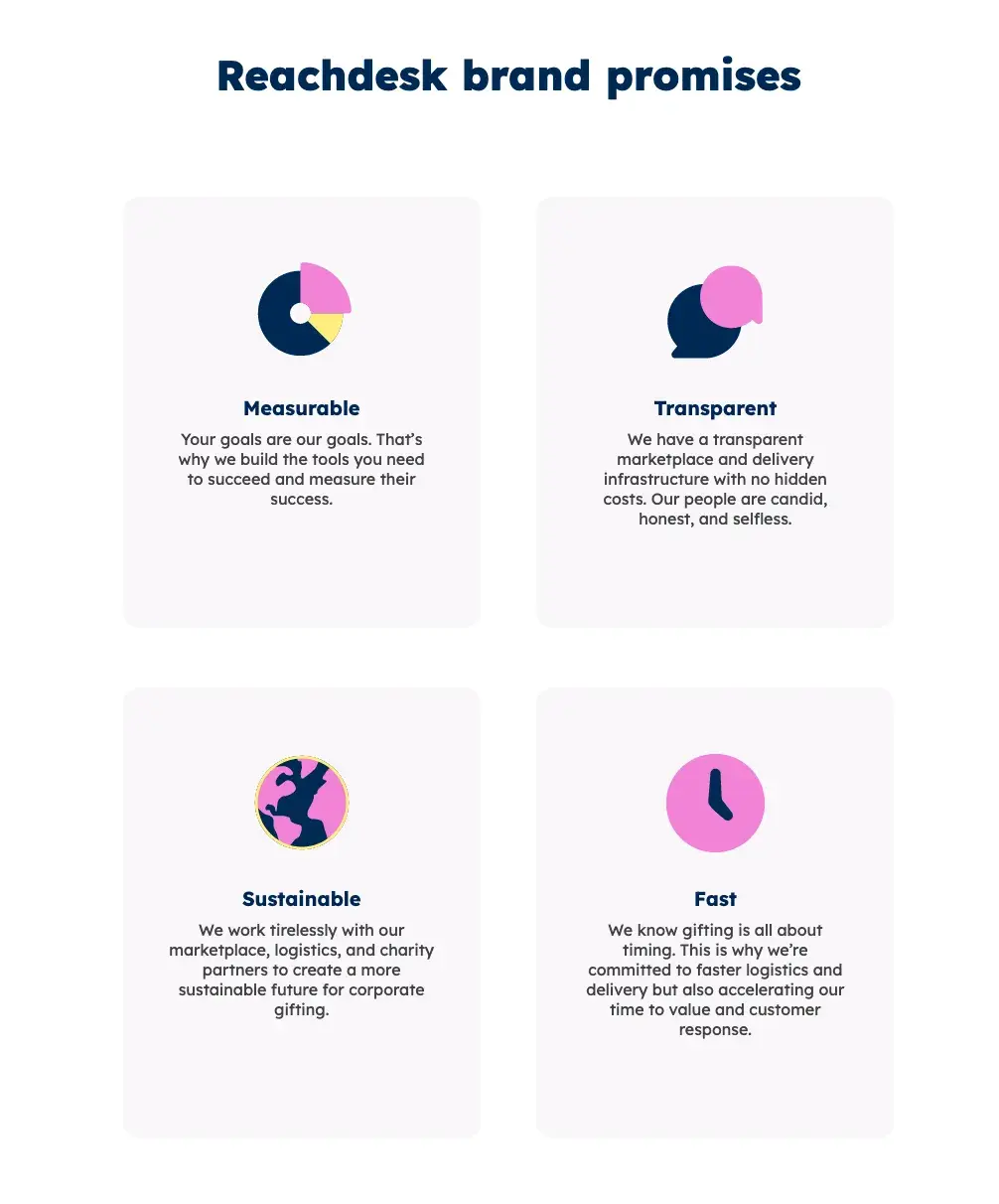
Reachdesk uses AI to power personalized corporate gifting. Its brand promise hints at the “power” in store for companies that wow and delight their customers.
If it couldn’t deliver on its brand promise: Glitchy AI could lead to gifts that didn’t feel thoughtful or personal, or worse, be embarrassing.
Manage tomorrow’s surprises today. ()
LogicManager uses the word “surprises” to indicate that it understands the realities of risk management. That establishes an emotional relationship with its customers — it’s that “hey, you get me” moment.
That emotional plea is backed up by a credible and actionable promise that the enterprise risk management company can predict future risks before they get out of control.
Smarter PR with powerful, easy-to-use software. ()
Muck Rack’s brand promise begins with a superlative, “smarter,” appealing to customers’ desires for growth and improvement. Coupled with “powerful” and “easy-to-use,” Muck Rack sets up an actionable brand promise.
Engineering the extraordinary to alleviate pain, restore health, and extend life. ()
Medtronic, a healthcare tech company, has to persuade potential customers that it can improve (and even extend) quality of life with devices like high-tech pacemakers. That’s a high bar to clear, so it goes straight for an emotional appeal with a brand promise that uses strong verbs like “alleviate” and “restore.”
Empowering small businesses and entrepreneurs with financial tools and services that are accessible, innovative, and user-friendly. ()
If you’ve interacted with small businesses, like your neighborhood bookstore or a vendor at the local farmers’ market, you’ve likely used Square to make a payment. Square’s brand promise hinges on accessibility and user-friendliness above all — an inability to deliver would make it unusable by the audience it targets.
Build Your Brand Promise for Lasting Results
Some promises last a lifetime. To make sure that you're creating a brand promise for the long haul, don’t rush through the process.
Drafting a quick slogan is tempting when your team is up against a deadline — but this is a promise to your all your stakeholders, so consider it carefully.
Take a look at the tips, templates, and examples above, and let your creativity run wild. Your brand may already have a strong identity, but how are you committing to your customers? Tell them today, with your brand promise.
Free Brand Building Guide
A comprehensive guide to effectively define, launch, scale, and monitor your brand.
- Understanding brands today.
- Incorporating brand in marketing.
- Creating brand strategy.
- Measuring brand impact.
Download Free
All fields are required.
Form not available
You're all set!
Click this link to access this resource at any time.
Branding






![How Internal 糖心Vlog Helps You Build a Strong Brand From the Inside Out [Experts Weigh In]](https://53.fs1.hubspotusercontent-na1.net/hubfs/53/internal-marketing-1-20241126-7031360.webp)