.png?width=112&height=112&name=Untitled%20design%20(98).png)
Nonprofit websites now function as fundraising systems, trust signals, and discovery surfaces simultaneously. AI-powered search engines increasingly answer donor questions directly, which raises the bar for content structure, accessibility, and data clarity. The best website builder for nonprofits connects donations, content, accessibility, and donor data into workflows that teams can track and improve over time.
This guide explains how nonprofit website builders work, how they differ from general platforms, and how to evaluate options based on donor growth, operational efficiency, and long-term sustainability.
Table of Contents
- What is a nonprofit website builder?
- Features That Grow Donors on Nonprofit Websites
- How We Evaluated the Best Website Builder for Nonprofits
- Best Website Builders for Nonprofits: Our Picks
- Frequently Asked Questions About Nonprofit Website Builders
What is a nonprofit website builder?
A nonprofit website builder is a platform designed to publish content, collect donations, and manage supporter engagement without requiring deep technical expertise. These systems combine page creation, donation flows, accessibility controls, and integrations with CRM and email tools. The best website builder for nonprofits supports fundraising performance while keeping day-to-day site management predictable.
Search engines and AI systems extract content from nonprofit websites to answer questions about causes, programs, and ways to give. Nonprofit website builders differ from general builders because fundraising and trust signals sit at the center of that extraction. Donation workflows, recurring giving options, and confirmation messaging function as core system behaviors rather than optional add-ons. Governance features such as permissions, approvals, and accessibility controls support compliance while preserving brand consistency.
Nonprofit-specific builders often fit organizations that want preconfigured fundraising tools and faster setup. General CMS (content management system) platforms can better support websites for nonprofits that need flexibility, deeper integrations, or advanced content strategies. Nonprofit website platforms scale more easily when they keep content creation, governance, optimization, and data capture into a single operational layer.
Nonprofit website builders also shape donor retention, not just first-time conversions. Platforms that link content, donation history, and follow-up communications make stewardship measurable. When donations, content, and donor data stay connected, teams gain clearer reporting, faster follow-up, and more consistent outreach across campaigns.
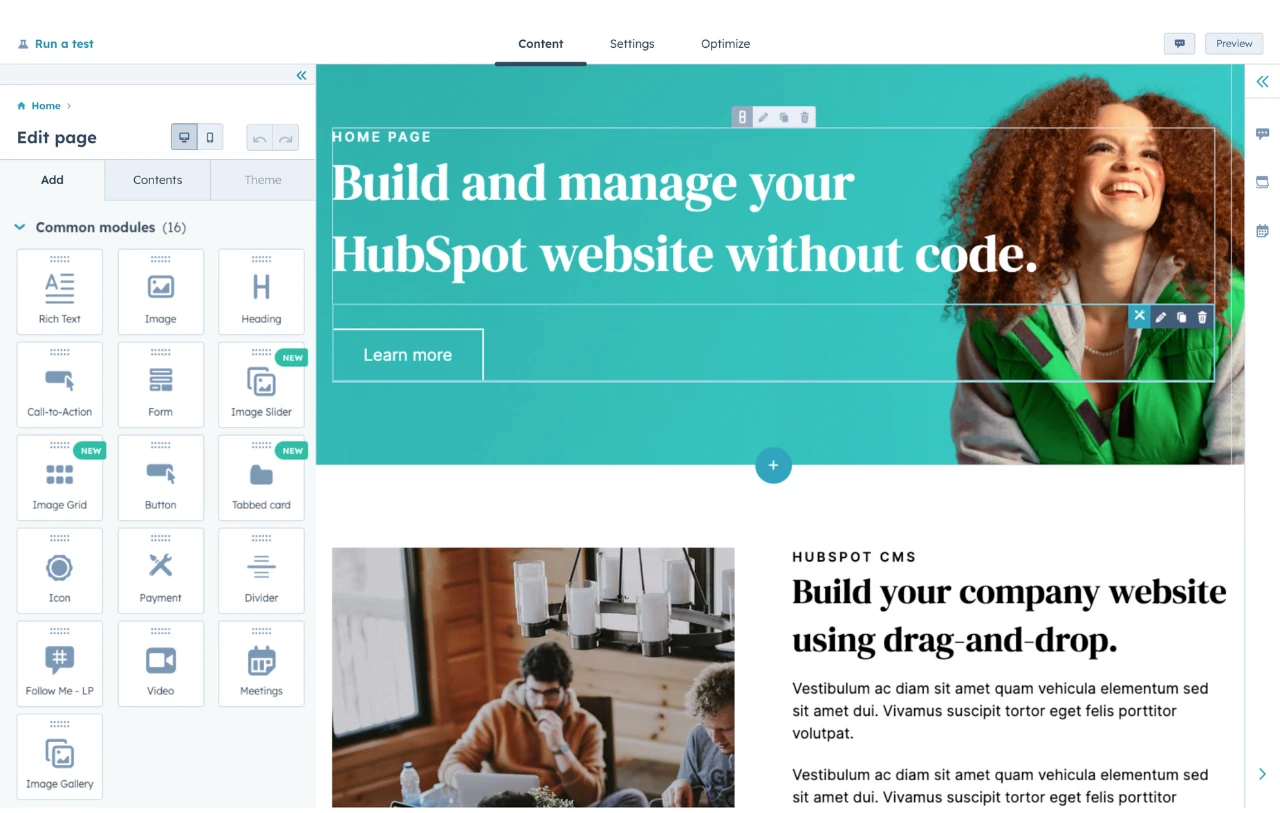
HubSpot's Free Website Builder
Create and customize your own business website with an easy drag-and-drop website builder.
- Build a website without any coding skills.
- Pre-built themes and templates.
- Built-in marketing tools and features.
- And more!
Features That Grow Donors on Nonprofit Websites
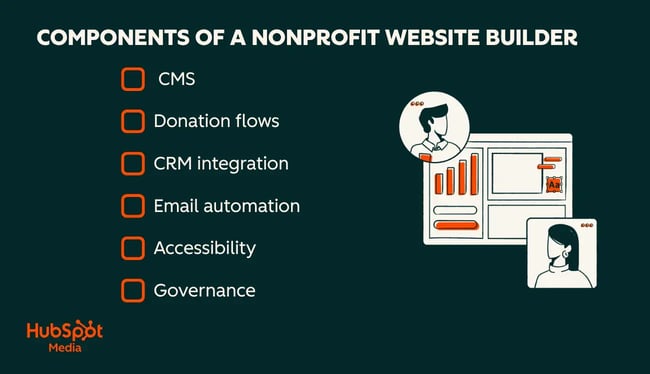
Nonprofit websites convert more donors when friction stays low, engagement stays relevant, and fundraising data connects directly to follow-up actions. The best website builder for nonprofits supports donation conversion, donor data capture, email nurturing, discovery, and accessibility.
Search engines, analytics platforms, and CRMs treat donation activity as structured signals. Donor growth depends on connected systems rather than isolated donation forms. When content, donation activity, and supporter data live in separate tools, teams lose visibility into what drives giving and what happens after the gift.
Website features support both first-time donations and repeat giving. Clear donation paths convert new visitors. Connected data and follow-up workflows support stewardship after the first gift. Over time, donor history informs outreach strategy, reporting accuracy, and campaign planning.
Donation Flows That Reduce Friction
Donation flows that reduce friction increase gift completion rates by removing confusion and payment barriers during high-intent moments. Clear calls to action, simple forms, and confirmation messaging reinforce donor confidence at the point of giving.
Multi-step forms, unclear payment options, and inconsistent messaging increase drop-off. Nonprofit website builders support recurring giving, confirmation receipts, and mobile-friendly experiences that match how donors give today.
supports donation-ready page creation with integrated forms that connect directly to HubSpot CRM, so every completed gift automatically updates a donor's contact record without manual data entry.
Pro tip: Tie every donation feature to a follow-up action. Donation flows should automatically trigger data capture, acknowledgments, and next-step communication.
CRM-Connected Forms and Donor Data Capture
CRM-connected forms capture donor information at the moment of engagement and store it in a system that teams can act on. This connection supports personalization, reporting, and lifecycle tracking.
Donation records linked to contact profiles support segmentation, attribution, and stewardship workflows. CRM connectivity turns website interactions into operational data that teams can use for outreach and measurement.
connects directly to Content Hub forms, so donor submissions update contact records in real time and feed into segmentation, reporting, and follow-up workflows without manual data entry.
Email and Automation for Donor Nurturing
Email and automation platforms manage post-donation communication and ongoing engagement by triggering timely, behavior-based outreach without manual effort.
Thank-you emails, campaign updates, and renewal reminders depend on accurate data flow. Automation matters because it creates consistent follow-up tied to donor behavior, not delayed batch exports.
connects email workflows to donor activity through HubSpot CRM, so acknowledgments, campaign updates, and renewal reminders trigger automatically based on each supporter's contact record.
SEO and Content Tools for Nonprofit Discovery
Search engines and AI systems rely on nonprofit website content to answer questions about causes, programs, and giving opportunities. Discovery depends on how clearly content is structured and how consistently it gets updated.
Search-optimized content reaches new audiences through educational pages, program updates, and blog content aligned to supporter questions. Discovery improves when teams organize content around defined topics, maintain consistent structure, and refresh pages as programs evolve. Established nonprofit SEO practices emphasize keyword alignment, internal linking, and accessible formatting to improve visibility across regions and missions.
HubSpot Content Hub supports structured publishing to make discovery easier to sustain. The platform manages pages, metadata, and approvals, reducing technical dependency while preserving consistency as content volume grows.
Accessibility and Governance Controls
Accessibility and governance controls support inclusive experiences, reduce compliance risk, and protect both supporters and the organization.
Accessibility tools support contrast, structure, keyboard navigation, and readable templates. Governance features control who can publish, edit, or approve content. Governance becomes more important as content volume grows and more contributors touch donation pages and high-visibility program content.
supports permission-based governance and accessible templates, so teams can control who publishes content while maintaining consistency across donation pages and high-visibility program content.
How We Evaluated the Best Website Builder for Nonprofits
The evaluation focused on how well each platform supports fundraising, ease of use, and long-term scalability for nonprofit teams. Criteria emphasized donor experience, integrations, accessibility, cost transparency, and content visibility.
Donation capability and CRM integration carried significant weight. Platforms that support recurring gifts, confirmation messaging, and reliable payment processing perform better during high-intent moments. CRM integration matters because donor data must move directly into systems that support segmentation, reporting, and follow-up. Builders that isolate donation activity limit insight and slow engagement.
Nonprofit website cost and staffing constraints also shaped scoring. Many teams operate with limited technical resources. Platforms that reduce setup time, maintenance effort, and developer reliance scored higher. Total nonprofit website cost extends beyond licensing to include plugins, integrations, training, and upkeep. Teams comparing a free website for nonprofit use can use 贬耻产厂辫辞迟’蝉 guide to free website builders as a baseline for where limits tend to show up.
Accessibility and SEO readiness completed the evaluation. Accessibility features reduce compliance risk. SEO readiness improves visibility across traditional search and AI-generated answers. More than were filed in the U.S. in 2025, according to , which increases the stakes for governance and accessibility workflows.
贬耻产厂辫辞迟’蝉 helps nonprofit teams test whether pages are structured for AI search and future discovery, making it a useful tool to factor in alongside platform decisions.
Best Website Builders for Nonprofits: Our Picks
Several website builders meet nonprofit needs, but they differ in flexibility, cost, and integration depth. This comparison highlights four leading options and explains which organizations each serves best.
Quick Comparison Chart
*Pricing changes often; confirm current plans during selection.
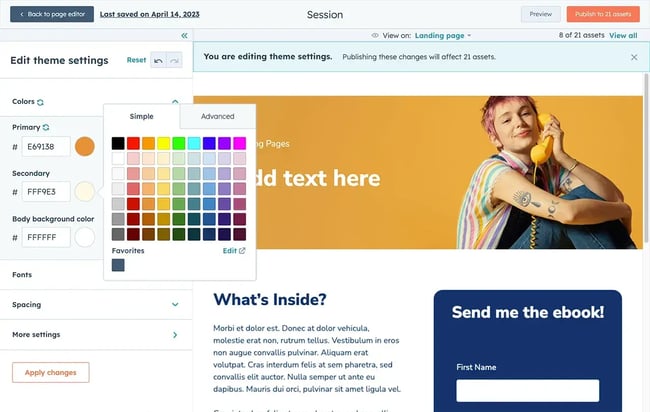
is a unified CMS that manages content, visibility, and donor-facing pages in one system. It supports nonprofits that want flexibility without heavy technical overhead.
The platform centralizes publishing, governance, and optimization. Teams manage pages, permissions, and discoverability without developer dependency. Content Hub matters because it keeps content, donor data, and optimization aligned rather than fragmented, which improves reporting and follow-up workflows.
What we like:
- Structured workflows that support consistent publishing and approvals.
- Centralized page management that reduces coordination overhead.
- A scalable foundation for discovery and content quality.
HubSpot also includes an inside Content Hub that builds a website based on your responses to prompts about your organization, mission, and goals — no technical background required. The helps teams create and optimize content directly within the platform.
Best for: nonprofits that want a scalable platform with strong content workflows, integrations, and long-term flexibility.
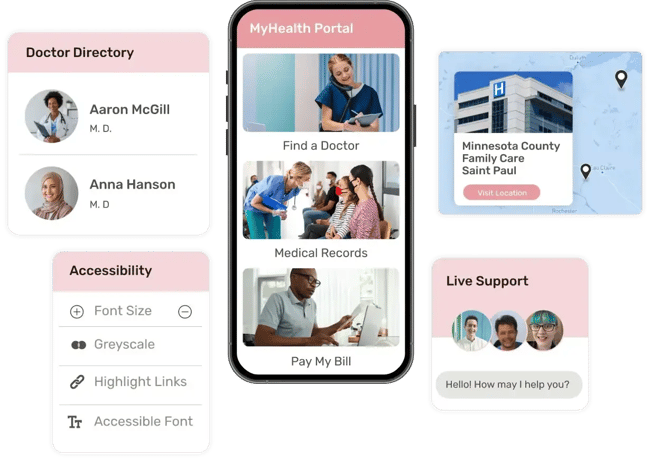
is a nonprofit-focused website builder centered on simplicity and fundraising functionality. It fits organizations that want fast setup and built-in tools. Donation pages, event promotion, and templates reduce launch time. This approach works well when a team needs fundraising defaults and prefers a platform designed around nonprofit use cases.
??Pricing: Starter, $149/month; Grow, $199/month; Engage, contact for pricing; Enterprise, contact for pricing
Best for: small to mid-sized nonprofits that prioritize quick setup and built-in fundraising tools over customization.
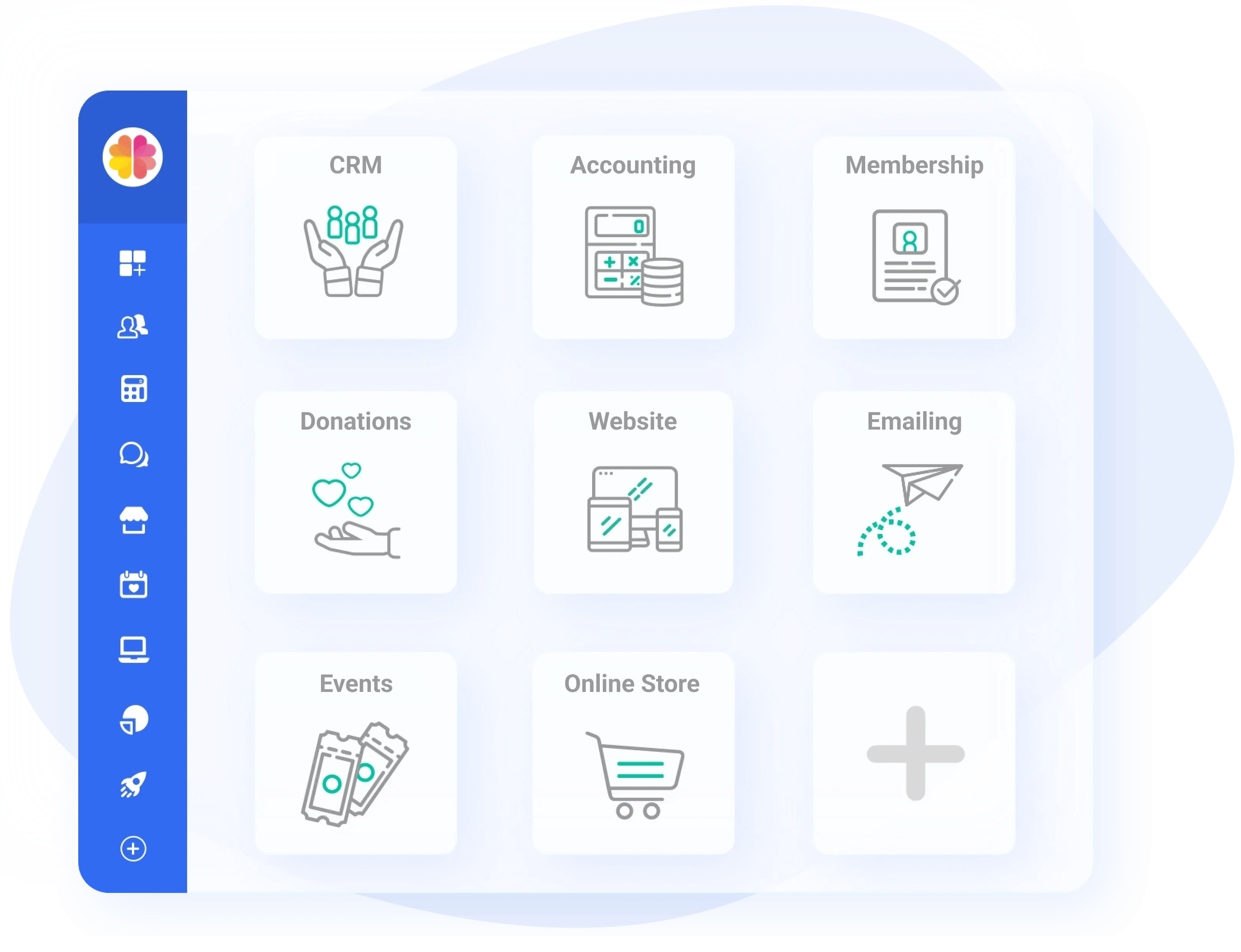
combines website building with membership and community management. It works well for engagement-driven organizations.
Donations, events, and memberships sit alongside website content. Community-first platforms can support recurring giving when membership operations and communications stay consistent.
Pricing: Springly offers tiered plans that vary by organization type; confirm current pricing at springly.org before committing.
Best for: nonprofits centered on memberships, events, or community-driven fundraising.
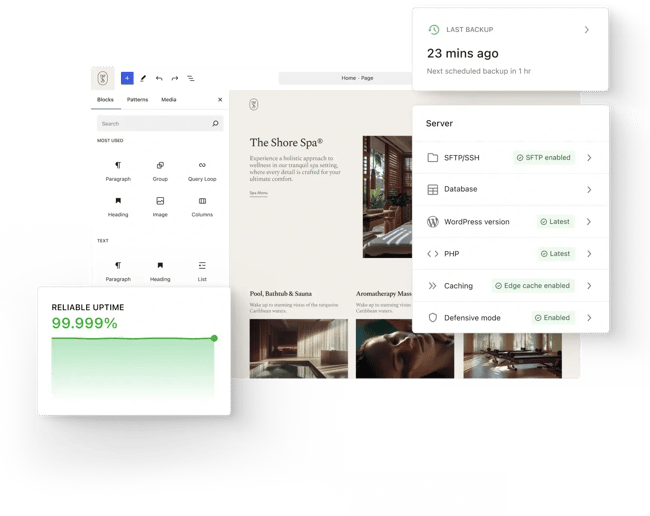
is a general CMS offering extensive customization through themes and plugins. It supports nonprofits that want full control.
Donation functionality often relies on third-party plugins, adding flexibility and maintenance complexity. WordPress suits organizations that can manage integrations while pursuing advanced content strategies.
Pricing: WordPress software is open source and free, but total costs include hosting, premium themes, and plugins; annual costs vary widely depending on the stack.
Best for: nonprofits with technical support or agency partners that want maximum customization.
Frequently Asked Questions About Nonprofit Website Builders
Can we accept recurring donations on these builders?
Most nonprofit website builders support recurring donations through built-in tools or integrations. The recurring experience depends on renewal handling, receipts, and donor self-service.
Teams can evaluate recurring support by checking whether failed payments trigger alerts, whether donors can update payment methods, and whether recurring gift history syncs to contact records for reporting and follow-up. CRM integration matters because renewal campaigns rely on accurate donor timelines and payment history.
How hard is it to migrate our old site and keep SEO?
Migration complexity depends on content volume, URL structure, and how donation flows are implemented. Preserving SEO usually requires redirect mapping, page-by-page content planning, and metadata consistency.
Platforms with structured publishing workflows can simplify the work because teams can manage redirects, templates, and page updates in repeatable patterns. Phased migrations often reduce disruption, especially for high-traffic program pages and donation pages.
Do these platforms support ADA accessibility requirements?
Most builders include accessibility features, but support varies. Tools often cover contrast, structure, and navigation, while compliance requires ongoing governance and content standards.
Teams can evaluate accessibility support by checking template quality, heading structure controls, keyboard navigation, and whether content workflows prevent accessibility regressions during edits. Centralized management supports consistency when more contributors update pages over time.
What hidden costs should we plan for?
Hidden costs include payment processing fees, plugins, integrations, hosting, and ongoing maintenance. Staffing time also affects total nonprofit website cost, especially when workflows require manual exports or reconciliation.
Budget planning works best when teams list required capabilities first, then confirm what is native versus add-ons. Annual reviews can help account for accessibility audits, plugin renewals, and ongoing optimization work.
How do we connect donations to CRM and email nurturing?
Donation events should update contact records and trigger follow-up automatically. Platforms with real-time data flow improve reporting and engagement while reducing manual work.
Teams can evaluate this capability by checking whether donation confirmations, acknowledgments, segmentation, and renewal reminders can run from the same donor record. Integrated systems reduce lag between giving and stewardship, which improves consistency across donor communications.
Getting Started
The best website builder for nonprofits is one that turns attention into action and action into long-term donor relationships. Platforms that connect fundraising, content, accessibility, and donor data make it easier to measure impact, reduce operational drag, and scale engagement as expectations grow. Cost clarity, governance, and discoverability now matter as much as design or page speed.
HubSpot Content Hub stands out for nonprofits that need one system to manage content, donations, and donor engagement while staying visible across search and AI-powered discovery. Teams evaluating readiness for AI search and future attribution can use HubSpot AEO Grader to assess whether their site structure supports how modern answer engines surface and cite nonprofit content.
HubSpot's Free Website Builder
Create and customize your own business website with an easy drag-and-drop website builder.
- Build a website without any coding skills.
- Pre-built themes and templates.
- Built-in marketing tools and features.
- And more!
CMS