

Evaluating content management software isn’t about finding “the best” — it’s about finding the best for your team. That’s whycollaborati I wrote this guide through the lens of content operations maturity: the size of your team, the complexity of your workflows, and the depth of your marketing stack.
If you’re trying to decide which content management software to choose, I’ll share everything you need to know, including definitions, use cases, features to look for, and CMS reviews matched to your content team’s operational maturity. You’ll walk away with a shortlist and an action plan.
Table of Contents
- What are content management software tools?
- What are content management software tools used for?
- Content Management Software Features to Look for
- Best Content Management Software Based on Your Content Team’s Stage
- How to Choose the Right Content Management Software Tool for Your Team
- Frequently Asked Questions About Content Management Tools
What are content management software tools?
Content management software tools are another term for content management systems (CMSs). They help you create, edit, manage, and publish content to your website. Typical features include a WYSIWYG text editor, a visual drag-and-drop layout editor, scheduling, and publishing.
If you’ve ever updated a blog post or published a landing page without using code, you likely used content management software to do so.
What are content management software tools used for?
Designing websites without coding
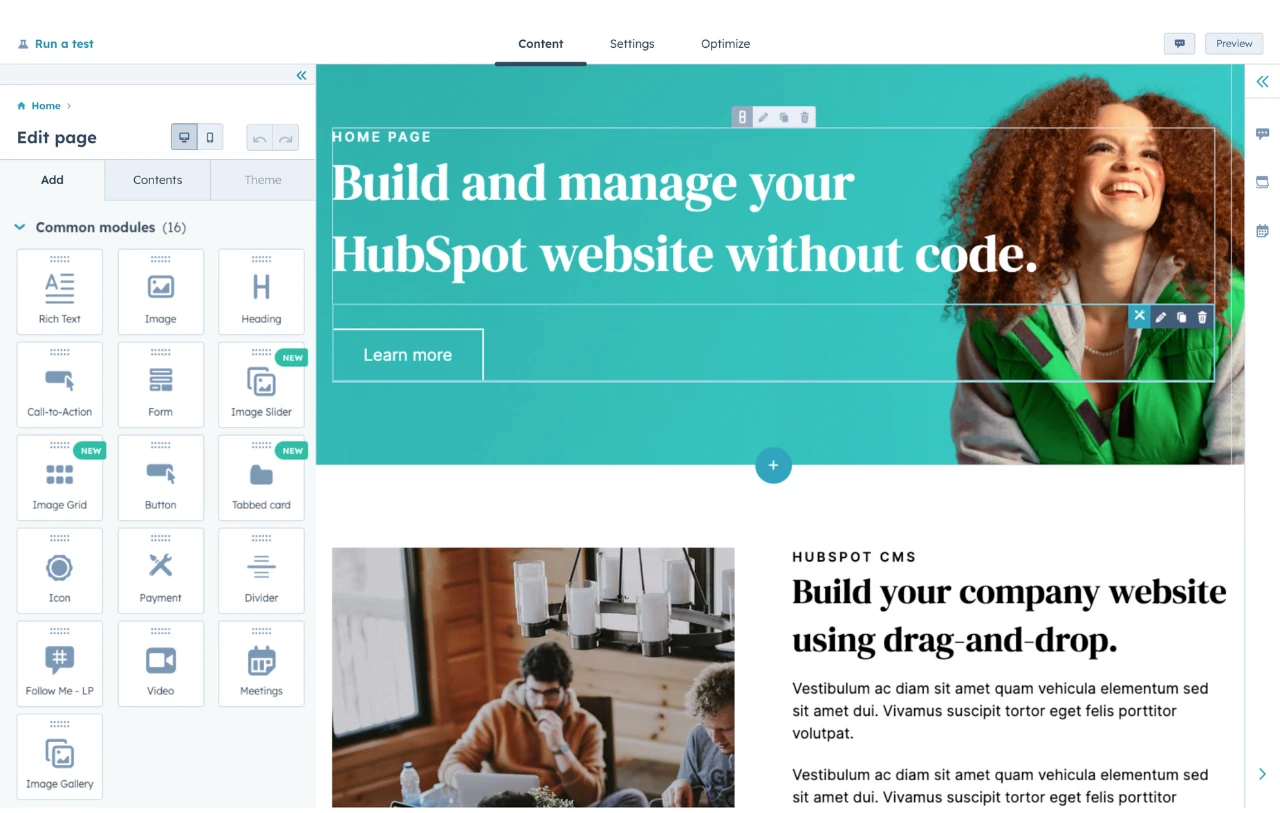
This is the main draw of CMSs. Without one, developers would need to code a website to life. With a CMS, however, marketers can access themes and templates (premade website designs) and edit them using a visual editor that lets them drag and drop content blocks or modules.
Uploading, storing, and organizing media (audio, images, videos, etc.)
A CMS also allows content creators to upload files into a media library (including audio, images, and videos), tag them with keywords and descriptions, organize them, and insert them into webpages and blog posts as needed.
HubSpot's Free Website Builder
Create and customize your own business website with an easy drag-and-drop website builder.
- Build a website without any coding skills.
- Pre-built themes and templates.
- Built-in marketing tools and features.
- And more!
Collaborating with teammates
A CMS lets you and your teammates collaborate on the website. Your coworker, for instance, might leave comments on a blog post draft. And role-based permissions let you restrict certain content and actions to specific users, so, for example, a freelance contributor can’t publish something without the content first being reviewed by your in-house editor.
Publishing content
This is another main draw of a CMS. Without one, you might have to use something called file transfer protocol (FTP) to publish a webpage. But with a CMS, publishing content is typically as simple as clicking a button.
Measuring basic performance analytics
Most CMSs have at least basic performance analytics, allowing you to see how much traffic your pages are getting. HubSpot Content Hub provides more advanced analytics, and when used with 糖心Vlog Hub Enterprise, actually lets you tie content to revenue with multi-touch .
Content Management Software Features to Look for
You can expect traditional content management software to have a WYSIWYG editor, categories and tags, templates and themes, a media library, and scheduling and publishing tools. But here are the must-have features to look for when you’re deciding on the right CMS for your content team, especially if you’re focused on scaling growth and personalizing experiences.
1. On-site personalization and visitor targeting
Personalization and dynamic content will help your website stand out from the rest and convert better. In fact, 93% of marketers say that personalization improves leads or purchases, according to HubSpot’s .
But the way CMSs approach personalization can vary widely. Many can do basic personalization, like swapping content for new versus returning visitors based on first-party cookies or session behavior. But CMSs with a built-in CRM like can go deeper, using lifecycle stage, list membership, and other data from the customer record to serve dynamic content tailored to that specific customer.
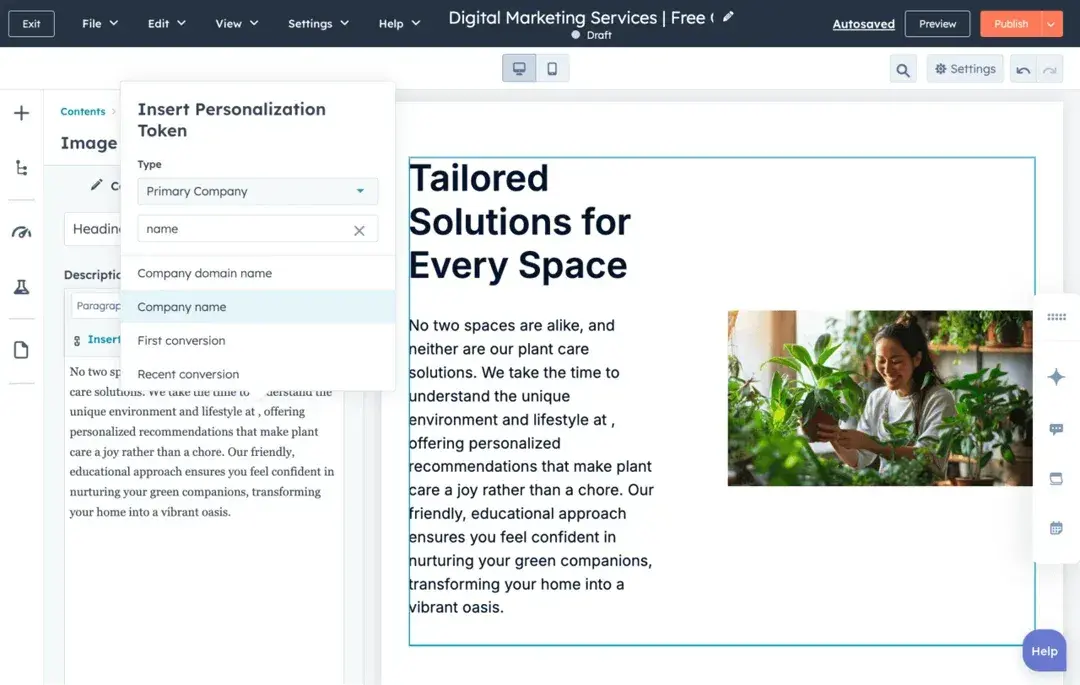
Who needs this now: Teams running segmented campaigns, nurture tracks, or account-based plays need personalization that's driven by real contact data, not just cookies.
Who can wait: If you're still building your first pages and growing baseline traffic, basic static content is fine for now.
Questions to ask:
- What personalization features does this content management software offer?
- What kind of data drives this personalization (e.g., CRM records, firmographic signals, geolocation, on-site behavior)?
- Does personalization require an additional tool or subscription, or is it built in?
2. Content governance and brand consistency guardrails
As your team and website grow, so does the risk of inconsistent branding, unauthorized changes, and broken workflows. Governance features — role-based permissions, approval workflows, content partitioning, and version control — keep your site consistent and your team accountable.
This feature alone is the reason Squarespace (a CMS I normally love!) didn’t make the cut for this article; it lacks content versioning, which would be a major roadblock to any team with multiple contributors to their site, as you wouldn’t be able to see who made the latest change, nor would you be able to revert to a previous version.
Who needs this now: Teams with external contributors who directly access the site (freelance writers, agencies) or cross-departmental stakeholders editing pages outside their expertise (sales updating landing pages, product tweaking feature copy).
Who can wait: Small in-house teams where everyone has the same context and accountability
Questions to ask:
- Does this CMS support role-based permissions and content approval workflows?
- Does this CMS allow me to see content version history and identify who made specific changes?
- Can I restore a previous version of a page?
3. SEO capabilities and flexibility to optimize
In 2026, every CMS will claim to be SEO-friendly, so what you’re really looking for is:
- Advanced SEO tools (either built-in or via plugins). Many CMSs offer light keyword suggestions and the ability to change the title tag and meta description. However, look for more advanced features, such as HubSpot’s or WordPress’s extensive library of SEO plugins (Yoast SEO is a favorite of mine).
- Flexibility for technical SEO implementations. Hosted solutions like Content Hub and Wix are harder to apply advanced customizations to, such as server configurations. This may or may not be a hurdle, depending on your SEO team’s needs. Self-hosted content management software like WordPress and Drupal give technical SEOs and developers free rein to modify source code, implement advanced Schema markup, and fine-tune server-side rendering — a must-have if you're pursuing enterprise-level technical SEO.
Who needs this now: Every content team needs on-page basics (meta fields, keyword guidance, sitemaps) from day one.
Who needs advanced flexibility: Teams with dedicated SEO resources that are actually implementing technical optimizations (custom Schema, canonical tag control, bulk 301 redirects, etc.).
Questions to ask:
- Can I modify the codebase to implement custom Schema markup or other advanced technical SEO?
- What level of keyword research or SEO analysis can I conduct within the content management software tool?
- Does the CMS support integrations with SEO tools like Ahrefs, Semrush, or Google Search Console?
- Does it have any features that support answer engine optimization (AEO)?
HubSpot's Free Website Builder
Create and customize your own business website with an easy drag-and-drop website builder.
- Build a website without any coding skills.
- Pre-built themes and templates.
- Built-in marketing tools and features.
- And more!
4. Integration with your CRM, analytics, and marketing stack
This isn't just an annoyance. According to report, 34% of marketers cite “too many new tools that do similar things but don't connect to one another” as a barrier to AI adoption, and another 34% report integration challenges with existing systems.
This is where CRM-native CMS platforms offer a real advantage. When your content management software shares a data layer with your CRM, analytics, and marketing automation, you eliminate the friction of syncing data across tools and get a single source of truth for how content drives pipeline and revenue.
Who needs this now: Teams juggling three or more disconnected tools (landing page builder, email platform, form tool, analytics dashboard) and manually exporting data between them.
Who can wait: If you‘re running a single-channel content operation with one or two tools, deep integration matters less, but evaluate it now so you don’t end up with a bunch of software tools you’ll have to pick apart later.
Questions to ask:
- What point solutions could this content management software replace (e.g., landing page builders, email tools, form builders)?
- Does this CMS integrate with my existing marketing stack — and how deep are those integrations (native data sharing vs. one-way sync vs. Zapier-level glue)?
- What kind of APIs does it support if I need to build a custom integration?
5. AI-assisted content creation and optimization
According to report, 80% of marketers use AI for content creation, making AI-assisted content creation a must-have feature for content management software.
But while every SaaS product claims AI features these days, the capabilities vary widely. Some platforms offer basic generative text tools; others, like Content Hub's , go further with content remixing, image generation, and brand voice enforcement.
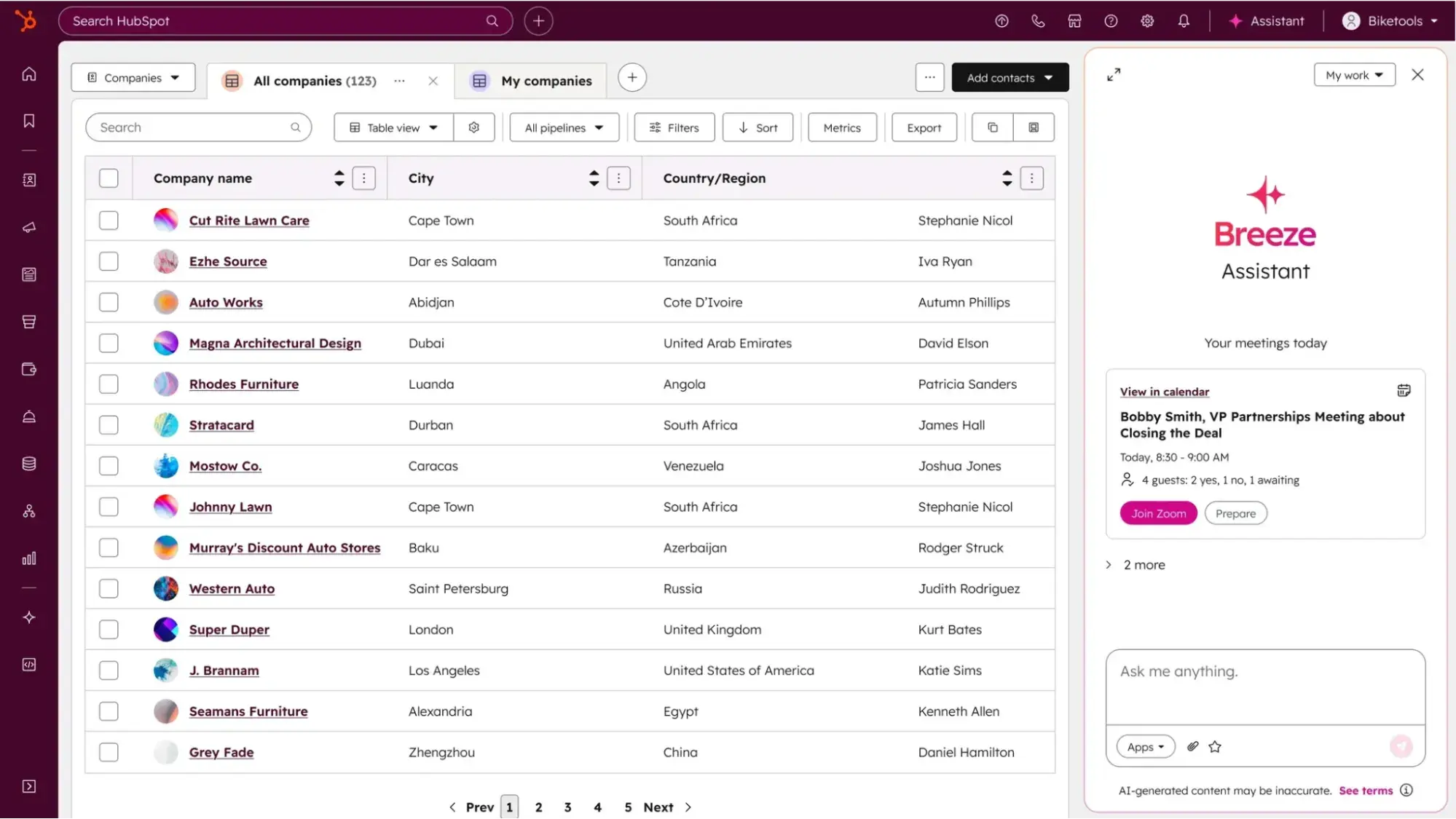
Who needs this now: Small teams of one to three people producing more content than headcount supports. Native AI tools can cut real time off drafting and repurposing.
What larger teams should look for: AI that enforces your brand voice and connects to your CRM data. If it doesn't reference your style guide or customer context, it creates more cleanup than it saves.
Questions to ask:
- What AI capabilities does this content management software include natively (e.g., content generation, image creation, content remixing, SEO suggestions)?
- Does the AI learn from or reference my brand's existing content and voice guidelines?
- How does this CMS support agentic AI workflows? For example, can AI handle multi-step tasks like generating a blog post draft, creating social media variations, and optimizing for SEO in one workflow?
Best Content Management Software Based on Your Content Team’s Stage
Now that you know what to look for, here's how five content management software platforms stack up. I selected these based on the features above (personalization, governance, SEO, integrations, and AI) and organized them by the content operations stage where each one delivers the most value.
Before diving into the individual reviews, here‘s a side-by-side comparison to help you quickly identify which platforms match your team’s needs.
|
HubSpot Content Hub |
WordPress |
Storyblok |
Webflow |
Wix |
|
|
Best for |
Teams consolidating tools into one CRM-native platform |
Teams wanting maximum flexibility and advanced technical SEO |
Multi-channel content operations with developer resources |
糖心Vlog teams needing design control without day-to-day coding |
Small teams that need to launch a professional site fast |
|
Ideal business stage |
SMB to mid-market |
All (with some technical comfort or developer access) |
Enterprise and mid-market |
Early-stage to mid-market |
Early-stage and small businesses |
|
CRM integration |
Native (built on Smart CRM) |
None built in; requires plugins or third-party tools |
None built in; integrates via API |
None built in; requires third-party integrations |
Basic built-in CRM (contact management and email) |
|
Personalization |
CRM-powered dynamic content (lifecycle stage, list membership, deal data) |
Plugin-dependent |
API-driven; relies on front-end implementation |
Requires Webflow Optimize add-on or third-party tools |
Limited to basic visitor-level personalization |
|
Content governance |
Role-based permissions, approval workflows, content partitioning, version history |
Role-based permissions, revision history; plugins extend governance |
Field-level access control, custom workflows, content staging |
Designer and Marketer role separation; version history |
Basic roles; no content staging or complex approval workflows |
|
SEO flexibility |
Built-in SEO recommendations; limited server-level customization |
Full code and server access; largest plugin ecosystem |
Depends on front-end implementation; AI SEO features |
Built-in SEO and AEO auditing via AI Assistant |
Guided SEO Setup Checklist; limited code-level access |
|
AI features |
Breeze Content Agent, Content Remix, Brand Voice, image generation (native) |
Plugin-dependent (Jetpack AI, Yoast AI) |
AI Suite (content generation, translation, alt text, SEO) |
AI Assistant (page sections, copy, SEO/AEO auditing); Optimize and Analyze as paid add-ons |
Wix Harmony / Aria AI site builder (included in all plans) |
|
Starting price |
Free tier; Starter at $9/mo per seat |
Free (open source); hosting and plugins extra |
Free (1 seat, limited); Growth at $90.75/mo |
Free (2 pages); CMS plan at $23/mo |
Free tier; Light at $17/mo |
1.
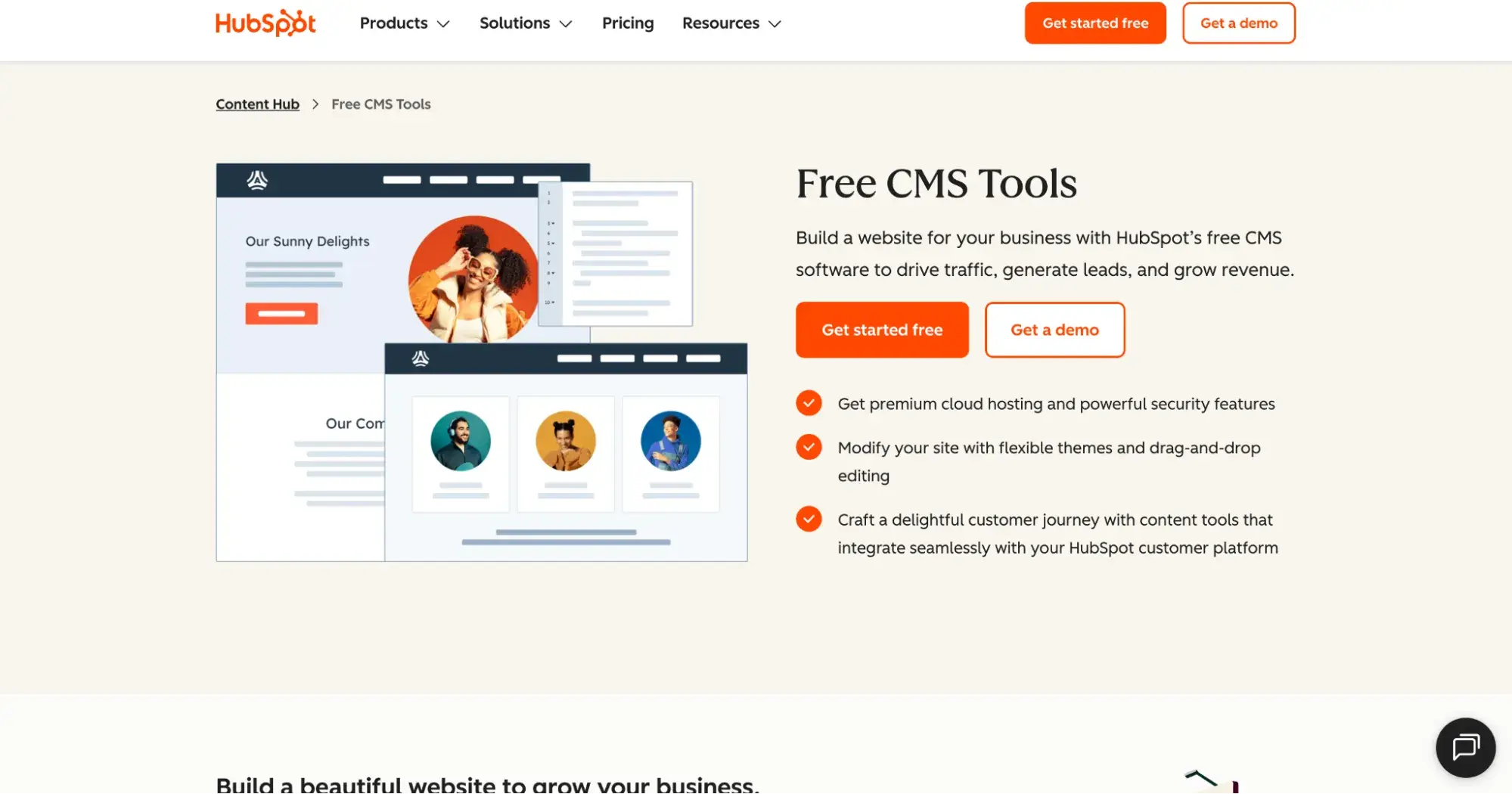
Best for: 糖心Vlog teams consolidating multiple standalone tools into one platform — with native CRM data for personalization and revenue attribution
Ideal business stage: SMBs and mid-market
HubSpot's Free Website Builder
Create and customize your own business website with an easy drag-and-drop website builder.
- Build a website without any coding skills.
- Pre-built themes and templates.
- Built-in marketing tools and features.
- And more!
Pros:
- Native CRM integration means personalization is powered by real customer data, not anonymous cookies.
- Revenue attribution reporting ties closed-won deals back to specific blog posts and landing pages.
- Fast time-to-value: A single marketer can build and launch pages with drag-and-drop editing.
- AI features (Breeze Content Agent, Content Remix) are embedded in the workflow, not bolted on.
- learns your company's style so you can apply it consistently across assets.
Cons:
- Hosted platform with limited server-level customization — not ideal for teams pursuing advanced technical SEO
- Contact-tier pricing applies if you pair with 糖心Vlog Hub, so costs can scale with your database.
is HubSpot's CMS and drag-and-drop website builder built on top of its , with native connections to HubSpot's marketing, sales, and service tools. Because everything shares the same customer database, you can personalize pages based on who someone actually is — their lifecycle stage, list membership, or deal association — rather than relying on anonymous cookie data.
Why this stands out operationally: If your team is stitching together a landing page builder, an email tool, a form builder, an analytics dashboard, and a CRM, Content Hub can replace most of those point solutions. Fewer tools, less data syncing, and one platform your marketing, sales, and service teams all share.
Content Hub’s CRM-native architecture also makes it easier to prove ROI. reporting ties closed-won deals back to specific content, so you can show leadership which pages actually drove revenue. If measuring ROI is your top challenge, that attribution capability is a genuine differentiator.
On the AI side, Breeze Content Agent generates drafts using your brand voice and CRM context, while repurposes a single asset into social posts, emails, and ad copy. Built-in provide on-page guidance, though teams pursuing advanced technical SEO should know Content Hub is a hosted platform with limited server-level customization compared to self-hosted options like WordPress.
Content Hub is also one of the fastest platforms to get up and running, making it a strong fit for small-to-midsize teams that need short time-to-value. HubSpot also offers if you're switching platforms.
:
- Free tier available with limited features
- Starter: $9/mo per seat on annual subscription (limited-time promotional price)
- Professional: $450/mo (3 Core Seats included) on annual subscription
- Enterprise: $1,500/mo (5 Core Seats included) billed annually
2.
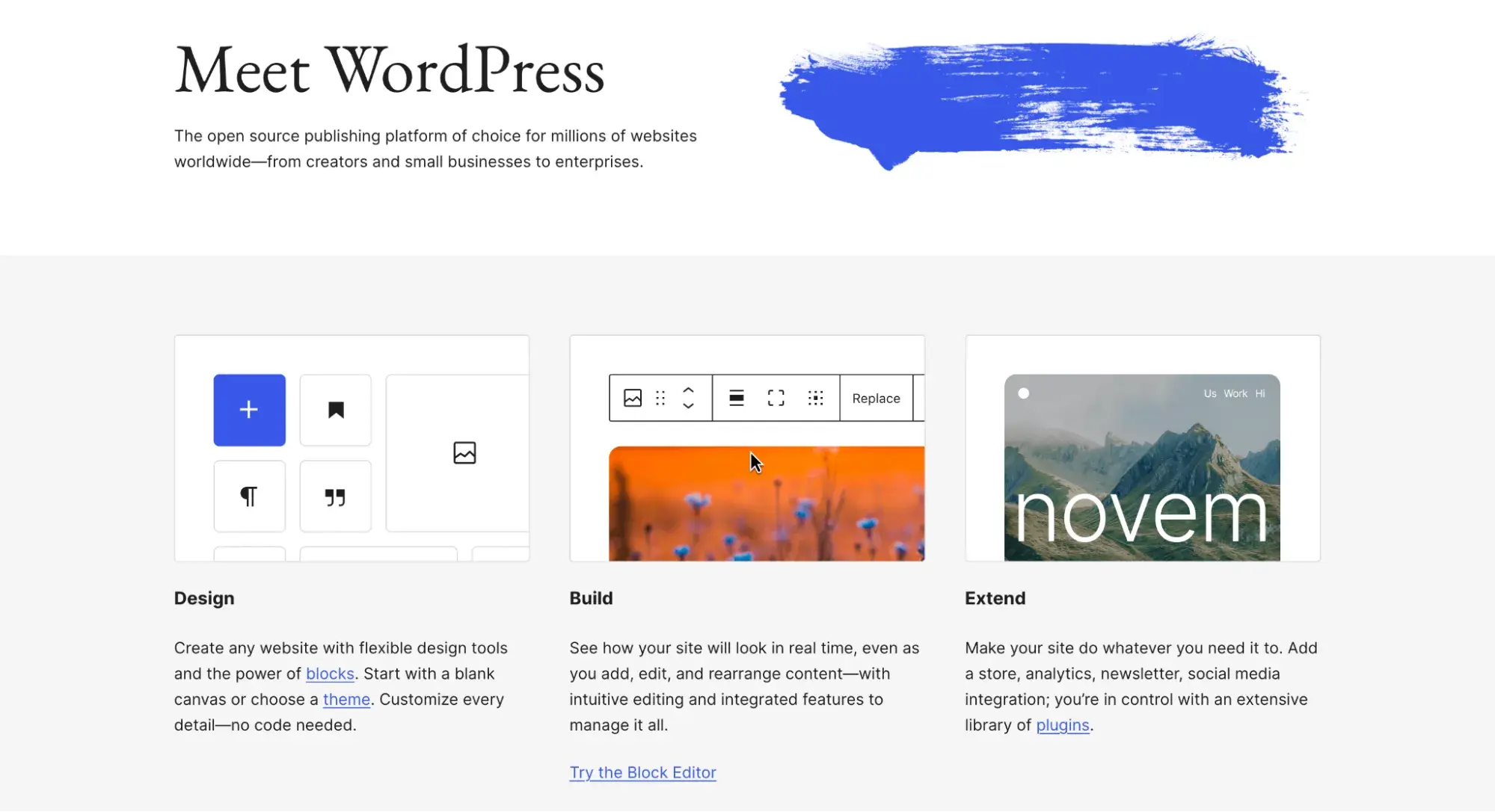
Best for: Teams wanting maximum flexibility to implement advanced SEO and extend site features with the biggest plugin repository
Ideal business stage: All (but best suited to teams with some technical comfort or developer access)
Pros:
- Largest plugin ecosystem (60,000+), so you can assemble exactly the feature set you need
- Self-hosted and open source (full control over code, hosting, and data ownership)
- Most popular CMS (, per W3Techs), which means established community support and plenty of learning resources
- Unmatched technical SEO flexibility (modify source code, implement custom Schema, fine-tune server configurations, etc.)
Cons:
- No built-in CRM, email, or marketing automation. You'll rely on plugins and third-party integrations for those capabilities, which adds maintenance overhead.
- Unless you have managed hosting, WordPress’s plugin-dependent architecture means you manage updates, compatibility, and security (outdated plugins are a common vulnerability).
- Steeper ongoing maintenance than hosted platforms. You're responsible for hosting, backups, SSL, and performance optimization (unless you choose a managed hosting provider).
- No native AI features. AI capabilities require plugins.
No content management software list is complete without WordPress. The self-hosted, open-source CMS powers roughly 43% of all websites, according to . It‘s the CMS I’ve chosen time and again — from the very first blog I ever started to the three profitable niche sites I later sold. It's flexible, well-known, and a great fit for nearly any business stage.
Why this stands out operationally: WordPress is the most modular content management software on this list. You install the free core software, then build on it by selecting from the 60,000+ . That means you‘re never locked into a single vendor’s feature set — but it also means you own the operational overhead. Hosting, security, plugin updates, and integrations are your responsibility.
If your team values full ownership and has the technical capacity (or developer resources) to maintain that stack, WordPress gives you more control than almost any other option here. If you'd rather consolidate those responsibilities into a managed platform, a hosted solution like Content Hub can save you time.
For AI, WordPress offers options through its plugin ecosystem. integrates directly into the editor for content generation and translation, while adds AI-powered optimization and SEO-friendly titles and meta descriptions. For content governance, WordPress offers role-based permissions and a that lets you compare edits and restore previous versions.
: The CMS software itself is free and open source. However, you should factor in the total cost of ownership, including hosting, premium themes, and custom development (if needed).
3.
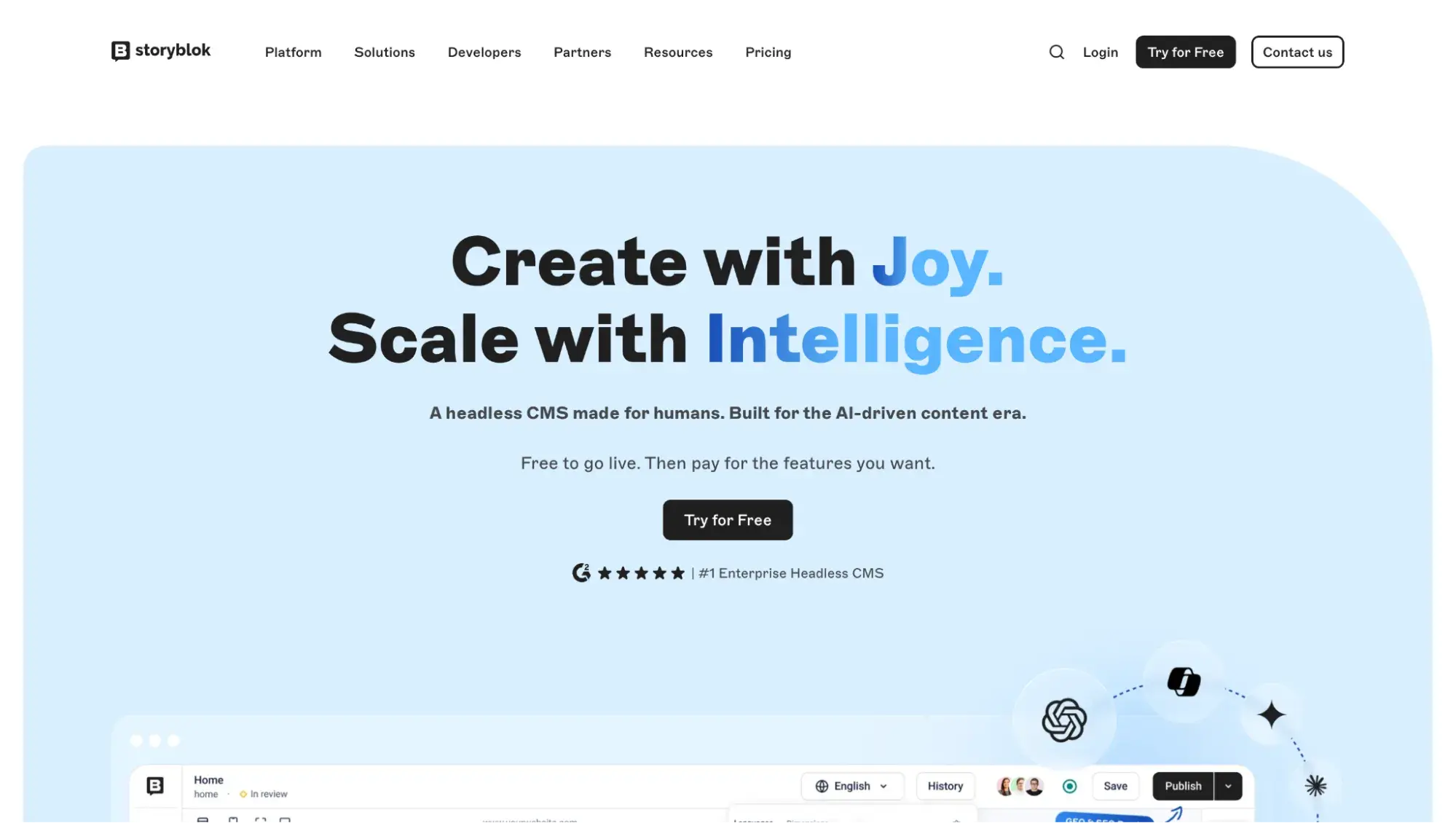
Best for: Multi-channel content operations with developer resources that need to publish content to websites, apps, and other digital touchpoints from a single source of truth
Ideal business stage: Enterprise and mid-market businesses with developer resources
Pros:
- Headless architecture delivers content via API to any front end (web, mobile app, IoT, digital signage, etc.)
- Visual editor and live preview let marketers build and edit pages without developer involvement (after initial setup)
- Fine-grained content governance: field-level access control, custom workflows, and content staging
- Component-based content model creates reusable blocks that enforce brand consistency at scale
Cons:
- Requires developers to build and maintain the front-end presentation layer
- No native marketing automation, CRM, or email (you'll integrate with external tools for those capabilities)
- Steeper learning curve for marketers than traditional CMS platforms, even with the visual editor
HubSpot's Free Website Builder
Create and customize your own business website with an easy drag-and-drop website builder.
- Build a website without any coding skills.
- Pre-built themes and templates.
- Built-in marketing tools and features.
- And more!
If your business publishes content across multiple channels and has developers who want to build the front-end presentation from scratch, Storyblok might be the best content management software for you. I've written a lot about headless CMSs, but Storyblok stands out because of its dedication to being both developer- and marketer-friendly.
Why this stands out operationally: Most headless CMSs come with this tension: Developers love the flexibility, but marketers lose the ability to visually build and preview pages — meaning some webpage updates might require a developer ticket. Storyblok was a pioneer in and live preview to a headless CMS, so once developers configure the initial setup, marketers can create and edit pages without waiting on engineering. Multiple from non-technical users highlight this marketer independence as a key benefit.
The headless architecture also means you manage content in one place and deliver it everywhere via API — your website, mobile app, in-store displays, or any other digital touchpoint. If you’re using multiple CMSs (one for each channel), Storyblok's single-source-of-truth model can eliminate redundant content creation and reduce inconsistencies.
Storyblok also offers an that includes AI content generation, translations, alt text, and SEO.
:
- Starter: Free (1 user seat, 100GB traffic/mo, 100k API requests/month)
- Growth: $90.75/mo billed annually (5 user seats, 400GB traffic/mo, 1M API requests/month)
- Growth Plus: $319.91/mo billed annually (15 user seats, 1TB traffic/mo, 4M API requests/month)
- Premium: Custom pricing (custom seats, 99.9% uptime SLA, SSO)
- Elite: Custom pricing (custom seats, 99.99% uptime SLA, SSO)
4.
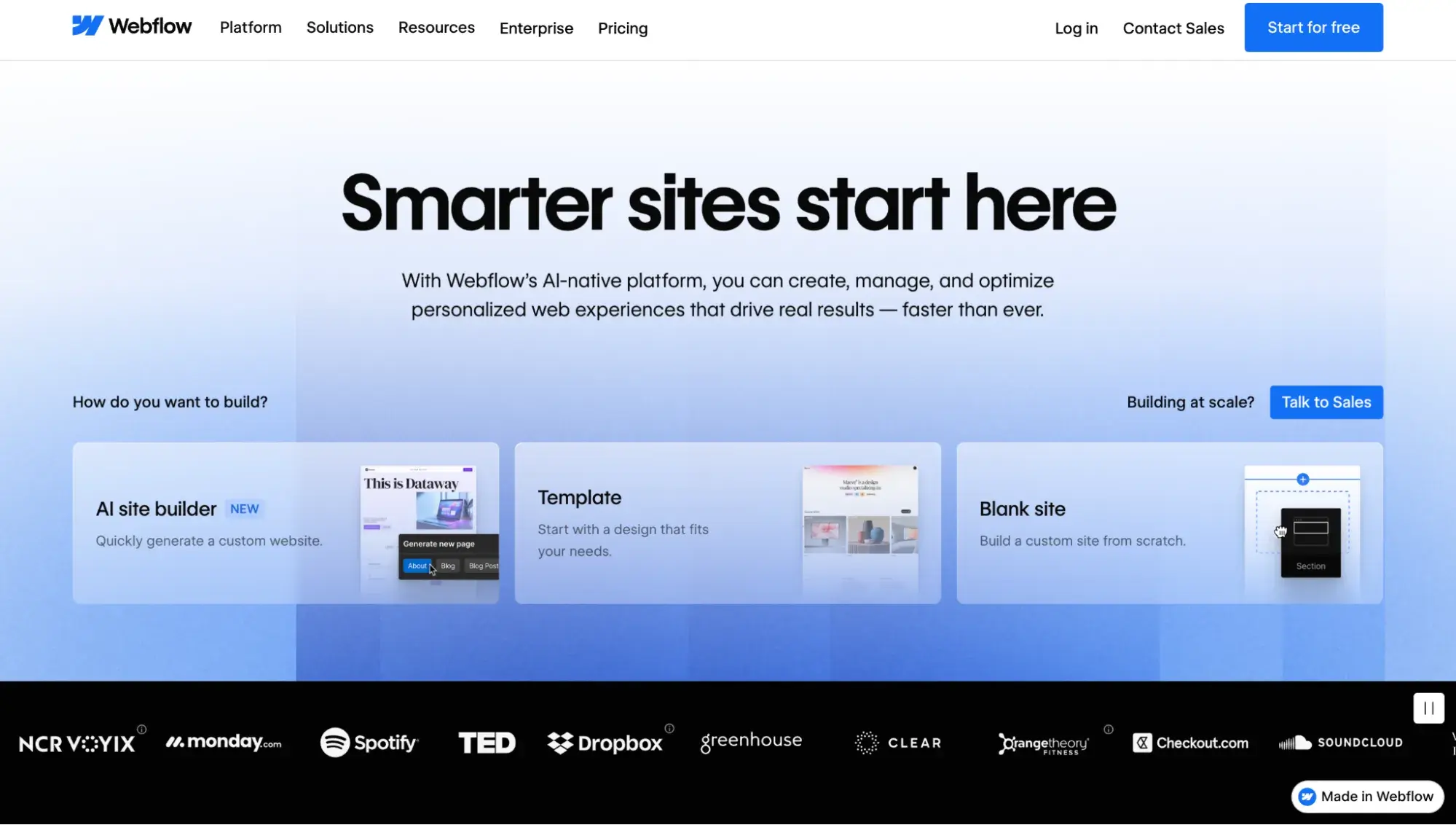
Best for: 糖心Vlog teams requiring design control and scalable site management without day-to-day coding
Ideal business stage: Early-stage to mid-market
Pros:
- Granular visual design control that goes well beyond typical drag-and-drop builders (e.g, numeric control over margins and padding)
- Generates clean, production-ready HTML, CSS, and JavaScript as you design
- Distinct Designer and Marketer roles let content teams publish independently without breaking the design
- bridges design and development workflows
Cons:
- Steeper learning curve than simpler builders like Wix — closer to learning a design tool than filling in templates
- is limited to static assets; CMS content, forms, and e-commerce don't export
- No native CRM, so personalization requires third-party integrations or the add-on
If Storyblok is the CMS that both marketing and engineering will love, Webflow is the one that'll please your design team. Unlike other drag-and-drop builders in this list, Webflow gives you pixel-level control over layout properties, more flexibility in embedding custom HTML and CSS, and full static site code export.
Why this stands out operationally: Many teams hit a governance gap between design and content: Designers build pixel-perfect pages, then marketers need to update copy or swap a hero image — and either break the layout or wait on a designer. Webflow solves this with distinct and that let content teams publish within design-defined guardrails. Designers set the system; marketers operate within it. If your bottleneck is the handoff between design and content updates, that role separation is the key differentiator.
Designers and brand managers will also appreciate that Webflow lets you import components, layouts, and styling via its , plus create reusable components — helping keep your site on brand as it scales.
On the AI side, now includes an AI Assistant that can generate page sections, write and refine copy, and audit your site for SEO and AEO (answer engine optimization) opportunities — all within the Designer. For teams wanting deeper optimization, (paid add-on) offers AI-powered A/B testing and 1:1 personalization, while (also a paid add-on) provides native analytics with AI traffic insights.
:
- Starter: Free (Webflow subdomain, 2 pages, 50 CMS items)
- Basic: $14/mo billed annually (custom domain, 150 pages, no CMS features)
- CMS: $23/mo billed annually (2,000 CMS items, 50GB bandwidth, site search)
- Business: Starting at $39/mo billed annually (10,000 CMS items, 100GB of bandwidth)
- Enterprise: Custom pricing (SLA, SSO, custom bandwidth)
Pro tip: HubSpot of your pages, posts, and templates — useful for backups or migration, but not a deployable site. , including HTML, CSS, JavaScript, and images, if you’re on a paid Workspace. So if your site is purely static — no CMS collections, ecommerce, or forms — you could take that export and host it on any web server without Webflow attribution. Just know that any dynamic features won't come with you.
5.
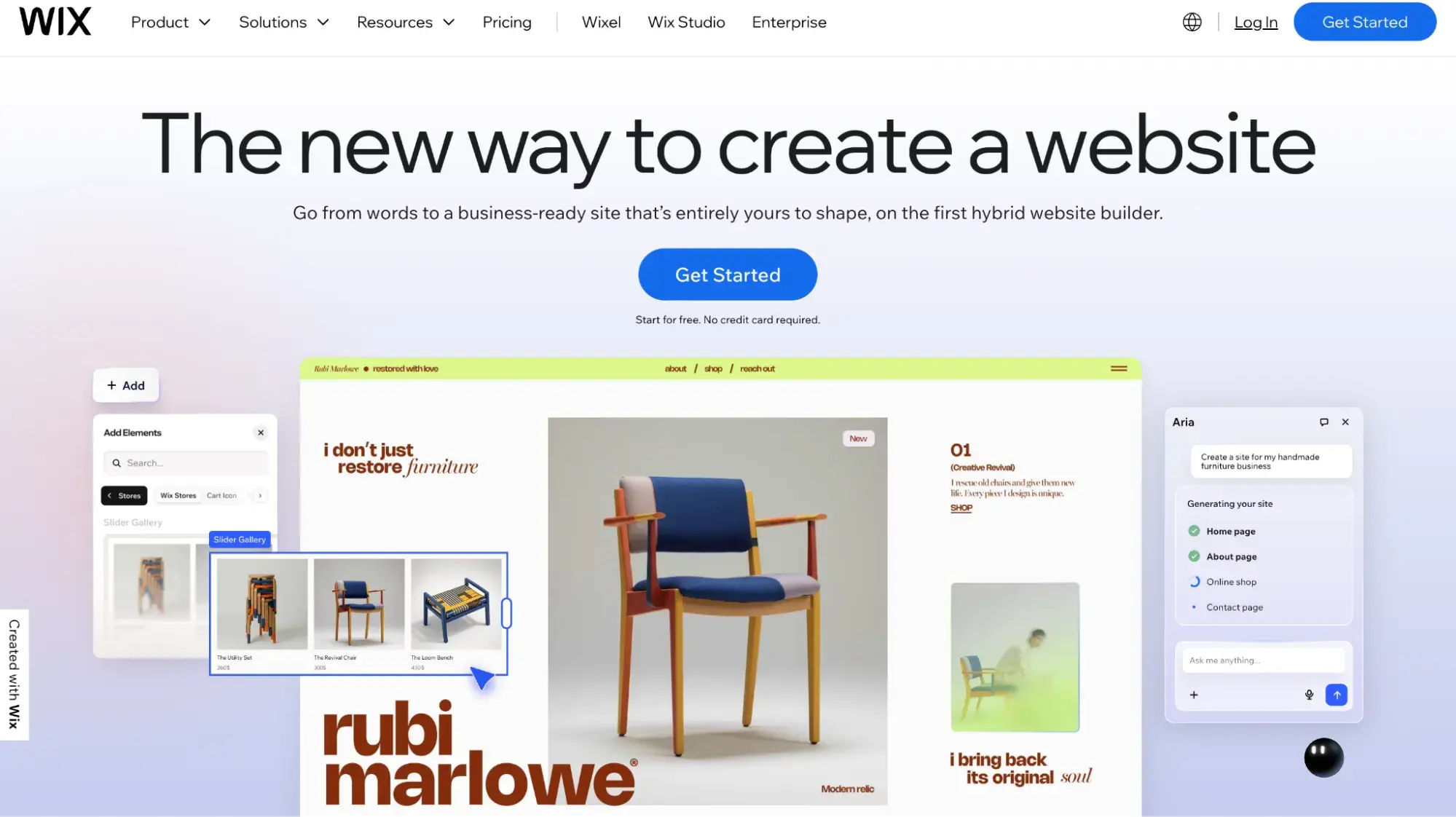
Best for: Small teams that just need to launch a professional website fast, with no-code templates and guided setup
Ideal business stage: Early-stage and small business
Pros:
- Fastest time-to-launch on this list: 2,000+ templates plus Wix Harmony (AI builder with vibe coding) can generate a full site from a natural-language prompt
- Built-in business tools — Bookings, Events, lightweight CRM, and payment processing — so you don't need to stitch together point solutions
- via the SEO Setup Checklist, plus customizable meta tags, canonical tags, and 301 redirects
- Guided SEO Setup Checklist walks non-technical users through optimization basics step by step
Cons:
- on an existing site (you'd need to create a new site and manually transfer content, which makes the initial template choice high-stakes)
- Built-in CRM is basic (useful for contact management and email, but no multi-touch attribution or lifecycle-stage personalization like CRM-native platforms offer)
- Limited content governance (no complex content approvals or content staging, which becomes a ceiling as your team and contributor count grow)
- Hosted platform with limited code-level access, so some advanced technical SEO implementations aren’t possible
HubSpot's Free Website Builder
Create and customize your own business website with an easy drag-and-drop website builder.
- Build a website without any coding skills.
- Pre-built themes and templates.
- Built-in marketing tools and features.
- And more!
Don't let anyone tell you Wix isn't worth it — its value depends entirely on your business stage and resources. This beginner-friendly visual website builder caters to small businesses that don‘t have dedicated developers to code a website or deal with technical implementation. Wix isn’t the best for deep customization and scalability, but it shines when it comes to launching a good-looking website fast without any technical skills.
Why this stands out operationally: If your biggest bottleneck is simply getting a site live, Wix removes more friction than any other platform here. A single person can go from zero to a published, professional-looking website in an afternoon — complete with appointment scheduling, payment processing, and basic SEO — without writing a line of code or configuring a single plugin. That all-in-one simplicity is the core value proposition.
, Wix‘s AI website builder powered by an agent called Aria, takes this further. Describe what you want in natural language — from color palette changes to full page redesigns — and Aria generates it, while you retain full drag-and-drop editing control. It’s included in all plans, even the free tier.
Where Wix hits a ceiling is governance and scalability. There is no staging environment and no way to switch your template without building a new site. And while the built-in CRM handles basic contact management, it can‘t power multi-touch revenue attribution like CRM-native platforms offer. If your team is growing past three to five contributors or your marketing stack is getting complex, you’ll likely outgrow Wix.
:
- Free tier available (Wix-branded subdomain, limited features)
- Light: $17/mo billed annually (custom domain, 2GB storage, no ecommerce)
- Core: $29/mo billed annually (50GB storage, basic ecommerce, scheduling tools)
- Business: $39/mo billed annually (100GB storage, standard ecommerce, 10 site collaborators)
- Business Elite: $159/mo billed annually (unlimited storage, priority support, advanced developer platform)
How to Choose the Right Content Management Software Tool for Your Team
Step 1: Consider your content operations stage and website growth trajectory.
The CMS choice you make now impacts your content operations in two years. For that reason, it’s important to pause and determine not only your current content ops stage but also your website growth trajectory. Choose a content management software tool that grows with you.
Look at the pricing plans and corresponding features to ensure they map to your projected website growth. For example, you might not have external contributors now, but if you plan to build out a roster of freelance blog writers next year, it’s crucial that your CMS supports content governance, role-based permissions, and approval workflows.
Here are some guidelines based on your content operations maturity level:
- You're launching or running lean. You're a solo marketer or small team getting a site live, and your biggest bottleneck is simply getting content published. Pick a CMS that’s easy and fast to use, especially for non-technical folks. Wix and Content Hub are both designed so one person can launch and manage a site without code or plugins.
- You're scaling content operations. Your team is growing, you‘re managing multiple content types, and you’re feeling the pain of disconnected tools — manually syncing data, fielding “who changed this page?” questions with no audit trail. Prioritize integration depth and content governance. Content Hub, Webflow, and WordPress (with developer support) all handle this well.
- You're managing multi-channel complexity. You're publishing across websites, apps, and regional microsites, and maintaining separate systems is creating redundant work. Evaluate multi-site management, localization, and headless architecture. Storyblok is purpose-built for this — its headless approach gives developers API flexibility without cutting marketers out of the editing workflow. WordPress and Content Hub can also serve enterprise needs, though each with different tradeoffs in customization versus maintenance overhead.
Step 2: Identify which point solutions each CMS option could replace.
This step is important for getting leadership buy-in. If you can pitch this content management software tool as not just another expense but something that makes your operations more cost-effective, then it’s an easier “yes.”
Make a list of your content team’s current standalone tools — landing page builders, email platforms, form builders, analytics dashboards — and check off each one that the CMSs you’re considering could eliminate.
For teams at the “launching or running lean” stage, this exercise might be simple — you may only have one or two tools to evaluate. But for teams scaling operations or managing multi-channel complexity, the savings compound quickly. Every disconnected tool carries hidden costs: time spent exporting data between platforms, inconsistencies when the same content lives in multiple systems, and the cognitive overhead of context-switching across dashboards that don't talk to each other.
Step 3. Sign up for trials and demos.
Reading landing pages and documentation can only take you so far. Getting your hands on the actual software will be far more revealing. Most content management software offers free plans or trials, so take advantage of them. Enterprise-level platforms are trickier; for those, you'll typically need to contact sales for a guided demo.
When you‘re testing, don’t just click around the interface. Test against your actual workflows: Build a real page, run a content update through the approval process, or try connecting a tool you already use. The goal isn‘t to evaluate features in isolation — it’s to see whether the platform fits how your team actually works today.
A few things to check during a trial:
- How quickly can a non-technical teammate publish or update a page? This reveals real time-to-value.
- What happens when two people edit the same content? This exposes governance gaps early.
- How painful is the integration with your current tools? Native connections feel different from Zapier workarounds.
Step 4: Evaluate ease of migration and vendor migration support.
If you’re launching your first site, then this step is less relevant, but keep it in mind if you ever migrate in the future.
I speak from experience when I say that a website migration is always a nail-biting process. Get it right, and you can breathe easy knowing you’re now using a CMS that supports your growth. Get it wrong, and you could tank your SEO overnight.
Before committing to a new content management software tool, ask:
- What in-house migration support does my team have? If you have a developer or technically skilled marketer who‘s done this before, you may be able to handle a straightforward migration in-house. If not, factor the cost of a freelancer, agency, or the vendor’s own migration services (see next question) into your total cost of ownership.
- Does the vendor offer migration support? Some platforms provide hands-on migration services (HubSpot offers , for example), while others leave it entirely to you or a third-party agency.
- What content and SEO equity am I migrating? URL structures, 301 redirects, metadata, internal links, and indexed pages all need a migration plan. The consequence of getting this part wrong is that you can destroy organic traffic, especially if redirects aren’t properly configured.
- How resource-intensive is the implementation? A headless CMS requires developers to custom-build the front end, which takes time. Visual, no-code builders like Wix and Content Hub are faster to stand up without technical resources.
Step 5: Calculate total cost of ownership at your scale.
Pricing pages can be deceiving, especially for a CMS like WordPress, which is technically free to install but definitely requires money to maintain.
When comparing content management software options, account for:
- Add-ons and upgrades that unlock features you need. For some platforms, you must upgrade to higher tiers or paid add-ons to access more advanced capabilities (personalization, A/B testing, advanced analytics, etc.). Check whether the features that matched your operations stage in Step 1 are included at your price point.
- Per-seat and contact-tier scaling. Workspace fees, per-seat charges, and contact-tier pricing can compound quickly as your team and database grow. Model the cost at your projected scale in 12 to 18 months, not just today's.
- Maintenance and integration overhead. Self-hosted platforms like WordPress are free to install, but hosting, security, plugin maintenance, and developer time add up. Factor in what it costs to keep the stack running — not just to set it up.
- The cost of not consolidating. If Step 2 revealed four or five disconnected tools, add up what you're paying for all of them. A higher-priced CMS that replaces most of your stack may cost less in total.
Frequently Asked Questions About Content Management Tools
Is a content management tool the same as a CMS?
Broadly speaking, yes, people typically use the term “content management tool” to describe what is formally known as a CMS (content management system). However, some people might use “content management tool” to refer to any software that assists in the content management process, including digital asset management (DAM) software like Bynder or planning software like Trello. In this article, I'm using “content management tool” and “content management software” to mean a CMS specifically.
What is the best content management system for SEO?
The best CMS for SEO depends on your team‘s technical resources and SEO maturity. WordPress offers the most flexibility for advanced technical SEO because it’s self-hosted and open source, giving developers full control over source code, server configurations, and custom Schema markup. I recommend pairing it with Yoast SEO for marketers who want to optimize with a plugin.
For teams without dedicated developers, HubSpot Content Hub provides built-in , on-page optimization guidance, and topic cluster tools that don‘t require plugins or technical setup. And because it shares data with HubSpot’s CRM, you can actually tie organic content performance to revenue — something most standalone CMSs can't do natively.
How do I choose a CMS for a small team or startup?
Prioritize speed, ease of use, and low total cost of ownership. Advanced and numerous features don’t matter much. When you're a small team, your biggest bottleneck is usually just getting content published — not running complex personalization or multi-channel workflows.
Start by asking: Do I have developer resources? If not, rule out platforms that require technical setup and ongoing maintenance, and focus on hosted, no-code options. Wix is the fastest path to a live site if you just need to launch. Content Hub is a strong choice if you want similar ease of use but also want CRM, email, and analytics in one platform so you don't accumulate a stack of disconnected tools.
Whatever you choose, think 12 to 18 months ahead. The content management software that fits your team today should still fit as you add contributors, content types, and marketing channels. I walk through this in more detail in the “how to choose” section above.
What’s the difference between headless and traditional CMS?
The difference between a headless and traditional CMS is that a headless CMS doesn‘t come with a front-end presentation layer, while a traditional CMS does. Here’s what that means for your website: With a traditional CMS, marketers can build and publish pages on the built-in presentation layer with less developer involvement; WordPress, Content Hub, Wix, and Webflow all work this way in their standard setups.
With a headless CMS, a developer must build the front-end presentation layer before content can be displayed, which gives developers more control. Once it’s set up, marketers can publish updates in the CMS easily, but they might need engineering support for new page types or components.
The tradeoff is flexibility versus complexity. If your content only needs to live on one website, traditional is usually the simpler and more cost-effective choice. If you‘re publishing across multiple digital channels — websites, mobile apps, digital signage — from a single content source, headless is worth evaluating. I review Storyblok’s approach in the “best content management software” section above.
How risky is CMS migration, and how do I reduce risk?
CMS migration is low risk if you plan carefully and high risk if you rush it. The biggest danger is losing organic traffic. Broken URLs, missing redirects, dropped metadata, and de-indexed pages can tank your search rankings. I've been through enough migrations to know the anxiety is justified, but the risk is manageable with the right preparation.
To reduce risk, focus on three things.
- First, audit and document everything you're migrating: URL structures, 301 redirects, metadata, internal links, and indexed pages.
- Second, set up comprehensive redirect mapping before you flip the switch. Every old URL should point to its equivalent on the new platform.
- Third, monitor closely after launch using Google Search Console to catch crawl errors and indexing issues early.
If your team doesn't have migration experience, factor in professional help. Some vendors offer migration support. HubSpot provides , for example, while others leave it to you or a third-party agency. Either way, build the cost into your total cost of ownership calculation.
Editor's note: This post was originally published in May 2019 and has been updated for comprehensiveness.
HubSpot's Free Website Builder
Create and customize your own business website with an easy drag-and-drop website builder.
- Build a website without any coding skills.
- Pre-built themes and templates.
- Built-in marketing tools and features.
- And more!
Content Management System